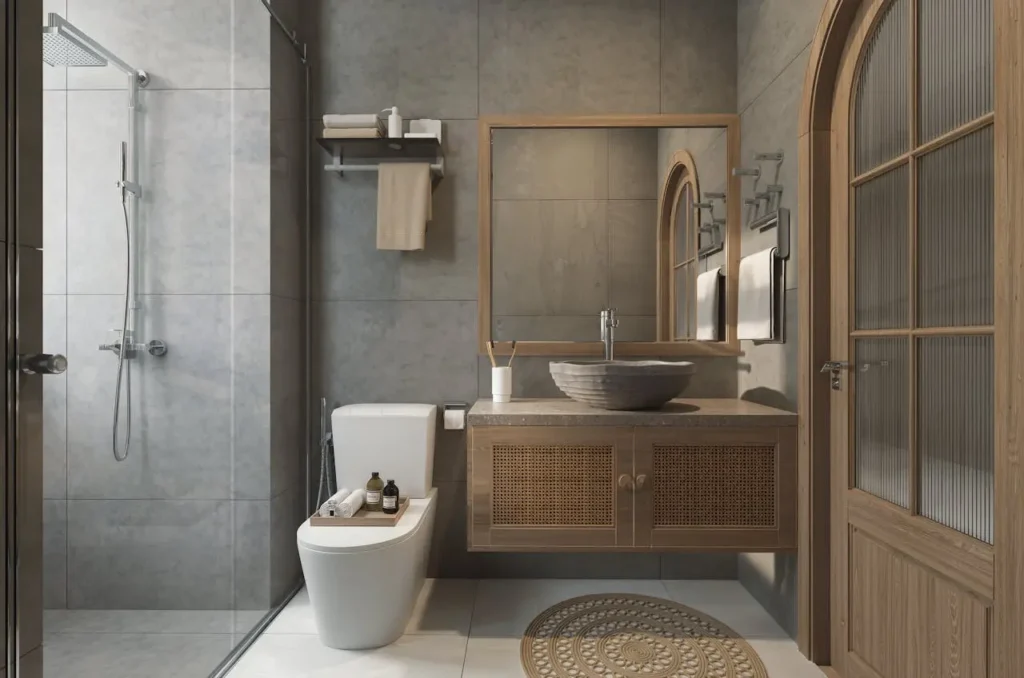
A Complete Timeline Breakdown
The most common question homeowners ask before starting a renovation is also the most frustratingly vague to answer: how long does a bathroom remodel take? Contractors say “3 to 8 weeks.” Articles say “two to three months.” Reddit threads are all over the map. The real answer depends on which bathroom you’re remodeling, what’s happening behind your walls, and, more than anything else, how prepared you are before the first tile comes down. That preparation gap is exactly what separates a renovation that finishes on time from one that drags on for months.
The team at Pillar 22 – a construction and remodeling company serving Palm Beach County – hears this question from nearly every homeowner before a project starts. Their experience with hundreds of bathroom remodels in West Palm Beach and across South Florida makes one thing clear: the projects that finish on time are the ones where every decision, every material, and every permit was handled before the first wall came down.
This guide gives you the honest, specific answer. We’ll break down timelines by bathroom type, walk through every phase of a real renovation week by week, identify what actually causes delays (and how to prevent them), and show you how to spot a contractor whose timeline estimate isn’t realistic.
Quick Reference: How Long Does Each Type of Bathroom Remodel Take?
Before diving into the details, here’s the summary view. These are realistic construction timelines – meaning active work days – not including the planning and permitting phase.
| Bathroom Type | Construction Time | Total Project Time (incl. planning) |
|---|---|---|
| Half bath / powder room | 1–3 weeks | 4–6 weeks |
| Small full bathroom (cosmetic refresh) | 2–3 weeks | 5–7 weeks |
| Small full bathroom (gut remodel) | 3–5 weeks | 7–11 weeks |
| Standard full bathroom | 4–6 weeks | 8–12 weeks |
| Master bathroom (mid-range) | 6–8 weeks | 10–14 weeks |
| Master bathroom (luxury / custom) | 8–12+ weeks | 14–18+ weeks |
Timeline Breakdown by Bathroom Type
Half Bath / Powder Room: 1–3 Weeks
A powder room remodel is the most manageable bathroom project. You’re working with a toilet and a vanity – no shower, no tub, no waterproofing membrane. Unless you’re moving plumbing, expect one to three weeks of active construction. The main variables are tile work (if you’re doing a full tile floor) and vanity lead times.
What extends the timeline: choosing a custom or semi-custom vanity with a four-to-six-week lead time, or deciding to tile accent walls, which adds two to four extra days.
Small Full Bathroom: 2–5 Weeks
How long does it take to remodel a small bathroom? The answer splits in two depending on scope.
Cosmetic refresh (no plumbing or layout changes): Two to three weeks. This includes replacing the vanity, updating tile, swapping the toilet, and installing new fixtures within the existing footprint. The small square footage actually works in your favor here – less tile to set, less drywall to repair.
Gut remodel (plumbing moves, full demo, new shower): Three to five weeks. Moving even one drain line in a small bathroom can add five to seven business days due to rough-in plumbing, the required inspection, and the waiting period before walls can close. Small bathrooms are also harder to work in – cramped quarters slow tile installation.
Pro tip: The most common reason a small bathroom remodel runs over schedule is a layout change that seemed minor on paper. Moving the shower drain two feet requires cutting into the subfloor, possibly into floor joists, and always triggers an inspection. Factor at least one extra week if any drain is moving.
Standard Full Bathroom: 4–6 Weeks
This is the most common remodel scope: a full bathroom with shower/tub combo, single vanity, and toilet. The four-to-six-week range assumes no major structural changes. If everything is staying in place and you’re just upgrading surfaces and fixtures, you’re closer to four weeks. Add a week or more if you’re switching from a tub/shower combo to a walk-in shower (which requires reconfiguring the drain and waterproofing a larger area).
Master Bathroom (Mid-Range): 6–8 Weeks
A mid-range master bath remodel – double vanity, walk-in shower, freestanding tub, and upgraded tile – runs six to eight weeks from the first day of demo to the final punch list. The extended timeline is driven by the volume of tile work (a walk-in shower with full surround tile can take a full week on its own), the complexity of coordinating multiple subcontractors, and the typical use of materials with longer lead times.
Master Bathroom (Luxury / Custom): 8–12+ Weeks
Luxury master bathroom remodels involving custom cabinetry, imported tile, frameless glass enclosures, radiant floor heating, or steam showers regularly run ten to fourteen weeks. Custom cabinetry alone can have a six-to-eight week fabrication lead time. Imported Italian or Spanish tile often has four-to-eight week shipping times. The construction itself is also more time-intensive: large-format porcelain slabs require precise installation, and frameless glass templating typically happens after tile is complete, adding another one-to-two-week wait for fabrication and installation.

The Full Timeline: From Decision to Done
Most articles only count construction weeks. But the full journey from “I want to remodel my bathroom” to “it’s finished” includes three distinct phases, each with its own timeline.
Phase 1: Planning and Design (Weeks 1–4)
This phase is largely invisible but sets up everything that follows. A rushed planning phase is the single most common cause of mid-project delays.
- Week 1: Define scope, establish budget, begin researching contractors. Collect three quotes from licensed contractors – this takes one to two weeks given scheduling and site visits.
- Week 2: Select your contractor, sign the contract, and begin making all material selections. This last point is critical: you need to choose your tile, vanity, fixtures, faucets, lighting, and shower glass before construction begins. Many homeowners underestimate how long this step takes.
- Weeks 3–4: Order materials. Standard tile in stock at a local supplier: immediate. Custom or imported tile: four to eight weeks. Custom vanity: four to eight weeks. Frameless glass: templated after tile, then two to three weeks for fabrication. Order long-lead items the moment they’re selected.
The rule: demolition should not begin until all materials are either on-site or have confirmed delivery dates within the construction window.
Phase 2: Permits (Weeks 3–5, Overlapping With Material Orders)
For any remodel involving plumbing changes, electrical modifications, or structural work, your contractor submits a permit application to your local building department. Processing time varies significantly by municipality – from a few days in smaller cities to two to three weeks in high-volume jurisdictions. Your contractor typically manages this process, but it runs concurrently with material ordering rather than as a separate sequential step.
Phase 3: Construction (The Active Remodel)
Here is what actually happens during the construction phase, broken down week by week for a standard full bathroom remodel:
| Week | What Happens | What Can Cause a Delay |
|---|---|---|
| Week 1 | Demolition (1–2 days), rough-in plumbing and electrical (2–3 days), rough-in inspection | Inspector unavailability, corrections required after inspection |
| Week 2 | Waterproofing membrane, cement board, subfloor prep, shower pan installation, shower pan inspection | Waterproofing cure time (48–72 hrs), failed shower pan test |
| Week 3 | Tile installation: floors and shower walls (5–7 days), grout and sealing | Complex tile patterns, small mosaic tile, mortar cure time |
| Week 4 | Vanity installation, plumbing and electrical finish, painting | Vanity not yet delivered, fixture back-orders |
| Week 5 (if needed) | Frameless glass installation, hardware, accessories, punch list, final inspection | Glass lead times, minor corrections from final inspection |
Phase 4: Final Walkthrough and Closeout (1–3 Days)
After construction is complete, your contractor walks the space with you to identify any punch list items – caulk touch-ups, fixture adjustments, grout cleanup, or paint corrections. A well-run project has a punch list of minor items. A poorly managed project has a long list. The final building inspection (for permitted work) typically occurs during this phase.
What Actually Causes Delays – and How to Prevent Them
Most bathroom remodel delays fall into one of five categories. Understanding them lets you either prevent them outright or build realistic buffer time into your expectations.
1. Mid-Project Design Changes
This is the single most controllable delay. When a homeowner changes tile mid-project, swaps a vanity after it’s been measured in, or decides to add a heated floor after rough-in is complete, the project stops. New materials need to be ordered, plumbers or electricians may need to return, and the scheduling cascade affects every other trade.
Prevention: Make every single design decision – down to grout color and towel bar finish – before demolition begins. If you’re not fully decided, wait. Starting a remodel with 80% of decisions made guarantees a delay.
2. Hidden Damage Behind Walls
Water damage, mold, rotted framing, outdated plumbing that doesn’t meet code, and deteriorated subfloor are all common in bathrooms that haven’t been touched in ten or more years. These discoveries require remediation before construction can continue, typically adding three to ten business days depending on severity.
Prevention: You can’t prevent the discovery, but you can prepare for it. Build a 10–15% time buffer into your schedule and don’t plan major life events (vacations, houseguests) during the middle weeks of your remodel.
3. Material Availability and Delivery Delays
Back-ordered vanities, tile discontinued between order and delivery, frameless glass delayed by the fabricator – these are among the most frustrating delays because they’re entirely outside your control once construction has started.
Prevention: Have all materials confirmed, ordered, and ideally on-site before demo begins. For any custom or imported item, confirm the delivery window in writing before signing the contract.
4. Inspection Scheduling and Corrections
Most bathroom remodels require at least two inspections: a rough-in inspection (plumbing and electrical before walls close) and a final inspection. In busy markets, inspectors may have a one-to-three-day scheduling lead time, which is built into a good contractor’s schedule. What isn’t built in is a failed inspection, which requires corrections and a re-inspection, adding three to seven days.
Prevention: Hire a licensed, code-compliant contractor. Failed inspections are almost always the result of work that wasn’t done to code, not bad luck.
5. Contractor Availability and Subcontractor Coordination
A general contractor coordinates multiple trades: plumber, electrician, tile setter, possibly a glass company and a cabinetmaker. If one trade is delayed, it cascades. A plumber who runs two days late on rough-in pushes back the inspection, which pushes back drywall, which pushes back tile, which pushes back everything else.
Prevention: Ask your contractor specifically how they handle trade scheduling and what happens when a subcontractor runs late. A well-organized contractor has contingency scheduling built in.
How to Tell If a Contractor’s Timeline Is Realistic
Not all timeline quotes are created equal. Some contractors underquote timelines to win the job and then make up excuses when the project runs over. Here are the specific red flags to watch for:
- The timeline doesn’t include a planning or permitting phase. If a contractor quotes you a construction start date within a week of your first meeting – before permits are pulled or materials are ordered – that’s a red flag. Legitimate contractors don’t start demo until permits are approved and materials are confirmed.
- No buffer for inspections. A realistic schedule accounts for inspection wait times (one to three business days in most markets). A contractor who promises a completely continuous construction schedule with zero downtime between phases has either never dealt with a difficult inspection or is overselling the timeline.
- Unusually short timeline for the scope of work. If a contractor quotes two weeks for a full gut master bath renovation, that’s not impressive efficiency – it’s a warning sign. Tile alone on a large master bath takes five to seven days to set and grout properly. There is a physical minimum time for quality work.
- No discussion of material lead times. A contractor who doesn’t ask about your vanity, tile, and fixture selections before quoting a start date hasn’t thought through the material pipeline. If custom items aren’t ordered in time, the project stalls mid-construction.
- Vague milestone schedule. Ask any contractor to walk you through their week-by-week schedule. A qualified, organized contractor can tell you exactly what happens each week. If the answer is “we’ll figure it out as we go,” that’s a red flag.
Key insight: The contractors who are best at keeping to timelines are the ones who invest the most time in pre-construction planning. If you want your remodel done on schedule, look for contractors known for their planning process, not just their craftsmanship. The team at Pillar 22, for example, which specializes in
For homeowners in South Florida, working with contractors who specifically specialize in bathroom remodeling in West Palm Beach – with deep familiarity of local permitting, inspection timelines, and humidity-related build requirements – means far fewer surprises on a schedule that was built realistically from day one.
6 Practical Ways to Shorten Your Bathroom Remodel Timeline
- Make all design decisions before demolition begins. Every day of design indecision during construction is a day (or more) of delay. Finalize every material, fixture, and finish choice before demo starts.
- Order long-lead materials immediately after signing the contract. Don’t wait for demolition day to order your custom vanity. Place orders for anything with a lead time over two weeks the day the contract is signed.
- Ask your contractor to pull permits as early as possible. In many jurisdictions, permit applications can be submitted before the project officially starts. Starting the permit clock early reduces front-end delays.
- Be available and responsive during construction. When unexpected conditions arise – and they often do – your contractor needs a quick answer. Every day you take to respond to a mid-project question is a potential delay.
- Don’t make the space hard to access. Contractors work fastest when they have clean, clear access to the worksite. Clear the adjacent hallway, protect floors along the access route, and don’t schedule other workers in the same area during peak construction days.
- Hire a contractor who uses a written construction schedule. Ask to see the actual week-by-week schedule before signing. A contractor who has a documented schedule is one who has thought through the project – and is accountable when things run late.
Frequently Asked Questions
How long does a bathroom remodel take from start to finish?
Including planning, permitting, and construction, most bathroom remodels take 8 to 14 weeks from start to finish. The active construction phase is typically 3 to 8 weeks, but the full project – including design decisions, contractor selection, material ordering, and permits – consistently adds another 4 to 6 weeks.
How long does it take to remodel a small bathroom?
A small bathroom cosmetic refresh with no plumbing changes takes 2 to 3 weeks of active construction. A full gut remodel of a small bathroom, including plumbing rough-in and new tile shower, takes 3 to 5 weeks of construction. Add 4 to 6 weeks for the planning and permitting phase to get total project timelines of 7 to 11 weeks.
Can a bathroom be remodeled in a week?
A very limited cosmetic update – paint, new hardware, replacing a toilet, or installing a new vanity mirror – can sometimes be done in a week. A full remodel involving tile, plumbing, and new fixtures cannot be completed responsibly in under two weeks. Anyone promising a complete bathroom remodel in a week is cutting corners, skipping inspections, or both.
What is the longest part of a bathroom remodel?
The tile work is typically the most time-intensive phase of active construction, often taking five to seven days for a standard bathroom. But the longest overall delay driver is material lead times – especially for custom vanities, imported tile, or frameless glass enclosures, which can each take four to eight weeks to arrive after ordering.
How do I know if my contractor’s timeline quote is realistic?
Ask the contractor to provide a week-by-week schedule, not just a start and end date. Verify that it accounts for inspection wait times, material delivery windows, and a buffer for unexpected conditions. Be skeptical of any quote that promises uninterrupted daily progress with zero downtime between phases.
What is the best time of year to start a bathroom remodel?
Late fall and winter (October through February) tend to be the best times in most U.S. markets. Contractors have more availability, permit offices are less backlogged, and material lead times can be shorter. In warm-weather markets, spring through fall is peak renovation season, which means longer permit wait times and tighter contractor schedules.
The Bottom Line on Bathroom Remodel Timelines
The honest answer to “how long does a bathroom remodel take?” is this: faster than you fear if you’re prepared, slower than you hope if you’re not. The homeowners who get the shortest timelines are the ones who make every decision before demo begins, order materials immediately, and hire contractors with a documented, realistic schedule.
Build your timeline from reality, not from wishful thinking. Account for the full project – planning, permitting, and construction. Add a time buffer for the unexpected conditions that almost always show up once the walls come down. And choose your contractor based as much on their organizational process as on their craftsmanship.
Do those things, and your bathroom remodel will finish on time more often than not.