The way people consume information online has evolved dramatically over the years. Written content is still important, but modern audiences increasingly prefer listening over reading, especially when they are multitasking or consuming content on the go. From podcasts and audiobooks to narrated videos and voice-based learning, audio content has become a powerful medium in the digital world.
This shift has pushed creators, businesses, and educators to look for smarter ways to convert written material into natural-sounding speech. Manually recording voiceovers for every piece of content can be time-consuming, expensive, and inconsistent. As a result, automated voice solutions have emerged as a reliable alternative for scalable audio creation.
Today, text to speech technology is no longer robotic or emotionless. With advancements in voice modeling and sound processing, digital voices can now deliver clear, expressive, and engaging narration. This transformation has opened new doors for accessibility, content creation, and global communication.
Understanding the Rise of Voice-Based Content
Voice-driven content has become deeply integrated into everyday digital experiences. People listen to audio while commuting, exercising, working, or relaxing. This growing preference for audio has made spoken content more accessible than ever before.
Websites, apps, and digital platforms are now adapting to this trend by offering audio versions of articles, tutorials, and product descriptions. This approach not only improves user experience but also keeps audiences engaged for longer periods. Audio content allows people to absorb information without being tied to a screen, making it ideal for modern lifestyles.
As demand increases, creators need solutions that can produce high-quality audio quickly and consistently. This is where automated voice generation plays a key role in meeting large-scale content needs.
What Makes Modern Text to Speech So Effective
Earlier versions of text-to-speech sounded mechanical and lacked natural rhythm. Pauses felt unnatural, pronunciation was inconsistent, and emotional tone was missing. Modern systems, however, have overcome many of these limitations by closely mimicking real human speech patterns.
Today’s voice outputs include proper pacing, natural pauses, and realistic intonation. This makes the listening experience smoother and more engaging for audiences. Whether it’s educational material, storytelling, or informational content, the audio feels more conversational and less artificial.
Another important improvement is language adaptability. Modern systems can handle different accents, tones, and speaking styles, allowing creators to match the voice with their brand personality or audience expectations.
How an AI Voice Generator Supports Content Creators
An AI voice generator has become an essential tool for creators who need scalable audio production without compromising quality. Instead of hiring voice artists for every project, creators can generate consistent voiceovers in minutes.
This approach is particularly useful for YouTube creators, online educators, marketers, and bloggers who regularly publish content. It allows them to focus on scripting and storytelling while the voice generation process handles delivery.
Consistency is another major benefit. Human voice recordings can vary depending on mood, environment, or recording setup. Automated voice generation ensures the same tone and clarity across all content, which is especially valuable for branding and long-term projects.
Improving Accessibility Through Audio Content
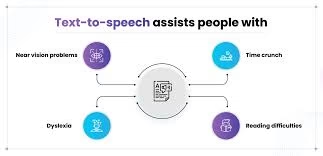
Accessibility is one of the most important advantages of text-based audio conversion. Not all users prefer or are able to read long blocks of text. Audio content provides an inclusive alternative for people with visual impairments, reading difficulties, or language barriers.
By offering spoken versions of written material, websites can reach a broader audience and improve overall user satisfaction. Educational platforms, in particular, benefit greatly from audio support, as learners absorb information in different ways.
Audio also helps bridge gaps in comprehension. Listening to content can make complex ideas easier to understand, especially when tone and emphasis are used effectively.
Voice Technology in Marketing and Branding
Audio plays a powerful role in shaping brand identity. A consistent voice helps brands connect emotionally with their audience. Whether it’s a calm and professional tone or an energetic and friendly one, voice style influences how messages are perceived.
Using an ai voice generator allows brands to maintain a unified audio presence across videos, ads, tutorials, and social media content. This consistency builds trust and recognition over time.
Voice-based marketing is also highly engaging. Narrated videos, explainer content, and audio ads often perform better than text-only formats because they capture attention more effectively and deliver messages clearly.
The Role of Voice in Education and Learning
Digital education has expanded rapidly, and audio-based learning has become a core part of this growth. Many learners retain information better when they hear it rather than read it. Audio lessons, narrated slides, and spoken explanations enhance understanding and engagement.
Text-to-speech tools enable educators to convert written lessons into audio quickly. This is especially helpful for online courses, language learning platforms, and training programs that require frequent updates.
Students also benefit from the flexibility of audio learning. They can listen to lessons while commuting or revising material without needing to stay focused on a screen.
Natural Sounding Audio Without Studio Setups
One of the biggest advantages of automated voice generation is eliminating the need for professional recording setups. Traditional voice recording requires microphones, soundproof environments, editing software, and technical skills.
With modern voice tools, creators can generate clear and polished audio directly from text. This reduces production time and removes technical barriers, making audio creation accessible to everyone.
This simplicity encourages experimentation. Creators can test different scripts, tones, and styles without additional cost or effort, leading to better content outcomes.
The Future of Digital Voice Content
Voice technology continues to evolve, becoming more expressive and adaptable. Future developments will likely focus on emotional depth, contextual awareness, and even more natural speech patterns.
As digital platforms prioritize immersive experiences, voice will remain a central element of content delivery. From virtual assistants to narrated digital experiences, audio will play a larger role in how people interact with technology.
Creators who embrace voice-based content early will have a strong advantage in reaching diverse audiences and staying ahead in competitive digital spaces.
Final Thoughts
Text-to-speech has transformed from a basic utility into a powerful content creation tool. When paired with a reliable AI voice generator, it allows creators to produce engaging, accessible, and scalable audio content without traditional limitations.
In a world where attention is limited and convenience matters, voice-based content offers a natural and effective way to communicate ideas. As technology continues to improve, audio will only become more central to digital storytelling and communication.