Meta: Want to cashout USDT to your bank today? Learn the fastest withdrawal methods, hidden fees to avoid, and safer ways to move funds.
Cashing out USDT is fundamentally a crypto-to-fiat settlement process: stablecoins move from an on-chain wallet environment to a platform capable of converting them into bank-transferable fiat. Because banking systems cannot process blockchain assets directly, the withdrawal pipeline typically involves three layers—wallet custody, exchange or off-ramp conversion, and bank settlement rails.
For this reason, many users manage their stablecoins in a self-custodial wallet before initiating the conversion step. Selecting the Best USDT Wallet ensures secure asset control and seamless transfers across networks such as TRON, Ethereum, or BNB Smart Chain before assets enter the fiat withdrawal pipeline.
This guide examines how to cashout USDT, outlining the mechanics of stablecoin off-ramps, common withdrawal routes to bank accounts, and the structural factors—liquidity, fees, and network selection—that influence the efficiency of USDT withdrawals.
Using a secure wallet such as Bitget Wallet allows users to manage USDT across multiple networks before converting it to fiat.
Cashout USDT: How USDT Is Converted Into Bank-Transferable Fiat?
Withdrawing USDT to a bank account involves converting a blockchain-based stablecoin into fiat currency through a platform that supports both crypto deposits and traditional bank payouts. The stablecoin itself does not enter the banking system; instead, USDT is transferred to a conversion platform that exchanges it for fiat and processes the bank transfer.
Each stage performs a different function in turning an on-chain asset into bank-settled money.
| Stage | What Happens | Who Handles It |
| Wallet layer | The user securely stores USDT and initiates the transfer to a conversion platform | Self-custodial wallet |
| Conversion layer | USDT is exchanged for fiat currency through a trading engine or liquidity pool | Exchange / crypto off-ramp |
| Settlement layer | The converted fiat is transferred through traditional payment rails to the user’s bank account | Banking network |
Only the fiat currency produced in the conversion layer ultimately reaches the bank account. The blockchain asset itself remains within the crypto ecosystem.
Why Do Traders Convert Crypto to USDT Before Cashing Out?
USDT is commonly used as the final asset before withdrawing funds to a bank account because it offers high liquidity and price stability compared with most cryptocurrencies. Converting assets into a dollar-pegged stablecoin helps reduce the risk of price swings during the withdrawal process.
Key characteristics that make USDT suitable for cashouts include:
- Dollar-pegged design intended to track approximately $1 USD
- Deep global liquidity, with USDT trading pairs available on most major exchanges
- Multi-chain availability, including TRON (TRC20), Ethereum (ERC20), and BNB Smart Chain
- Efficient transfers, particularly on lower-fee networks such as TRON
Because of these advantages, traders often convert volatile cryptocurrencies into USDT before initiating a fiat withdrawal. This approach helps maintain a stable value while the funds are moved to an exchange or off-ramp platform that supports bank transfers.
Where Can You Convert USDT to Fiat for Bank Withdrawal?
The conversion from USDT to fiat typically takes place on platforms that support both cryptocurrency deposits and bank payouts. These services act as the operational bridge between blockchain networks and traditional banking infrastructure.
The most common options include:
Centralized exchanges
- Deposit USDT into an exchange account
- Sell USDT for fiat currency such as USD or EUR
- Withdraw the fiat balance to a linked bank account
Crypto off-ramp providers
- Accept USDT deposits directly from a wallet
- Convert the stablecoin into fiat automatically
- Send payouts through supported bank transfer systems
Both types of platforms perform the same core function: transforming blockchain-based stablecoins into bank-transferable fiat currency.
What Platforms Support USDT Cashout to Bank Accounts?
A variety of crypto platforms provide infrastructure for converting USDT into fiat and withdrawing funds to a bank account. These services generally fall into two categories depending on how the conversion is handled.
Centralized exchanges
Centralized exchanges combine trading and withdrawal services in one environment. Users deposit USDT, execute a market trade to convert the stablecoin into fiat, and then initiate a bank withdrawal using the exchange’s supported payment rails.
Crypto off-ramp services
Off-ramp providers specialize in converting digital assets directly into fiat payouts. Instead of manually placing trades, users transfer USDT to the service and receive the equivalent fiat amount through supported bank settlement systems.
Both approaches connect crypto liquidity with the traditional banking network, enabling stablecoin holders to move funds into conventional financial accounts.
What Wallet Should You Use Before Cashing Out USDT?
Before transferring funds to an exchange or off-ramp provider, many users store their stablecoins in a self-custodial wallet. This ensures that the user maintains control over private keys and can verify addresses, networks, and transaction details before initiating a transfer.
Using a wallet also allows users to:
- Select the correct blockchain network supported by the receiving platform
- Manage USDT across multiple chains such as TRON, Ethereum, or BNB Smart Chain
- Maintain custody of funds until the withdrawal process begins
For users operating across multiple blockchain ecosystems, selecting the **Best USDT Wallet** can simplify asset management and cross-chain transfers before sending USDT to an exchange or off-ramp provider.
Some multi-chain wallets, such as Bitget Wallet, support a wide range of networks and tokens, allowing users to manage USDT across chains like TRON, Ethereum, and BNB Smart Chain before initiating a fiat withdrawal.
Cashout USDT Methods: Practical Ways to Withdraw USDT to a Bank Account
There are several ways to cashout USDT and withdraw funds to a bank account. In practice, most users rely on three main withdrawal routes: crypto exchanges, stablecoin off-ramp providers, and peer-to-peer (P2P) markets. Each method uses a different mechanism to convert USDT into bank-transferable fiat currency.
1. How to Cashout USDT Through Crypto Exchanges?
Centralized exchanges are one of the most widely used channels for converting USDT into fiat currency because they provide deep liquidity and direct access to banking withdrawal infrastructure.
Unlike simple conversion services, exchanges operate active trading markets where stablecoins can be sold against fiat currencies such as USD, EUR, or other regional currencies. High trading volume helps ensure that large USDT transactions can be executed efficiently with minimal price impact.
Several features make exchanges a common choice for USDT withdrawals:
- Large liquidity pools, which allow stablecoins to be converted into fiat quickly
- Multiple fiat trading pairs, enabling conversion into different currencies
- Integrated withdrawal systems, connecting the exchange to regional banking networks
- Advanced order execution, including market and limit orders for price control
Because exchanges aggregate global trading activity, they are often preferred when users want to convert larger USDT balances or access multiple fiat payout options.
2. How to Convert USDT to Fiat Using Crypto Off-Ramp Services?
Crypto off-ramp providers allow users to convert USDT directly into bank payouts without placing a manual trade on an exchange order book.
A typical off-ramp workflow includes:
- Sending USDT to the provider’s deposit address
- The platform converts the stablecoin into fiat at a quoted rate
- The fiat balance is transferred to the user’s bank account through supported payment rails
Off-ramp services usually integrate with regulated payment processors, enabling them to move funds between blockchain networks and traditional financial systems.
These platforms are often used when users want:
- Simplified USDT withdrawals
- Direct crypto-to-bank conversion
- Automated payout processing
3. Can You Cashout USDT Using Peer-to-Peer (P2P) Markets?
Yes. Peer-to-peer markets allow users to sell USDT directly to buyers who pay through bank transfers or other payment methods.
Most P2P platforms operate an escrow system to protect both sides of the trade.
Typical P2P transaction flow:
- A seller posts an offer specifying the amount of USDT and price
- A buyer sends payment through bank transfer or another supported method
- The platform releases the USDT from escrow once payment is confirmed
P2P markets can provide flexible payment options and local currency access, especially in regions where exchange withdrawals are limited.
What Is the Best USDT Wallet Before Cashing Out USDT?
Before initiating a withdrawal, many users store their stablecoins in a self-custodial wallet to manage transfers securely.
Using a wallet allows users to:
- Verify the correct USDT network (TRC20, ERC20, BEP20)
- Confirm deposit addresses before transferring funds
- Maintain control of private keys until the withdrawal begins
For users managing assets across multiple blockchain networks, selecting the **Best USDT Wallet** can simplify cross-chain transfers before sending USDT to exchanges or off-ramp platforms that support bank withdrawals.
How to Cashout USDT: Step-by-Step Guide to Withdraw USDT to Bank Account
How to cash out USDT to bank account involves selecting a regulated USDT off-ramp, transferring ERC20 USDT or TRC20 USDT, converting USDT to USD, completing KYC verification, and initiating a USDT to USD bank transfer through a supported withdrawal method such as bank card or Visa payout.
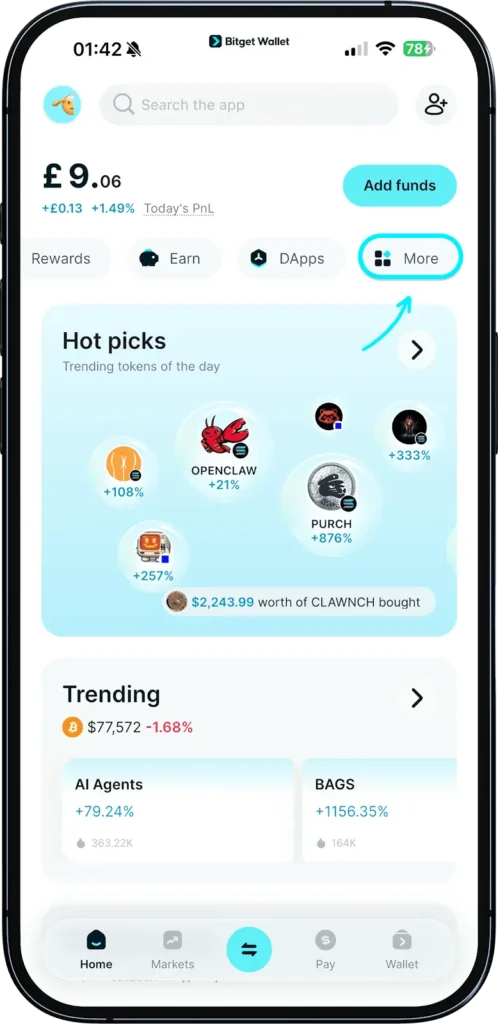
Step 1 – Open Sell Crypto in Bitget Wallet
To begin the process:
- Open Bitget Wallet
- Navigate to Home → More → Sell Crypto
- Select USDT from your wallet balance
- Choose the correct network (TRC20 USDT or ERC20 USDT)
- Confirm available balance before you sell USDT
Selecting the correct network helps minimize gas fees and ensures successful crypto to fiat conversion.
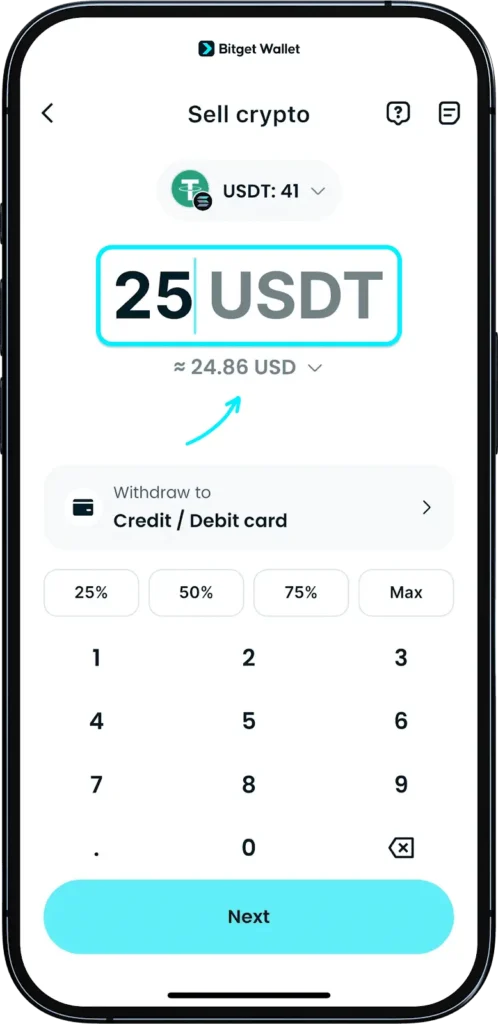
Step 2 – Enter Amount and Convert USDT to USD
Next:
- Enter the amount of USDT you want to sell
- Preview the real-time exchange rate
- Convert USDT to USD or supported fiat
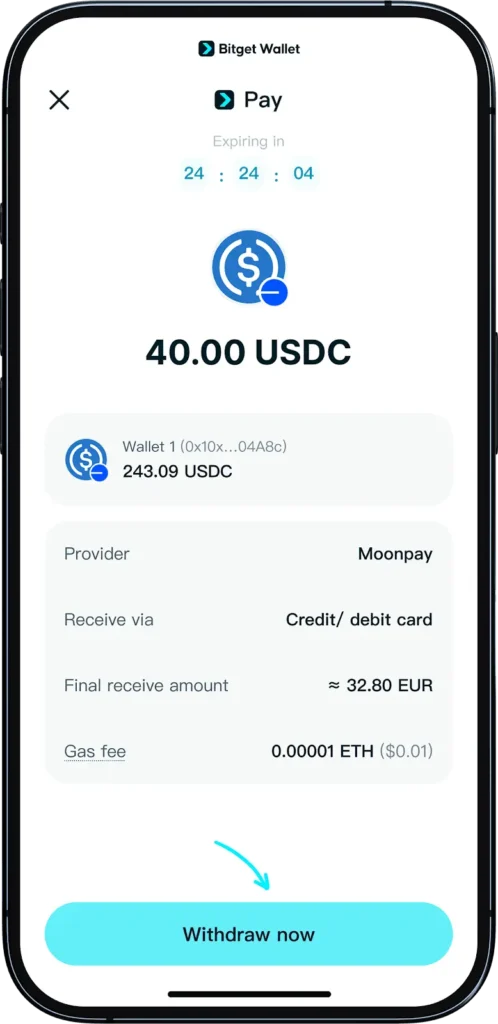
- Review the estimated payout amount before confirming
This step ensures transparency in conversion rates and allows you to evaluate potential USDT withdrawal fees before proceeding.
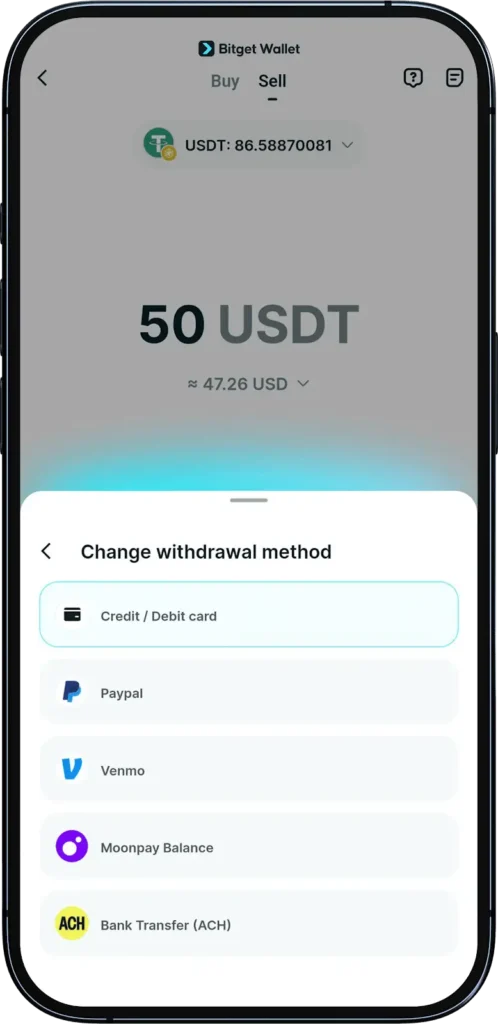
Step 3 – Choose Withdrawal Method
After conversion, choose how you want to receive fiat:
- Bank card transfer
- Visa / Mastercard payout
- Supported digital payment rails
The selected method determines processing speed and possible settlement fees.
Step 4 – Complete KYC Verification
Before finalizing the withdrawal:
- Submit required identity documents
- Complete selfie or verification steps
- Wait for approval confirmation
KYC verification is mandatory for most USDT off-ramp providers due to AML compliance requirements.
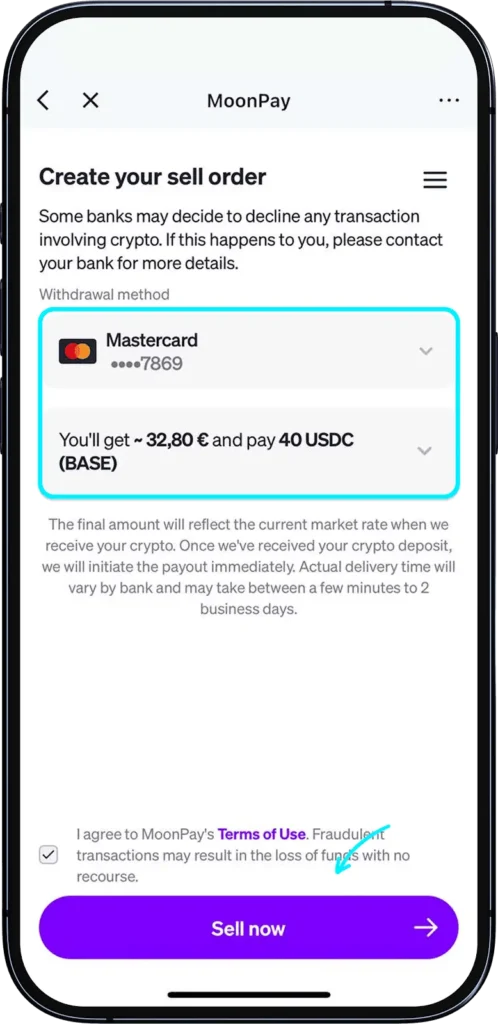
Step 5 – Confirm USDT to USD Bank Transfer
Once verified:
- Confirm transaction details
- Approve the conversion
- Track the USDT to USD bank transfer status
Settlement typically takes minutes to several hours, though some bank transfers may require 1–3 business days depending on region and compliance checks.
USDT Withdrawal Fees: What Costs Should You Expect When Cashing Out USDT?
Cashing out USDT involves several types of fees depending on the blockchain network used, the conversion platform handling the trade, and the banking infrastructure that processes the final payout. Understanding where these costs occur helps users estimate the real amount they will receive after completing a withdrawal.
Blockchain Network Fees
Before USDT can be converted into fiat currency, it must be transferred from a wallet to the exchange or off-ramp platform. This transaction requires a blockchain network fee.
The cost varies depending on the network used:
- TRON (TRC20) — commonly used for USDT transfers because transaction costs are typically low and confirmation times are fast
- Ethereum (ERC20) — fees depend on network gas prices and may increase during periods of heavy blockchain activity
- BNB Smart Chain (BEP20) — usually lower than Ethereum but slightly higher than TRON in some cases
Selecting the correct network is important because the receiving platform must support the same blockchain standard.
Conversion or Trading Fees
Once the USDT deposit reaches the platform, it must be converted into fiat currency such as USD or EUR. Platforms charge a fee for executing this conversion.
Depending on the platform structure, this cost may appear as:
- Trading fees on exchanges where USDT is sold through a market order
- Conversion spreads used by off-ramp services that quote a direct crypto-to-fiat rate
- Liquidity spreads when the platform aggregates prices from multiple liquidity providers
The effective cost of conversion can vary depending on market liquidity and the size of the transaction.
Bank Transfer Fees
After the stablecoin has been converted into fiat currency, the platform sends the funds through banking infrastructure. Banks or payment processors may charge additional settlement fees.
Common banking payout methods include:
- ACH transfers used within the United States
- SEPA transfers used within the European Union
- Wire transfers used for international settlements
Each payment rail has different processing costs and settlement times depending on the country and banking provider.
USDT Withdrawal Time: How Long Does Cashing Out USDT Take?
The time required to receive fiat after cashing out USDT can vary depending on the withdrawal platform, the payment method selected, and regional banking infrastructure. While blockchain transfers themselves are usually completed quickly, the overall withdrawal timeline is often determined by the platform’s processing policies and the banking network handling the final payout.
In many situations, the fiat transfer stage introduces the longest delay because traditional banking systems operate within scheduled settlement windows rather than real-time processing.
Typical withdrawal timelines may look like this:
| Withdrawal Method | Typical Processing Time |
| Crypto off-ramp payout | Minutes to several hours |
| ACH bank transfer (U.S.) | 1–3 business days |
| SEPA bank transfer (EU) | 1–2 business days |
| International wire transfer | Same day to several business days |
Additional factors can also affect the total withdrawal time, including:
- Account verification status on the platform
- Internal risk or compliance reviews
- Bank operating hours and holidays
- Transaction size and payout currency
Because of these variables, the time required to cash out USDT can range from a few minutes to several business days, depending on the infrastructure used for the withdrawal.
Best USDT Wallet for Cashing Out USDT: Securely Store Stablecoins Before Withdrawal
Before initiating a USDT cashout or bank withdrawal, many users store their funds in a self-custodial wallet. This allows them to verify transaction details, select the correct blockchain network, and maintain full control of private keys before sending assets to an exchange or off-ramp platform that converts USDT into fiat.
A reliable USDT wallet should support several features that help streamline the withdrawal process:
- Multi-chain USDT compatibility, including networks such as TRON (TRC20), Ethereum (ERC20), and BNB Smart Chain
- Private key ownership, ensuring users maintain custody of their assets
- Secure transaction verification, allowing users to confirm addresses and network selections before transferring funds
- Direct transfers to exchanges or off-ramp services that support withdrawing USDT to bank accounts
The Best USDT Wallet typically provides these capabilities while allowing users to manage stablecoins across different blockchain ecosystems before initiating a fiat withdrawal.
One example is Bitget Wallet, a multi-chain self-custodial wallet used by 90 million+ global users. It supports 130+ blockchains and over 1 million tokens, allowing users to manage USDT across networks such as TRON, Ethereum, and BNB Smart Chain before transferring funds to exchanges or off-ramp platforms for conversion into fiat currency.
Cashout USDT vs Holding USDT: When Should You Withdraw USDT to a Bank Account?
Deciding whether to cashout USDT into fiat or continue holding stablecoins depends on how the funds will be used. While USDT is commonly withdrawn to bank accounts for spending or financial transfers, many users keep stablecoins on-chain to maintain liquidity within the crypto ecosystem.
Several factors influence the decision to withdraw USDT.
Liquidity Requirements
Users often cash out USDT when they need funds in traditional banking systems for expenses, investments, or transfers that require fiat currency.
Market Conditions
Stablecoins are frequently used as a temporary store of value during periods of cryptocurrency market volatility. Some traders prefer holding USDT until they re-enter the market.
Payment or Banking Needs
USDT withdrawals are common when users need to:
- move funds to a bank account
- convert trading profits into fiat currency
- transfer money through traditional financial systems
On-Chain Opportunities
Keeping USDT on-chain may be preferable when users plan to:
- continue trading digital assets
- provide liquidity on decentralized exchanges
- participate in DeFi lending or yield strategies
Understanding these factors helps determine whether withdrawing USDT to a bank account or maintaining stablecoins on-chain is the more suitable option.
Related Reading on USDC Earn
If you’re exploring USDC earn opportunities — from understanding APY mechanics to evaluating liquidity and smart contract exposure — these guides will help you assess yield potential and risks more clearly.
🔹 Understanding USDC & Stablecoin Basics
- What Is USDC the Stablecoin
- USDC vs USDT: What’s the Difference? Investor’s Guide
🔹 USDC Earn Explained
- USDC Earn Explained: A Complete Guide to Yield, APY, and Risk
- USDC Earn Returns: How to Evaluate APY, Liquidity, and Smart Contract Exposure
- USDC Yield: How to Earn Yield on USDC Safely in 2026?
- Best USDC Yield Strategies: How to Earn Stablecoin Interest?
- USDC Yield and Passive Income: How Much Capital Do You Need?
- USDC Yield vs Traditional Savings: How Stablecoin Earn Plus Structures Passive Income?
🔹 Stablecoin Earn Plus & Yield Options
- Stablecoin Earn Plus: What USDC Earn Is and How to Start Generating Yield
- Stablecoin Earn Plus: Earn Up to 10% APY with Flexible Withdrawal
Conclusion
Cashing out USDT requires converting the stablecoin into fiat currency through an exchange or crypto off-ramp platform that supports bank withdrawals. After the conversion is completed, the fiat balance can be transferred through traditional banking systems such as ACH, SEPA, or wire transfers.
While the process itself is straightforward, factors such as network selection, platform fees, and banking settlement times can influence the overall withdrawal experience. Preparing assets in a secure wallet environment before initiating the transfer helps ensure accurate transactions and smoother access to fiat payouts.
👉 Download Bitget Wallet to securely store, manage, and transfer USDT across 130+ blockchains before cashing out to fiat.
CTA
FAQs
1. Can you cash out USDT to a bank account?
Yes. USDT can be converted into fiat currency through crypto exchanges or off-ramp platforms that support bank withdrawals. After selling USDT for fiat such as USD or EUR, the funds can be transferred to a bank account through payment networks like ACH, SEPA, or wire transfer.
2. What is the easiest way to cashout USDT?
The easiest way to cash out USDT is by transferring the stablecoin to a platform that supports crypto-to-fiat conversion. After converting USDT into fiat currency, users can withdraw the funds to a linked bank account through the platform’s supported payout methods.
3. Which networks support USDT transfers for withdrawals?
USDT is available on multiple blockchains, but the most commonly used networks for withdrawals include:
- TRON (TRC20)
- Ethereum (ERC20)
- BNB Smart Chain (BEP20)
The selected network must match the deposit network supported by the exchange or off-ramp platform.
4. Is identity verification required to withdraw USDT to a bank account?
Most platforms require KYC (Know Your Customer) verification before enabling fiat withdrawals. This typically involves confirming identity with a government-issued ID and linking a bank account to comply with financial regulations.
5. What is the difference between converting USDT and withdrawing USDT?
Converting USDT refers to exchanging the stablecoin for fiat currency such as USD or EUR. Withdrawing USDT to a bank account occurs after this conversion, when the fiat balance is transferred through traditional banking systems.
Risk Disclosure
Please be aware that cryptocurrency trading involves high market risk. Bitget Wallet is not responsible for any trading losses incurred. Always perform your own research and trade responsibly.