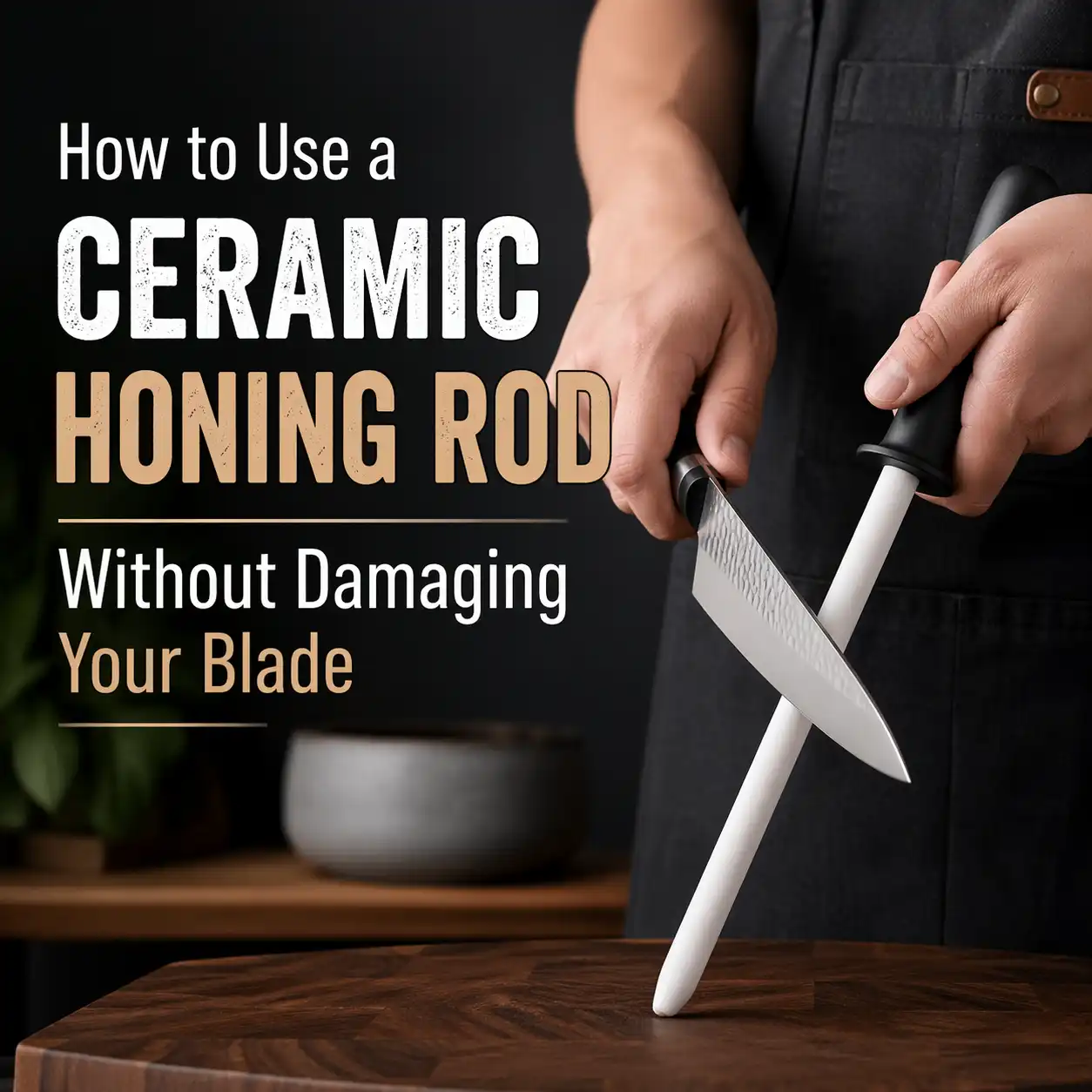
Nothing stalls kitchen prep quite like a dull knife. Consistent honing keeps the cutting edge aligned and performing at its best. That said, poor technique does more harm than good, leaving chips or scratches on an otherwise fine blade. Ceramic rods provide a gentler, more refined option compared to traditional steel, yet they still require careful handling. This guide walks through the key steps, frequent errors, and practical habits that protect a blade during every honing session.
Why Ceramic Rods Differ From Steel
A steel honing rod straightens a blade’s edge through direct friction against a softer metallic surface. Ceramic versions operate on a different principle. Their material is harder than most knife steels, so they lightly remove metal while also realigning the bevel. That dual function makes them highly effective, but it also leaves less room for careless form.
A reliable ceramic honing rod delivers a fine, uniform grit suited to both European and Japanese knives. Because the surface is extremely rigid, even minor lapses in angle or force can score the blade. Grasping this distinction early on sets the foundation for safe, productive use.
Choosing the Right Angle
European-style knives generally perform best at a 15 to 20 degree honing angle. Japanese blades call for a narrower angle, often between 12 and 15 degrees. Matching the rod’s contact angle to the factory bevel matters more than most people realize.
A Simple Way to Find the Angle
Position the knife perpendicular to the rod. That gives a 90-degree starting point. Halving it twice brings the blade close to 22 degrees. A slight inward tilt from there lands within the 15 to 20 degree range. Running through this visual check before each session trains the hands to find the correct position by feel.
Controlling Pressure
Excessive force is the single most common cause of blade damage on a ceramic rod. Unlike steel, ceramic does not flex or absorb impact. Too much pressure concentrates stress right on the cutting edge rather than spreading it across the surface.
A practical rule: let the weight of the knife do the work. The blade should glide along the rod with minimal resistance. If the contact produces a harsh, gritty sound, that signals too much downward force. Pulling back immediately prevents unnecessary wear. Light, patient strokes always outperform heavy-handed ones.
Proper Stroke Technique
Begin at the heel and sweep the blade along the rod toward the tip in one fluid motion. Each pass should engage the full length of the cutting edge. Alternate sides after every stroke so both faces of the bevel receive equal attention.
Speed and Rhythm
Rushing through strokes increases the risk of slipping or uneven pressure distribution. Slow, intentional passes allow far greater control over contact and angle. A calm, steady tempo works best. Five to ten alternating passes per side handle most routine maintenance needs without overdoing it.
Mistakes That Cause Damage
A few recurring errors account for most honing-related blade problems. Spotting them early saves money on repairs and extends the life of a good knife.
Incorrect Angle
Holding the blade too flat grinds into the side of the knife rather than the edge. Holding it too steeply shaves metal off the apex without straightening anything. Either habit weakens the cutting edge over repeated sessions.
Too Much Force
Bearing down hard on a ceramic surface creates micro-chips along the bevel. Those tiny fractures compound with each use if the pattern goes uncorrected.
Neglecting Rod Maintenance
Metal filings accumulate on ceramic rods over time. A dirty rod drags those particles across the blade, producing fine scratches on its surface. A quick wipe with a damp cloth after each session keeps the grit clean and functional.
When Honing Is Not Enough
Honing preserves an edge that already has some sharpness. It cannot bring back a blade that has gone truly dull or sustained visible damage. If a knife still tears or crushes food after a careful honing session, it likely needs full sharpening on a whetstone or through a professional service. Repeating the honing process on a blade past that point only compounds the uneven wear.
Conclusion
Ceramic rods are a valuable part of any knife care routine, bridging the gap between full sharpening sessions. Three things determine success: the right angle, minimal pressure, and controlled stroke form. Cleaning the rod after each use goes a long way toward protecting both the tool and every blade it touches. A bit of patience and attention to these basics keeps a razor-sharp edge intact, session after session.