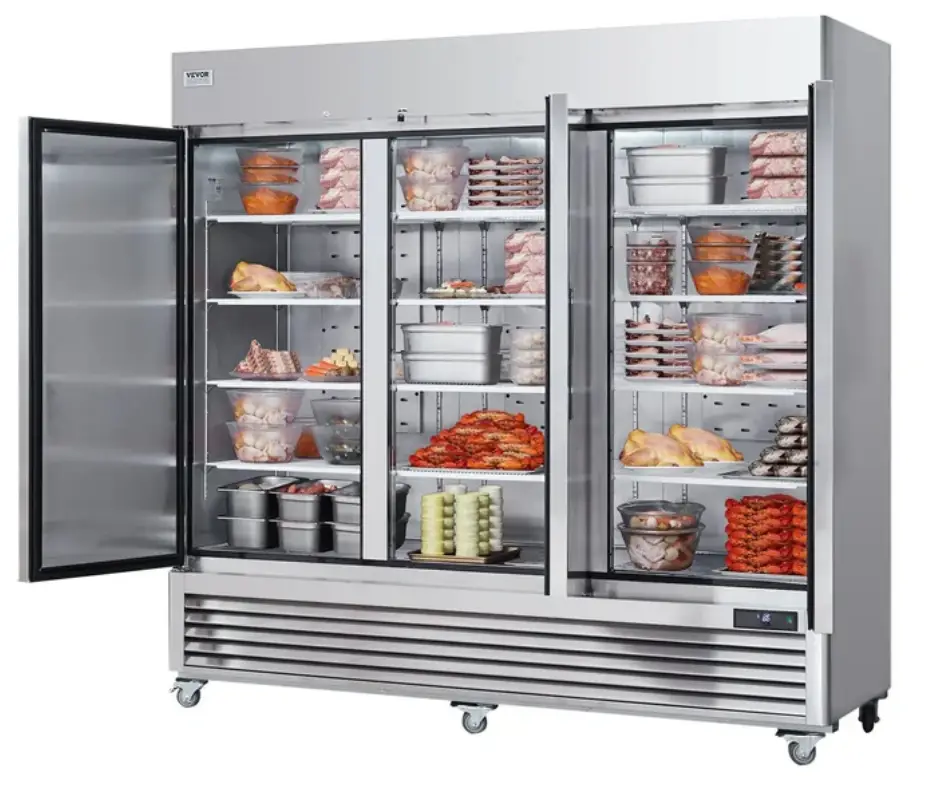
In Germany, the logistics and warehousing sector is undergoing continuous transformation due to stricter food safety regulations, expanding cold chain requirements, and increased demand for temperature controlled storage. Industrial upright freezers play a critical role in maintaining product integrity across sectors such as food distribution, pharmaceuticals, and chemical storage. For warehouse managers and logistics professionals, reliable freezing systems are essential for ensuring compliance, minimizing losses, and maintaining operational continuity.
Large capacity industrial upright freezers, such as commercial reach in units, provide structured storage and controlled temperature environments. Their application extends beyond storage to include inventory management and workflow optimization within industrial settings.
Technical Overview and Operating Principles
Refrigeration System Fundamentals
Industrial upright freezers operate using a vapor compression refrigeration cycle. This process involves a refrigerant circulating through a closed system where it absorbs heat from the interior and releases it externally. Key components include a compressor, condenser, expansion valve, and evaporator.
The controlled removal of heat maintains internal temperatures typically ranging from minus thirteen to minus five degrees Fahrenheit. This range is suitable for long term preservation of perishable goods.
Common Use Cases in Industrial Logistics
Upright freezers are widely used in:
· food storage warehouses requiring organized shelving systems
· pharmaceutical storage requiring stable low temperature conditions
· distribution centers handling frozen goods
· industrial kitchens and processing facilities
Efficiency, Safety, and Productivity in Cold Storage
Efficiency in cold storage directly impacts operational costs and product quality. Upright freezers contribute to efficiency through structured storage and consistent temperature control.
· reduced product spoilage due to stable conditions
· faster access through organized shelving
· lower energy waste when properly maintained
Safety is equally important. Improper temperature control can lead to product degradation or regulatory non compliance. Reliable equipment reduces these risks and supports continuous operations.
Technical Requirements and Capability Considerations

Selecting an industrial upright freezer requires evaluation of several technical factors:
· storage capacity and internal configuration
· temperature control range and accuracy
· power requirements and compatibility with facility infrastructure
· material quality, such as stainless steel for durability and hygiene
Operators must also consider workflow integration. Placement within a warehouse affects accessibility and efficiency.
Factors Affecting Performance and Reliability
Several variables influence the performance of upright freezers:
· ambient temperature in the storage environment
· frequency of door openings
· loading practices and airflow obstruction
· maintenance of condenser and evaporator components
Proper loading practices are essential. Overloading shelves can restrict airflow and reduce cooling efficiency.
Safety Considerations and Best Practices
Cold storage environments introduce specific safety challenges. Best practices include:
· regular monitoring of internal temperature levels
· use of protective clothing for low temperature handling
· routine inspection of door seals and insulation
· clear labeling of stored materials
Additionally, facilities should implement emergency procedures for equipment failure to prevent product loss.
Equipment, Tools, and Accessories
Efficient use of upright freezers requires supporting equipment:
· temperature monitoring systems for continuous tracking
· adjustable shelving for flexible storage
· mobility features such as wheels for repositioning
· data logging tools for compliance documentation
Integration with warehouse management systems can further improve traceability and inventory control.
Advantages and Limitations
Advantages
· organized vertical storage reduces floor space usage
· consistent temperature control supports product quality
· ease of access improves workflow efficiency
Limitations
· energy consumption can be significant if not optimized
· requires stable power supply
· limited capacity compared to large walk in systems
Real World Application Example
A mid sized distribution center in Germany implemented upright freezers to support frozen food logistics. By organizing products across adjustable shelves, the facility improved picking efficiency and reduced handling time. Temperature monitoring systems ensured compliance with regulatory standards.
The result was improved workflow consistency and reduced product loss due to temperature deviations.
Conclusion and Future Trends
TMG Industrial upright freezers are essential components of modern cold chain logistics. They support efficient storage, maintain product integrity, and enable compliance with regulatory requirements. Proper selection, operation, and maintenance are critical for achieving optimal performance.
Future developments are expected to include improved energy efficiency, integration with digital monitoring systems, and enhanced automation. These advancements will further support the evolving needs of logistics and warehousing operations.