Over 77 million US households have dropped cable TV. By 2026, that number is projected to exceed 80 million. The average cable bill reached $147 per month in 2024, adding up to more than $1,700 per year.
The global IPTV market, by contrast, is growing at up to 18.69% annually and is projected to reach between $133 billion and $330 billion by the early 2030s. The numbers point in one direction.
IPTV vs Cable TV is one of the most searched television comparisons today, and for good reason. Viewers want to know what they gain, what they give up, and whether switching is worth it. This guide breaks down how the two technologies actually differ, so you can decide which fits your home.
What Is Cable TV?
Cable television delivers content through a physical network. Coaxial or fiber-coaxial cables run from a provider’s distribution facility to your home, and a set-top box decodes the incoming signal into the channels you see on screen.
All content arrives as a live broadcast stream. Channels follow a fixed schedule, and you watch whatever is currently airing. Most cable packages include an optional DVR, allowing you to record programs and view them later.
Providers typically bundle cable TV with internet and phone services under one contract (usually 12 to 24 months), with equipment rental fees billed monthly on top of the base rate. Getting started requires a professional technician visit.
The core strength cable TV has always offered is independence from your broadband connection. The signal travels over a dedicated physical line, so it holds steady even during peak internet usage hours. Weather-related disruptions are rare, and service interruptions are uncommon.
What Is IPTV?
IPTV stands for Internet Protocol Television. It delivers video content as compressed digital data packets over your broadband connection, using the same underlying method as any other streaming service, rather than sending a broadcast signal through physical cables.
This approach opens three distinct ways to watch: live TV channels streaming in real time, video on demand (VOD) for films and series you choose yourself, and time-shifted viewing (catch-up TV) that lets you access programs after they originally aired.
IPTV works on virtually any internet-connected device. In the Netherlands, providers offering Nederlandse IPTV have made switching accessible, with broad channel selections, VOD libraries, and WhatsApp-based support for quick setup assistance. No technician visit is required, and most services activate immediately after payment.
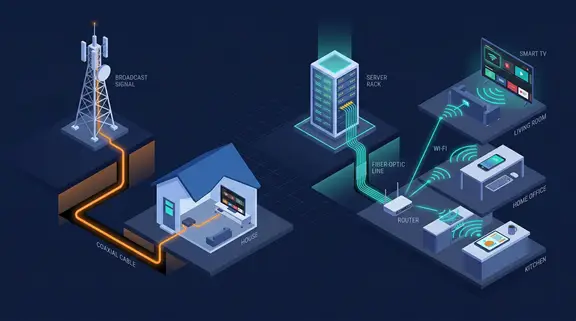
IPTV vs Cable TV: The Key Differences
Cost and Pricing
Cable TV pricing has become a serious issue for subscribers. The average US bill reached $147 per month in 2024, and that figure frequently excludes equipment rental charges and installation fees added on top. Contracts typically lock you in for one to two years, with early cancellation penalties.
IPTV operates on a simpler model. Subscriptions typically range from $10 to $30 per month, with no hardware costs, no installation fees, and no long-term commitment. A monthly IPTV Abonnement lets you pay for exactly what you need and cancel whenever you choose. That combination of lower cost and zero contract is why 86.7% of cord-cutters list price as the primary reason they left cable.
Channel Selection and Content
Cable TV bundles hundreds of channels together. Most subscribers watch a fraction of them but pay for the full package regardless. Sports channels, shopping networks, and regional channels you never use are all included in the base rate.
IPTV gives you a choice. You select packages based on what you actually watch: local channels, international content, sports tiers, or on-demand libraries. Time-shifted viewing removes the dependency on a broadcaster’s schedule entirely. Miss a program? Find it in the catch-up section and watch it on your timeline.
Picture and Sound Quality
Both technologies deliver strong quality under the right conditions. Modern cable TV supports HD as standard, and fiber-coaxial infrastructure provides consistent day-to-day performance largely unaffected by external variables.
IPTV supports HD and 4K streaming. For smooth 4K playback, a minimum broadband speed of 40 Mbps is recommended. Standard HD runs well on connections of 25 Mbps or above. Quality is directly tied to your internet connection: stable broadband produces sharp, reliable images, while a slow or congested connection can introduce buffering and quality drops.
Device Flexibility
Cable TV is built around the television set. Your viewing is fixed to one screen in one room, and extending to additional rooms increases your monthly cost.
IPTV runs on any internet-connected device: smart TV, smartphone, tablet, or laptop. Many subscriptions allow multiple simultaneous streams, so different household members can watch different content on different devices at the same time.
Reliability and Stability
Cable’s biggest practical advantage is consistent performance. Because the signal travels over a dedicated physical line rather than the public internet, it holds steady regardless of how busy your broadband network is. Live sports and time-sensitive news play without interruptions.
IPTV depends entirely on your broadband connection. If the internet goes down, your TV does too. With a stable connection of 25 Mbps or above for HD viewing, modern IPTV services deliver reliable performance. As broadband infrastructure has improved across the Netherlands and broader Europe, buffering has become far less frequent with established providers.
Installation and Setup
Getting cable TV running takes time. A technician must schedule a visit, run the required cabling, and install the equipment. From order to activation, the process typically spans one to two days.
IPTV takes minutes to set up. Download an app or configure a streaming device, enter your subscription credentials, and you are watching immediately. No hardware shipment, no technician, no waiting.
Legal Considerations
IPTV as a technology is fully legal. Whether a specific service is legitimate depends entirely on the provider.
Licensed IPTV providers hold proper agreements that authorize them to distribute the channels and content they carry. When evaluating a service, look for transparent terms and conditions, real contact information, and a verifiable business presence. A provider with a clear track record of customer reviews and accessible support is far more reliable than an anonymous service offering unusually low prices with no traceable identity.
IPTV vs Cable TV: Quick Comparison Table
| Feature | IPTV | Cable TV |
| Monthly Cost | Approx. $10 to $30 | ~$147 average (US, 2024) |
| Contract | No (month-to-month) | Typically 12 to 24 months |
| Device Flexibility | Any internet-connected device | Primarily TV with set-top box |
| Channel Selection | Customizable packages | Fixed bundles |
| Reliability | Dependent on broadband speed | Independent of internet |
| Setup | Self-install, minutes | Professional visit required |
| 4K Support | Yes (40 Mbps recommended) | Limited, varies by provider |
| Internet Required | Yes | No |
Which One Should You Choose?
Cable TV still makes sense in specific situations. If your broadband connection is slow or unreliable, IPTV quality will suffer noticeably. Rural areas with limited internet infrastructure remain a genuine case for cable’s independence from broadband. Some viewers also prefer the familiar structure of a channel guide and see no reason to change a setup that works for them.
For most households with a reliable broadband connection, IPTV offers a better overall deal. Lower monthly costs, no contract, flexible multi-device access, and far greater content variety are hard to argue with, particularly when the IPTV market is expanding at nearly 19% annually.
If you are based in the Netherlands and considering the switch, verified customer reviews are the most practical starting point before committing to any provider. Platforms like Beste IPTV Nederland collect real subscriber feedback covering stream stability, setup experience, and support response times. Reading those reviews gives you a clearer picture than any provider’s own marketing materials ever will.
Frequently Asked Questions
Is IPTV cheaper than cable TV?
Yes, in most cases. IPTV subscriptions typically range from $10 to $30 per month with no installation fees or long-term contracts. The average US cable TV bill reached $147 per month in 2024, and that figure often excludes equipment rental charges billed separately on top.
What internet speed do you need for IPTV?
For standard HD streaming, a minimum of 25 Mbps is recommended. For 4K content, aim for at least 40 Mbps. A wired Ethernet connection performs more consistently than Wi-Fi for IPTV, especially when watching live programming.
Can IPTV replace cable TV completely?
For most households with reliable broadband, yes. IPTV covers live channels, on-demand content, catch-up viewing, and international programming. The one area where cable still holds an advantage is resilience during internet outages.
Is IPTV legal in the Netherlands?
IPTV is a legal technology. Whether a specific service is legitimate depends on the provider. Licensed services hold proper content distribution agreements and operate with transparent terms and verifiable contact details. Before subscribing, check for real customer reviews and avoid anonymous providers with no traceable business identity.
Which is better for live sports: IPTV or cable TV?
Cable TV has historically been the more reliable option for live sports because of its signal stability. With a fast and consistent broadband connection, a quality IPTV service performs just as well. IPTV also has an edge in access to international sports channels that most cable packages do not carry.
Do you need special equipment for IPTV?
No dedicated hardware is required. IPTV works on smart TVs, smartphones, tablets, and laptops. If you prefer a standalone device, affordable streaming boxes and sticks such as Amazon Fire Stick or Android TV boxes are widely available and compatible with most IPTV applications.
Final Thoughts
The direction of the market is clear. Millions of households are switching from cable every year, drawn by lower costs, flexible device access, and content they can actually choose.
Cable TV is not a bad product. For households with unreliable broadband or a genuine preference for the traditional TV experience, it remains a valid choice. For most viewers with a stable internet connection, IPTV delivers more for significantly less money.
The right choice depends on your broadband speed, your viewing habits, and how much flexibility matters to you.