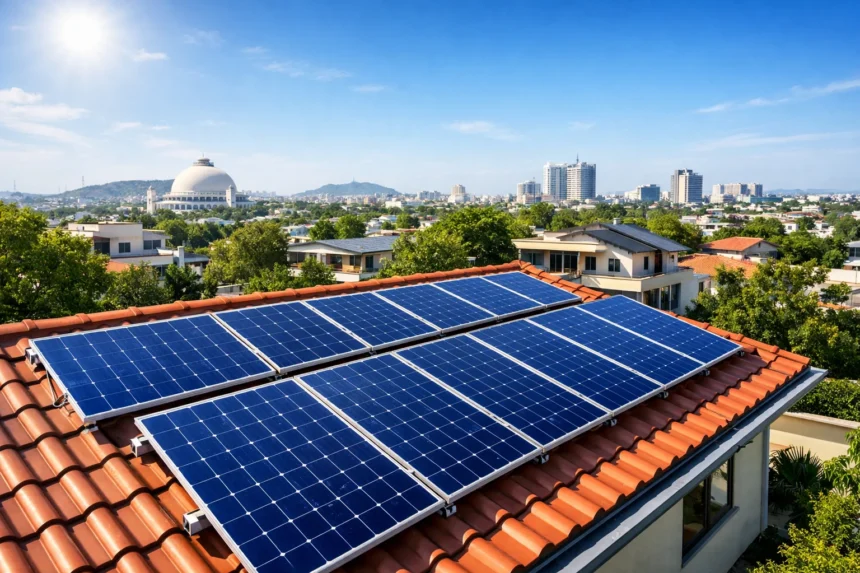
Residential electricity rates continue to climb across the country, prompting many households to look for alternatives to traditional municipal grids. Among the various alternative solutions available, rooftop photovoltaic technology has emerged as the most popular choice for property owners seeking relief from climbing utility overhead. However, determining whether switching to daylight-generated power truly represents the absolute most economical strategy requires a thorough investigation. A realistic financial assessment demands balancing significant initial capital demands against decades of potential utility reductions.
The Upfront Expenditure vs Long Term Returns
Evaluating the true cost of residential clean energy requires moving past simplistic price tags. The total price of an installation encompasses hardware manufacturing, structural engineering, permits, grid connection charges, and professional manual installation. While this initial figure often appears daunting, the long-term math tells a completely different economic story.
Calculating the Financial Amortization Period
The total time required for a sustainable energy system to pay for itself through utility statement reductions is known as the amortization or payback period. For a standard residential property, this transition window usually spans between six and ten years. Once the initial hardware and labor expenses are fully offset by your monthly energy savings, the electricity produced by the rooftop panels becomes essentially free for the remaining lifespan of the system.
Modern components are engineered to retain high operational efficiency for twenty-five to thirty years. This extended operational lifetime guarantees at least fifteen to twenty years of pure financial profit. During this post-payback period, your household remains completely insulated from any future rate hikes imposed by municipal electric suppliers.
Comparing Capital Purchase Against Alternative Financing Options
Paying cash for an installation delivers the highest lifetime return on investment because it completely eliminates interest charges. However, property owners who prefer to preserve their liquid capital can utilize flexible alternatives. Dedicated clean energy loans, municipal property-assessed clean energy programs, and third-party lease agreements allow individuals to lower their monthly overhead without paying large upfront fees.
When structured correctly, the monthly payment on a specialized solar loan is frequently lower than the original utility statement. This creates immediate positive cash flow from the very first month of operation, making the technology financially accessible to homeowners with varying budgets.
How Geographic Location and Regional Infrastructure Distort the Math
The exact microclimate and the legal frameworks established by local governments play a major role in determining if solar constitutes the cheapest energy pathway. Physical sun exposure, state tax rules, and local grid compensation models can radically shift the overall financial outcome of a project.
For example, a home situated in a state with high baseline utility rates and generous sun exposure will achieve a much faster return on investment than a property located in an area with heavily subsidized fossil-fuel grid power. Property owners researching these regional variables often seek localized guidance. Consulting certified solar power companies in Utah or matching regional experts can help clarify specific net metering rules, winter production averages, and local clean energy incentives unique to your territory.
The Vital Contribution of Net Metering Policies
Net metering programs serve as a crucial economic link between a residential array and maximum household savings. During peak daylight hours, rooftop panels frequently produce more electricity than a home consumes. Net metering frameworks require utility providers to credit the property owner for this surplus energy fed back into the regional grid.
These accumulated credits are then used to offset the cost of electricity pulled from the traditional grid during the night or during heavily overcast winter periods. In areas where utilities offer full retail rate credits, the financial return increases significantly. Conversely, in territories where net metering has been altered or reduced, integrating a home battery storage system becomes necessary to retain the financial value of your excess power.
Comparing Photovoltaic Systems to Other Savings Strategies
While generating your own electricity is highly effective, it should not be viewed as the sole method for lowering utility bills. Homeowners must compare the return on investment of a rooftop system against aggressive energy efficiency modifications.
The Power of Efficiency Upgrades First
In many instances, spending money on minor structural modifications can lower total power consumption at a fraction of the cost of new generation hardware. Adding advanced attic insulation, sealing leaky window frames, upgrading to high-efficiency heat pumps, and switching to modern smart thermostats can reduce total household energy demands by up to thirty percent.
Lowering your overall energy baseline first is a highly strategic move. By reducing your daily kilowatt-hour demand through simple efficiency measures, you can install a significantly smaller and less expensive solar panel system while still achieving complete energy independence.
Conclusion
For the vast majority of property owners living in regions with moderate to high electricity rates, transitioning to a rooftop solar installation represents the cheapest long-term method for powering a household. While simple energy efficiency upgrades provide immediate low-cost relief, they cannot completely eliminate a utility bill. Photovoltaic technology provides a unique opportunity to stop buying power from an outside vendor and start generating equity on your own roof, locking in predictable, low-cost energy for decades to come.