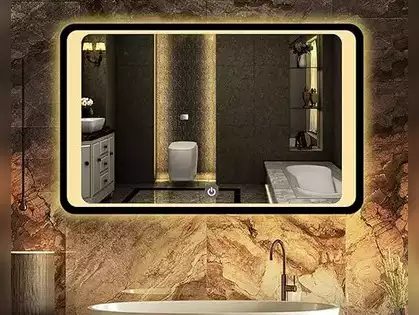
The LED bathroom mirror has rapidly become the defining feature of the contemporary bathroom, seamlessly merging sophisticated lighting design with practical utility. Unlike standard mirrors that rely on external fixtures, an integrated LED mirror provides focused, shadow-free task lighting, enhancing visibility for grooming while simultaneously contributing to the room’s ambient illumination and modern aesthetic.
Selecting the right LED bathroom mirror requires an understanding of electrical safety (IP ratings), the impact of lighting quality (CRI and Kelvin), and key functional features such as demisters and touch controls. This extensive guide breaks down the technology, design variations, and safety standards necessary to choose a durable, stylish, and highly functional mirror for the challenging bathroom environment.
Lighting Specifications: The Core of LED Performance
The primary benefit of an LED bathroom mirror is the integrated lighting system, which must meet specific criteria for both safety and effectiveness in a moist environment.
1. Ingress Protection (IP) Rating: The Safety Standard
Due to the presence of water and steam, all electrical fixtures in a bathroom must have an adequate Ingress Protection (IP) rating.
- IP44 (Minimum Standard): This rating protects the electronics from solid objects and water splashing from any direction. This is the minimum required standard for installation in Zone 2 (outside the immediate shower area).
- IP65 and Above: Offers superior protection against strong water jets or direct spray, suitable for installation closer to the shower or bath (Zone 1).
2. Color Temperature (Kelvin) for Ambiance
The color temperature (CCT) of the light significantly influences the mood and function of the space. Most LED bathroom mirrors offer a neutral or cool white light for optimal task performance.
- Task Lighting 5000K to 6500K: Bright, white light that simulates daylight. Ideal for grooming, shaving, and makeup application, as it provides the most accurate color rendering.
- Ambient Lighting (Dimmable/Tunable): Many mirrors feature tunable white technology, allowing the user to switch the light to a warmer, softer 3000K or 4000K for relaxation or night use.
3. Color Rendering Index (CRI) for Accuracy
A high CRI is crucial for any mirror used for cosmetic tasks. A quality LED bathroom mirror should have a CRI of 90 or above to ensure that all colors (skin tones, makeup shades) are displayed accurately.
Design and Illumination Styles
The way the LEDs are integrated dictates the mirror’s aesthetic appeal and how the light is cast upon the user’s face.
1. Backlit (Halo) Mirrors
The LED strips are positioned around the perimeter and shine light onto the wall behind the mirror.
- Aesthetic: Creates a soft, floating “halo” effect, adding ambient mood lighting and depth.
- Function: Excellent for general mood lighting but may not provide optimal illumination directly onto the face.
2. Front-Lit (Integrated Light Bands) Mirrors
The LED strips shine light through the mirror surface via sandblasted or etched light bands within the mirror glass itself.
- Aesthetic: Provides a direct, modern light source within the mirror.
- Function: This is the most effective style for task lighting, as it minimizes shadows cast by overhead lighting, providing an even glow across the face.
3. Full-Sized Mirror Walls
Large LED bathroom mirrors can span an entire wall, often used in double vanity setups. These create a dramatic visual impact, maximizing light reflection and enhancing the perception of space.
Smart Features: Functionality in a Humid Environment
Modern LED bathroom mirrors are often equipped with integrated technology designed specifically to thrive in a high-moisture environment.
1. Demister Pad (Anti-Fog Technology)
This is a small, heated electrical pad adhered to the back of the mirror glass. It heats a section of the mirror surface slightly above the dew point of the surrounding air, preventing condensation and fogging. This feature is essential for immediate usability after a hot shower.
2. Touch Sensors and Controls
High-end mirrors utilize subtle capacitive touch buttons integrated into the glass surface, allowing users to:
- Activate/Deactivate the light.
- Control the brightness (dimming).
- Turn the demister pad on/off.
- Change the color temperature (tunable white).
3. Integrated Accessories and Connectivity
Advanced models may include:
- Digital Displays: Integrated clocks, temperature displays, or even weather updates.
- USB Charging Ports: Conveniently located to power electric shavers or toothbrushes.
- Integrated Magnification: A small, magnified area (often 3X or 5X) seamlessly integrated into the corner of the mirror glass.
Installation and Longevity
Installing an LED bathroom mirror requires electrical expertise, particularly for hard-wired, wall-mounted units.
- Wiring: The wiring must be fully concealed within the wall, and the connection should be made by a qualified electrician to ensure compliance with local building codes and safety regulations (IP rating adherence).
- Longevity: Quality LED strips are highly durable, rated for $50,000$ hours or more. The longevity of the mirror relies on the IP rating protecting the internal electrical drivers and wiring from moisture damage.
- Cleaning: Use a soft, lint-free cloth and a gentle, ammonia-free cleaner to protect the delicate mirror silvering and the anti-fog pad backing.
Conclusion
The LED bathroom mirror is a powerful upgrade, combining essential safety features and superior lighting quality into one elegant package. By ensuring your selection meets the necessary IP standards and offers a high CRI, you guarantee a functional, safe, and sophisticated focal point for your bathroom.