A Mexico hair transplant package is often marketed as an all-inclusive solution for international patients seeking affordable hair restoration. Many individuals traveling from the United States and Canada choose packaged options for convenience, predictable pricing, and simplified travel planning.
However, understanding what is truly included — and what determines long-term results — is essential before making a decision.
Why Packages Are Popular
Mexico has become a leading destination for medical tourism. Cities such as Tijuana and Cancún frequently offer structured packages designed for international patients.
These packages simplify logistics by combining medical and travel arrangements into one plan.
Common reasons patients choose package deals include:
Transparent overall pricing
Airport pickup and transportation
Hotel accommodation
Coordinated scheduling
Post-operative care kits
The goal is to reduce stress and streamline the experience.
What a Mexico Hair Transplant Package Usually Includes
While details vary by clinic, most packages include:
Initial consultation (often virtual)
Hairline design and surgical procedure
Specified number of grafts
Medications for immediate recovery
First wash appointment
Transportation between airport, hotel, and clinic
Hotel stay for 2–3 nights
Some packages may also include follow-up video consultations once the patient returns home.
Patients should confirm whether the surgeon personally performs key steps such as hairline design, graft extraction, and implantation.
What May Not Be Included
Not all costs are always covered. Patients should clarify:
Additional graft fees beyond a certain number
Extra hotel nights
Flight tickets
Extended aftercare products
Future touch-up procedures
Understanding these details prevents unexpected expenses.
Technique Still Matters More Than the Package
Whether included in a package or not, the success of the procedure depends on technique and planning.
Modern clinics in Mexico typically use:
FUE (Follicular Unit Extraction)
DHI (Direct Hair Implantation)
Both methods transplant individual follicular units for natural-looking density.
A well-designed procedure focuses on:
Conservative, age-appropriate hairline placement
Balanced graft distribution
Protection of the donor area
Long-term hair loss planning
A package simplifies travel — it does not guarantee quality.
Recovery Timeline
Recovery after a Mexico hair transplant package follows the same biological process worldwide:
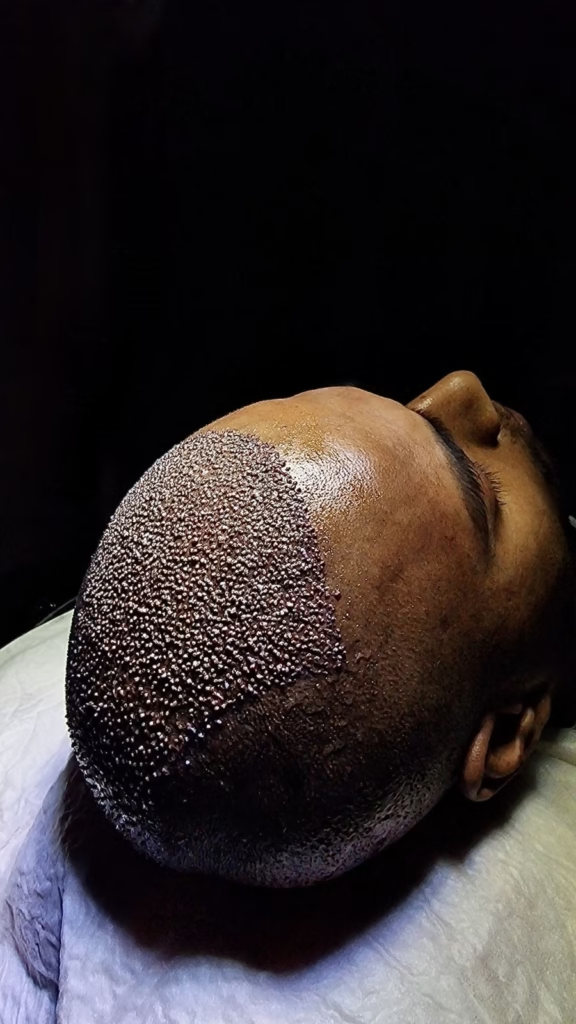
Days 1–3: redness and mild swelling
Weeks 2–4: temporary shedding phase
Months 3–4: early regrowth
Month 6: noticeable density improvement
Months 9–12: final maturation
Most patients stay in Mexico for two to three days after surgery before returning home.
Growth develops gradually, not instantly.
Evaluating a Good Package
When comparing Mexico hair transplant packages, patients should focus on:
Surgeon experience and documented case results
Realistic graft recommendations
Clear communication before travel
Long-term follow-up support
Extremely low-cost packages may reflect high-volume models where technicians perform most of the procedure.
Balanced planning is more important than maximum graft numbers.
Is a Mexico Hair Transplant Package Right for You?
A structured package can be a practical option if:
You prefer predictable pricing
You want coordinated travel arrangements
You understand realistic expectations
You prioritize surgical quality over marketing
When planned carefully and performed by experienced professionals, hair transplant procedures in Mexico can produce natural, age-appropriate results.
The package simplifies logistics — but long-term success always depends on conservative design, proper technique, and respect for biological limits.