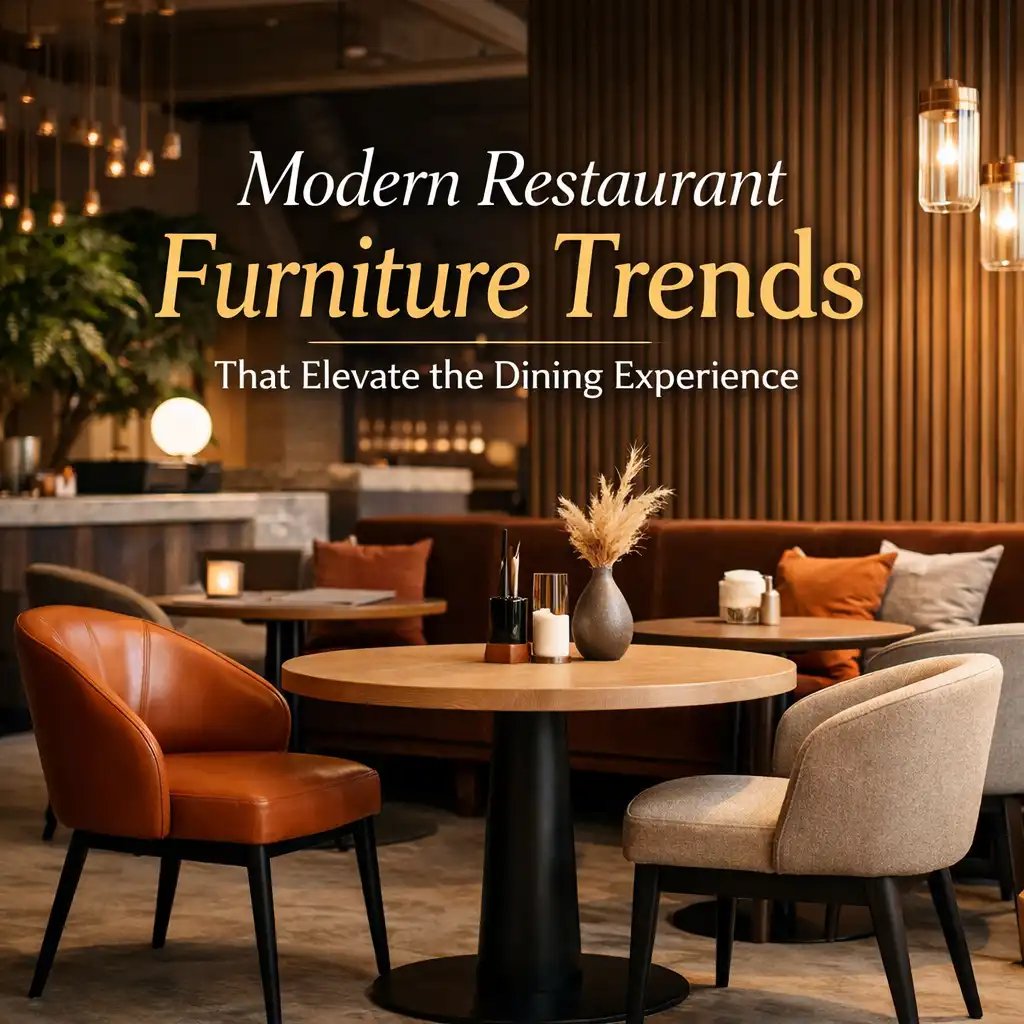
Restaurant furniture does not just fill the entire hall. It influences the vibe guests experience when they arrive and the length of their stay. It creates a sense of liveliness without the raucousness of an excessive layout. The right chair allows one to convert a quick meal to a leisure affair. This is why furniture trends are shifting from focusing solely on “looks” to prioritizing comfort, flow, and flexibility.
Small design decisions can elevate the whole ambiance, from semi-hybrid roles to more palatable materials and clever lighting pairings. In this post, we take a look at modern restaurant furniture trends that allow restaurateurs to focus on providing patrons with more than just a meal, but an experience.
Emphasis on Comfort and Ergonomics
Modern dining areas focus on making visitors as comfy as possible. Padded chairs with back support and arms are finding their way down as well. These things make guests feel at home and help them feel appreciated during their stay.
This design is ergonomic, and it reduces a lot of discomfort, which brings about prolonged visits and customer retention. Everybody knows that an appealing menu is essential for a good restaurant, but now owners realize that comfortable seats are equally important too.
When selecting modern restaurant furniture, comfort and ergonomic design play an important role, since supportive seating helps guests relax and enjoy their dining experience longer.
Eco-Friendly Materials
Modern design still has its demand for sustainability. Many venues use furniture made from recycled or responsibly sourced materials. Fridges made out of reclaimed wood and chairs made out of biodegradable plastics are quite frequent materials. These alternatives are popular with diners who care about the environment. Choosing sustainable items demonstrates a dedication to ethical practices with no need to skimp on aesthetics.
Flexible Seating Arrangements
You can design a flexible floor plan based on the number of people expected in the room. Modular furniture allows you to rearrange quickly to accommodate your different guests, from an intimate dinner to a bigger party, making it a fantastic space saver! Both stacking chairs and foldable tables offer a non-permanent option and an attractive appearance. It also ensures that during high-demand times, the available space is maximized. Guests love the flexibility because it provides a more personalized experience.
Bold Colors and Textures
Bold colors and textures are now being used as staples in the dining room. Colorful textiles, patinated surfaces, textured finishes, and novelty materials play a role in setting the mood. Bold-colored upholstery might transform boring seating into statement pieces. Different elements, such as smooth and shiny metal shine, combined with soft leather, create contrast. These daring decisions spark conversations and stick in people’s memories.
Minimalist Designs
Simplicity still sparks many new ideas. Simplicity—crisp lines, neutral colors, and uncluttered spaces all help create a tranquil atmosphere. It avoids limiting people through cluttered styles, providing a sense of decorum and tranquillity with its offerings. It also helps keep the attention on the food and interaction. A simple design also allows your staff to clean and maintain many parts of the building easily.
Multi-Functional Pieces
In the modern dining spaces, efficiency is key. Use multi-functional furniture—benches with built-in storage are great for creating more utility. Flexible tables change shape, size, and height, serving different needs over 24 hours. That is valuable in smaller venues where space is limited. Aesthetic design is paired with functionality.
Integration of Technology
Furniture with integrated technology is another 21st-century approach to furniture design. The design incorporates wireless charging stations at every table for the convenience of guests. There are seat selections with power outlets for personal device charging. Integrated lighting is excellent for setting the mood for any occasion. These considered additions not only make for an overall better dining experience, but they also meet the needs of the modern patron.
Mixing Vintage and Modern Elements
A mix of retro and sleek, modern designs makes for an interesting dining area. Classic combinations such as wooden chairs and metal tables create an interesting dichotomy. Antique lamps and reclaimed benches serve as warm and nostalgic vintage accents. Gently blending the old and the new evokes an ambiance that is both approachable and refreshing. Here, the trend attracts the guests with versatility in style.
Prioritizing Accessibility
Creating a welcoming experience for every guest is more vital than ever. Inclusive furniture is continuing to grow in priority. Table heights can vary, and gaps between seats can widen. Accessible design reflects responsibility and care for each guest. This is a key area where planning can create loyalty and word of mouth.
Conclusion
Smart furniture selections can enrich the meal experience considerably. Guest satisfaction is the result of various contributing factors, including factors such as comfort, sustainability, flexibility, and style. But increasingly, furniture is not only functional, but it also needs to represent the brand values and character of the venue. These trends shape an environment for restaurants that welcomes diners and encourages them to be comfortable and return.