Not all private schools are created equal — and not all of them are trying to accomplish the same thing. Beneath the broad category of private education lies a rich and genuinely diverse landscape of philosophical approaches, each with its own theory of how children learn, what education is for, and what a well-educated human being looks like at the end of the process. For parents accustomed to the familiar rhythms of traditional schooling — textbooks, grades, standardized tests, teacher-led instruction — encountering Montessori classrooms where children move freely and choose their own work, or Waldorf schools where formal reading instruction doesn’t begin until age seven, can feel disorienting. Understanding these models on their own terms, rather than measuring them against the traditional template, is the essential first step toward making a genuinely informed choice. Alongside these philosophically distinct approaches sits the IB program — a rigorous, globally recognized framework that occupies its own unique position in the private school landscape and is increasingly the curriculum of choice for families seeking academic excellence with genuine intellectual depth.
Core Philosophy of Each Model
Every alternative educational model begins with a theory of the child — a set of beliefs about how young people naturally learn, what they need from their environment, and what gets in the way of genuine development.
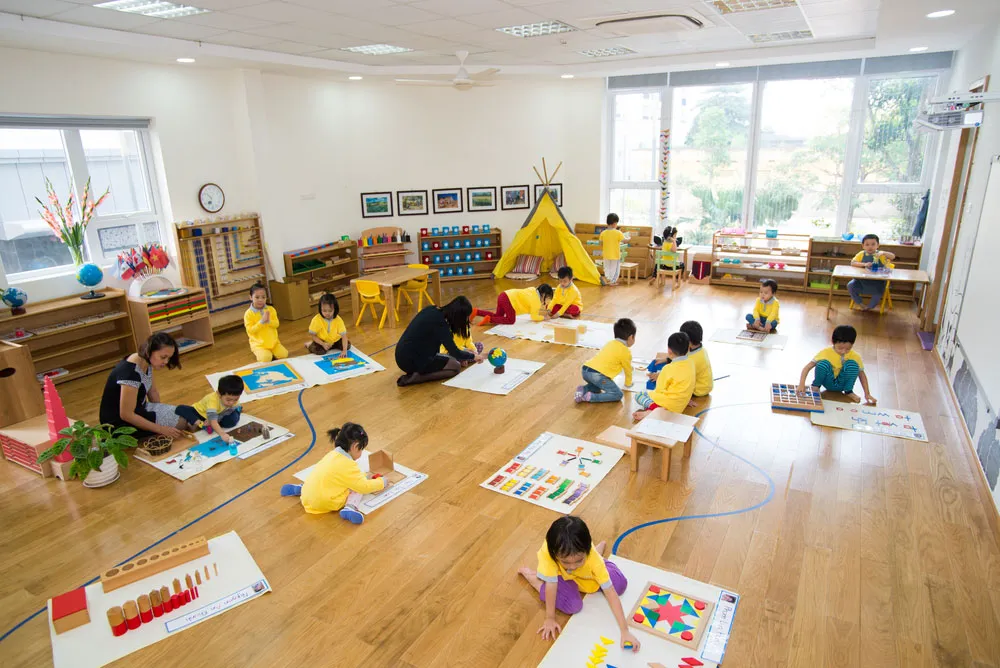
The Montessori method, developed by Italian physician and educator Maria Montessori in the early twentieth century, begins from the observation that children are intrinsically motivated learners who, given the right environment and materials, will direct their own education with remarkable effectiveness. Montessori classrooms are carefully prepared environments containing specialized materials designed to make abstract concepts concrete and sensory. Children work at their own pace, choose their own activities within a structured framework, and are grouped in mixed-age classes that create natural mentorship dynamics. The teacher’s role is not to instruct but to observe, guide, and introduce new materials at the moment of each child’s greatest readiness.
The Waldorf model, founded by Austrian philosopher Rudolf Steiner in 1919, takes a developmental approach grounded in a rich philosophical framework. Steiner believed that human development proceeds through distinct seven-year phases, each with its own characteristic mode of learning and appropriate educational response. In the first phase — birth to seven — learning is primarily through imitation and sensory experience. Formal academic instruction is deliberately withheld until the second phase begins at around age seven, when the child’s capacity for conceptual thinking has matured sufficiently to engage with it productively. The Waldorf curriculum is saturated with arts, music, movement, and narrative — disciplines understood not as enrichment but as the primary vehicles of genuine human development.
The IB program takes a different kind of alternative stance. Rather than departing from academic rigor, it redefines what academic rigor means. Where traditional curricula measure mastery of content, the IB measures the quality of thinking — the ability to connect ideas across disciplines, evaluate evidence critically, construct original arguments, and engage with knowledge as something dynamic and contested rather than fixed and transmissible. Its flagship offering, the IB Diploma Programme, is taken in the final two years of secondary school and is recognized by universities worldwide as one of the most demanding and intellectually serious pre-university qualifications available.
Academic and Developmental Outcomes
The research on alternative educational models is substantial, nuanced, and occasionally contested — but certain patterns emerge consistently enough to be useful for families making decisions.
Montessori education produces strong outcomes in executive function development — the cluster of cognitive skills that includes working memory, cognitive flexibility, and inhibitory control. Children educated in well-implemented Montessori environments consistently demonstrate stronger self-regulation, better concentration, and greater intrinsic motivation than peers in traditional settings. Academic outcomes are broadly comparable to traditional schooling, with particular strengths in literacy and mathematical reasoning.
Waldorf graduates consistently demonstrate strong creative and artistic capability, deep literacy, and a love of learning that persists into adult life. The delayed introduction of formal academic instruction — counterintuitive to many parents — does not produce academic deficits. Research suggests that children who learn to read at seven or eight within a rich Waldorf environment typically reach the same level of reading proficiency by age ten as peers who began formal instruction at five or six, and often with a more positive relationship to reading as a result.
IB outcomes are among the most extensively researched in private education. IB Diploma graduates consistently outperform peers in university performance metrics, demonstrate stronger critical thinking skills, and report higher levels of engagement with their undergraduate education. Trinity School and comparable institutions that have adopted the IB framework report that their graduates are disproportionately successful in competitive university admissions — not because IB inflates grades, but because it develops the kind of intellectual capability that university-level work genuinely demands.
Which Child Personality Fits Which Model
Matching educational philosophy to individual child temperament is one of the most important — and most underappreciated — dimensions of private school selection.
Montessori tends to suit children who are self-directed, internally motivated, and capable of sustained independent focus. Children who thrive on autonomy, who resist being told what to do and when to do it, and who learn best through hands-on exploration rather than verbal instruction often flourish in Montessori environments. Children who need more external structure, who find open-ended choice anxiety-inducing, or who are strongly socially motivated may find the Montessori environment less natural.
Waldorf suits children with strong imaginative and artistic tendencies, those who learn most deeply through story and image rather than abstract concept, and those who benefit from the slower, more developmental pace that Waldorf’s philosophy prescribes. It is particularly well-suited to children who are sensitive, creative, and resistant to the performance pressure of conventional academic assessment.
The IB suits academically ambitious, intellectually curious students who enjoy complexity and thrive under challenge. It is an excellent fit for children who like to understand why as much as what, who are comfortable with ambiguity, and who are motivated by the idea of genuine intellectual engagement rather than simply accumulating qualifications. Private school families considering the IB pathway should be honest about whether their child has the organizational capacity and stress tolerance that the diploma demands — it is genuinely rigorous, and students who are not ready for that rigor can find it overwhelming.
Transitioning from Alternative to Traditional Schooling
One of the most common concerns families raise about alternative educational models is the transition question: if my child has been educated in a Montessori or Waldorf environment, how will they manage when they enter a traditional school or university system?
The evidence on this question is broadly reassuring. Children transitioning from well-implemented alternative programs to traditional secondary schools typically adapt successfully within one to two terms. The adjustment period involves primarily structural adaptation — learning to work within a more directive, assessment-focused environment — rather than academic remediation. In many cases, students transitioning from alternative backgrounds bring genuine advantages: strong intrinsic motivation, sophisticated learning habits, and the ability to think independently rather than simply follow instructions.
The transition into IB from a non-IB primary background deserves specific attention. Families considering private school entry at the secondary level — whether at Trinity School or another institution offering the IB pathway — should understand that the IB demands a particular kind of academic preparation. Strong literacy, comfort with independent research, and experience of open-ended inquiry are more important prerequisites than specific content knowledge.
What the transition process looks like across different entry points into private education includes:
- Montessori to traditional secondary: adjustment to structured timetables, teacher-directed instruction, and formal assessment — typically smooth within one term for well-prepared students
- Waldorf to IB secondary: bridging support in formal mathematics and scientific method, combined with natural strengths in essay writing, creative thinking, and philosophical inquiry
- Traditional to IB: adjustment to interdisciplinary thinking, extended independent research, and the expectation of genuine intellectual engagement rather than content reproduction
- International transition into any private school: language support, cultural orientation, and social integration programs that recognize the full complexity of what relocation means for a child
- Public to private school transition: adapting to smaller class sizes, higher expectations, greater extracurricular commitment, and the cultural differences of a fee-paying community
- Mid-year entry into any alternative program: individualized onboarding that respects the child’s prior learning while orienting them to the new philosophical framework
Transitions are manageable when they are planned, supported, and understood by everyone involved — student, family, and school alike. The worst transitions happen when families underestimate the adjustment required or when schools provide insufficient bridging support.
Cost Differences and Availability
The financial landscape of alternative private education is complex and varies considerably by model, geography, and institutional quality. Montessori schools exist across a wide range of price points — from community-based programs with relatively modest fees to prestigious urban institutions charging fees comparable to the most selective traditional private schools. The quality variation across Montessori schools is significant, and the name itself is not trademarked, meaning families must investigate the authenticity and quality of implementation rather than relying on the label alone.
Waldorf schools tend to be mid-range in fee structure, often supported by strong community foundations and parental involvement cultures that help manage costs. Their availability is more geographically limited than Montessori — there are approximately 1,200 Waldorf schools worldwide, concentrated in Europe, North America, and Australia.
IB schools represent the broadest global network in alternative private education, with over 5,500 authorized schools in more than 150 countries. Fee structures vary enormously by institution and geography. A private school offering IB in an international setting — London, Singapore, or Cyprus — will typically charge fees that reflect both the quality of the program and the cost of operating in that market. The IB authorization and annual program fees that schools pay to the IB Organization are substantial, and they are reflected in tuition costs — families should understand that genuine IB quality has a genuine price.
The right question is never simply which model is most affordable but which model represents the best investment for this particular child’s development. A less expensive school that poorly implements its philosophical framework will deliver worse outcomes — and worse value — than a more costly institution with genuine expertise and commitment. Understanding alternative private school models deeply enough to evaluate implementation quality is the most important research any family can do before committing to a choice that will shape years of a child’s development.