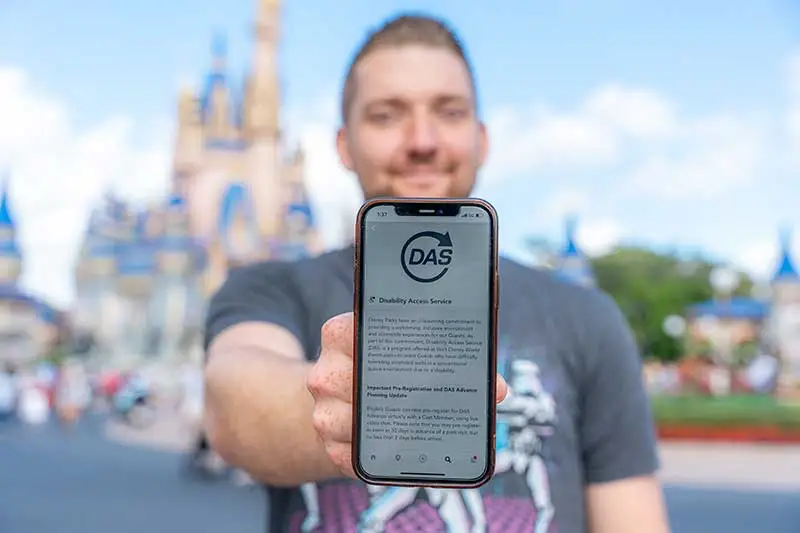
For many families with disabilities, a trip to Walt Disney World has always required careful planning. But since Disney overhauled its Disability Access Service (DAS) in 2024, that planning has become significantly more complex — and for some families, significantly more stressful. If you’re unsure what the changes mean for your family, here’s what you need to know and how to build a workable plan regardless of whether you qualify.
What Changed — and Why It Matters
Disney redesigned DAS in mid-2024 following widespread reports of misuse. Under the revised criteria, the service is now primarily available to guests with developmental disabilities, most notably autism spectrum disorder. Guests with physical disabilities, chronic illnesses, anxiety disorders, chronic pain conditions, and many other conditions previously accommodated under DAS are now being directed toward alternative options instead.
The registration process itself — now conducted via live video chat before your visit — has been described by many families as inconsistent and emotionally difficult. Some guests with documented disabilities have been denied during pre-registration calls, while others with similar conditions have been approved. The inconsistency has added a layer of anxiety to what should be an exciting planning process.
If Your Family Is Denied DAS
A denial during a pre-registration call is not necessarily final. Guests can speak with Guest Relations in person on the day of their visit, where cast members have some discretion. Coming prepared with specific language about how your family member’s disability affects their ability to wait in a standard queue — focusing on functional impact rather than diagnosis alone — has been reported to be more effective than describing the condition in clinical terms.
If DAS is ultimately not available to your family, several alternatives exist:
Return to Queue allows guests who need to leave a line due to their disability — for a sensory break, restroom need, or medical reason — to re-enter at approximately the same point. It doesn’t reduce wait times, but it removes the pressure of remaining in a physical queue for the full duration. Notify a cast member at the attraction entrance before joining the line.
Mobility Aid Access remains fully intact. Guests using wheelchairs or electric conveyance vehicles (ECVs) continue to have accessible boarding at all attractions. Rentals are available at each park entrance.
Rider Switch allows a non-riding family member to wait separately while the rest of the party rides, then swap without re-queuing — useful for families managing unpredictable symptoms or energy levels.
Strategic Scheduling becomes the most powerful tool for guests without queue accommodations. Targeting the most important attractions during the first hour after park opening, when lines are shortest, and using Lightning Lane reservations for high-demand rides can dramatically reduce total queue exposure throughout the day.
Planning Is Now More Essential Than Ever
The 2024 DAS changes have made advance preparation not just helpful but critical for families with disabilities. Knowing which attractions have the longest average waits, which parks are least crowded on your travel dates, where sensory break areas are located, and how to sequence your day to minimize queue time requires more research than most families can realistically do on their own.
A dedicated disney world accessibility guide built for the post-DAS-change landscape gives families the structured, current information they need to plan with confidence — rather than piecing together outdated blog posts or inconsistent forum advice. Whether your family qualifies for DAS or is navigating the alternatives, having a clear, realistic itinerary built around your specific needs makes the difference between a stressful visit and a genuinely enjoyable one.
Final Thoughts
Disney World remains one of the most accessibility-conscious theme park destinations in the world, but the 2024 DAS changes have created real challenges for families who relied on the program. The path forward requires more preparation and more knowledge of the alternatives than ever before. With the right resources and a realistic plan, a meaningful visit is still absolutely within reach — it just takes more intentional groundwork to get there.