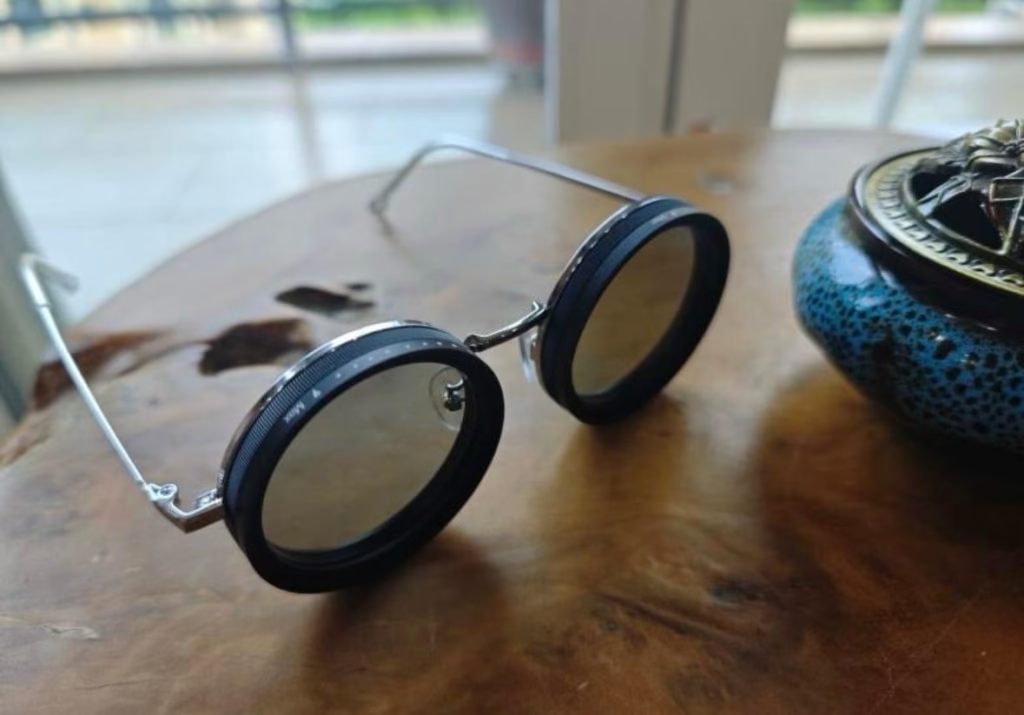
While protection and comfort are both important features of vision, a good pair of sunglasses can make all the difference in how one views the world. Among the various options available today, ND filter sunglasses have gained attention for their ability to reduce light intensity without affecting color balance. Traditionally known for their use in photography and videography, many wonder whether such lenses would be practical for everyday outdoor purposes. This post takes a closer look at what ND filters do, how such ND filter sunglasses perform in regular daily environments, and whether they present a suitable choice to wear for casual purposes, driving, sports, or long hours outdoors.
What are ND filter sunglasses?
The ND filters are designed to cut down light intensity reaching the eyes without distorting colors. In photography, ND filters control exposure when conditions are too bright. The same principle goes into the use of ND filter sunglasses, which house similar filter technology in eyewear.
Unlike colored or polarized lenses, which can affect the color of your surroundings or target kinds of glare, the lenses with ND filters darken light uniformly across the visible spectrum. That means that the world looks as it does—only darker and more comfortable for your eyes.
Are ND Filter sunglasses suitable for outdoor use?
Most people wear sunglasses daily while driving, walking, jogging, cycling, shopping, or even going to the beach. It was only by considering the pros and cons associated with them that the feasibility of wearing ND filter sunglasses in such everyday events could be determined.
Balanced Light Reduction
One of the prime advantages of ND lenses is that they maintain a steady filtering effect. In sunny conditions, they reduce overall brightness without affecting natural coloration. This will result in a more realistic visual experience, day in and day out, compared to those lenses that use a tint.
If you prefer the color of sunglasses to remain neutral and not have that “cool blue”, “warm brown”, or “greyed out” feeling of regular tints, then these lenses with an ND filter will feel more natural.
Comfort in Strong Sunlight
Whereas bright sunlight for many is discomforting, especially when it deals with midday or summer months, ND filter sunglasses lower the intensity of light that enters the eye, thus creating a more comfortable viewing experience during long outdoor exposure.
Those who spend their hours in front of reflective surfaces, be they water, sand, concrete, or snow, will appreciate the softening effect from ND lenses.
Just keep in mind, however, that these will in no way act like polarized lenses. They do not filter out glare specifically, and for those people who either drive a lot or find themselves around reflective surfaces often, polarized sunglasses may still be a preference.
For whom would ND filter sunglasses be most useful?
Since the brightness is reduced uniformly by ND filter technology, the following groups may find it very helpful:
People Sensitive to Bright Light
Those who have discomfort or eye strain in intensive sunlight usually seek a lens to make such outdoor light more manageable. The ND lenses can make bright conditions appear more balanced, without color distortion.
Outdoor Workers
These are also preferred by many landscape photographers, videographers, drone operators, and other frequent outdoor workers, since the world will still appear natural in color-a good constant reference compared to tinted sunglasses.
People Who Like to See Nature
Some sunglasses can give very noticeable color shifts that might distract. Since ND filter sunglasses let you see true colors, it is something that draws you into them if you prefer accurate visual representation.
When might ND filter sunglasses not be ideal?
While the strengths of ND filters are many, they may not be suited for everyone and in every setting.
- Driving Situations Requiring Glare Reduction
Polarized lenses reduce the glare from car windshields, from water, or off the roads. ND lenses do not aim for glare, even though they reduce brightness. Polarized options may be preferred for driving in extremely reflective environments.
- Poor Light
The ND filters really darken the world. Under overcast conditions or low light, these lenses can make things darker than one would want.
- High-Contrast Sports
Skiing, cycling, and running applications sometimes require that a lens maximize contrast or bring out a change in terrain. There are sport-specific applications where neutral ND lenses will not enhance colors to the degree required
Benefits of Using ND Filter Sunglasses Daily
Additional reasons why many people consider these sunglasses for everyday use are
- Reduced eye strain in bright daylight
- Natural and lifelike colors
- Comfortable visual experience for long outdoor activities
- Suitable for beaches, deserts, city streets, and parks around the world.
- Aesthetic appeal, since ND lenses usually have a sleek, modern look.
Safety Considerations
As with any pair of sunglasses, safety always comes first. In selecting ND filter sunglasses, make sure lenses:
- Offer UV protection, preferably 100% UVA and UVB.
- Use high-quality optical standards
- Are from a reliable brand or seller
- Provide clarity without distortion
ND filtering affects brightness, not UV exposure, so UV protection is essential.
Final thoughts
ND filter sunglasses can be practical and comfortable for daily outdoor use. They just might turn out to be the best choice for someone who desires only a balanced brightness reduction and doesn’t want to change how colors would appear in their surroundings. While they can’t replace polarized lenses under high-glare conditions, the viewing is natural and neutral, better suited to most day-to-day activities.
Adding to convenience and versatility, Magnewear magnetic clip on glasses provide a ready means of incorporating a range of different lens options, including ND filters, into a single, simple eyewear solution.