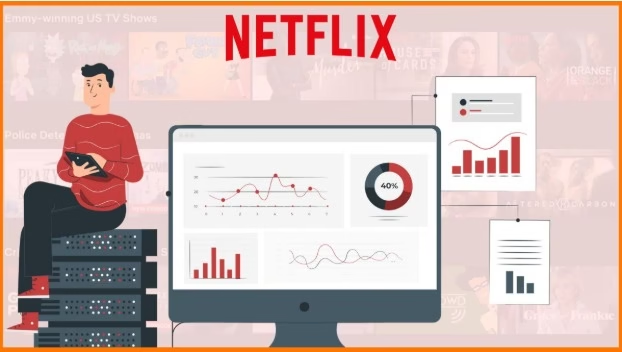
Introduction to the Netflix Recommendation System
The netflix recommendation system is one of the most sophisticated and influential personalization engines in the digital entertainment industry. It plays a central role in determining what users watch, how long they stay engaged, and how satisfied they feel with the platform. Instead of offering a one-size-fits-all content library, Netflix delivers a highly tailored viewing experience driven by data, machine learning, and user behavior analysis.
With millions of users worldwide and thousands of content options, Netflix faces a complex challenge: helping each viewer quickly find something they will enjoy. The recommendation system solves this challenge by continuously learning from user interactions and dynamically adapting to preferences over time.
Why Recommendation Systems Matter in Streaming Platforms
Content Overload and User Decision Fatigue
Modern streaming platforms host vast libraries of movies, series, documentaries, and originals. Without intelligent filtering, users may feel overwhelmed by choices. Recommendation systems reduce decision fatigue by highlighting content that aligns with individual tastes.
Business Impact of Personalization
Netflix has publicly stated that recommendations influence the majority of viewing activity on the platform. Effective personalization leads to:
- Increased watch time
- Higher user retention
- Reduced subscription cancellations
- Better content discovery for niche titles
In essence, recommendations directly impact revenue and customer loyalty.
Core Components of the Netflix Recommendation System
Data Collection and User Signals
Netflix collects a wide range of user interaction data, including:
- Watch history
- Viewing duration
- Search behavior
- Content ratings (thumbs up/down)
- Time of day and device type
Importantly, Netflix does not rely on demographic data like age or gender. Instead, it focuses on behavioral signals that more accurately reflect user preferences.
Content Metadata and Tagging
Each title in the Netflix library is enriched with detailed metadata, including:
- Genre and sub-genre
- Themes and moods
- Cast and crew information
- Narrative style and pacing
This metadata allows the system to match content attributes with user preferences at a granular level.
Key Algorithms Powering Netflix Recommendations
Collaborative Filtering
Collaborative filtering identifies patterns among users with similar viewing behavior. If users with comparable tastes enjoy a particular show, the system may recommend it to others in the same group.
Strengths
- Learns directly from user behavior
- Adapts as preferences evolve
Limitations
- Struggles with new users or new content (cold start problem)
Content-Based Filtering
Content-based filtering focuses on similarities between titles rather than users. If a viewer enjoys a crime thriller with a slow-burn narrative, the system recommends other titles with similar characteristics.
Advantages
- Works well for users with unique tastes
- Helps recommend new or less popular content
Hybrid Recommendation Models
Netflix uses hybrid models that combine collaborative and content-based filtering. This approach balances accuracy, diversity, and scalability while minimizing the weaknesses of individual techniques.
Machine Learning and Deep Learning Techniques
Neural Networks and Representation Learning
Netflix employs deep learning models to create embeddings—numerical representations of users and content. These embeddings allow the system to measure similarity and predict viewing likelihood with high precision.
Ranking and Optimization Models
Instead of simply generating a list of recommended titles, Netflix ranks content based on multiple factors:
- Probability of watching
- Completion likelihood
- User satisfaction
- Content freshness
The ranking process ensures that the most relevant titles appear prominently on the homepage.
Personalization Beyond Content Recommendations
Personalized Thumbnails and Artwork
Netflix customizes thumbnail images based on user preferences. A viewer who prefers romantic content may see a different image for the same movie than someone who prefers action or comedy.
Dynamic Home Screen Layouts
Rows such as “Because You Watched” or “Top Picks for You” are personalized for each user. The ordering and composition of these rows change frequently based on behavior.
Continuous Experimentation and A/B Testing
Data-Driven Decision Making
Netflix runs thousands of A/B tests each year to evaluate changes in recommendation algorithms, user interface elements, and ranking logic. Even minor adjustments are tested to measure their impact on engagement.
Feedback Loops
User interactions continuously feed back into the system, allowing it to learn and improve in near real time. This feedback loop is critical for maintaining relevance as tastes evolve.
Challenges Faced by Recommendation Systems
Cold Start Problem
New users and newly released content lack sufficient data, making accurate recommendations difficult. Netflix addresses this by:
- Asking initial preference questions
- Leveraging content metadata
- Using popularity and trend-based signals
Balancing Personalization and Exploration
Over-personalization can trap users in a narrow content bubble. Netflix deliberately introduces exploration by recommending diverse genres and unfamiliar titles to broaden user exposure.
Ethical and Transparency Concerns
As recommendation systems grow more powerful, questions arise about algorithmic bias, content manipulation, and transparency. Netflix must ensure fairness while maintaining user trust.
Role of Engineering and Data Science Expertise
Building and maintaining a system as complex as Netflix’s requires advanced expertise in data science, machine learning, and scalable infrastructure. Technology-focused companies like Attract Group demonstrate how specialized teams can design intelligent recommendation engines tailored to business goals, whether in entertainment, e-commerce, or digital platforms.
Such expertise highlights the growing demand for custom AI-driven solutions that enhance user engagement through personalization.
Future Trends in Recommendation Systems
Context-Aware Recommendations
Future systems may consider contextual factors such as mood, current events, or social trends to refine recommendations further.
Explainable AI
Providing users with understandable reasons behind recommendations can improve trust and satisfaction.
Cross-Platform Personalization
As users engage across devices and platforms, recommendation systems will increasingly integrate multi-channel data for a seamless experience.
Conclusion
The netflix recommendation system represents a benchmark in intelligent personalization, combining data science, machine learning, and user-centric design. Its success lies not only in predicting what users might like, but in continuously adapting to changing preferences while maintaining diversity and discovery.
As recommendation technologies evolve, they will play an even greater role in shaping digital experiences across industries. Organizations that invest in advanced personalization strategies—like those developed by expert teams such as Attract Group—will be better positioned to engage users, increase retention, and stay competitive in data-driven markets.
By understanding how Netflix’s system works, businesses can gain valuable insights into the future of intelligent content delivery and personalized user experiences.