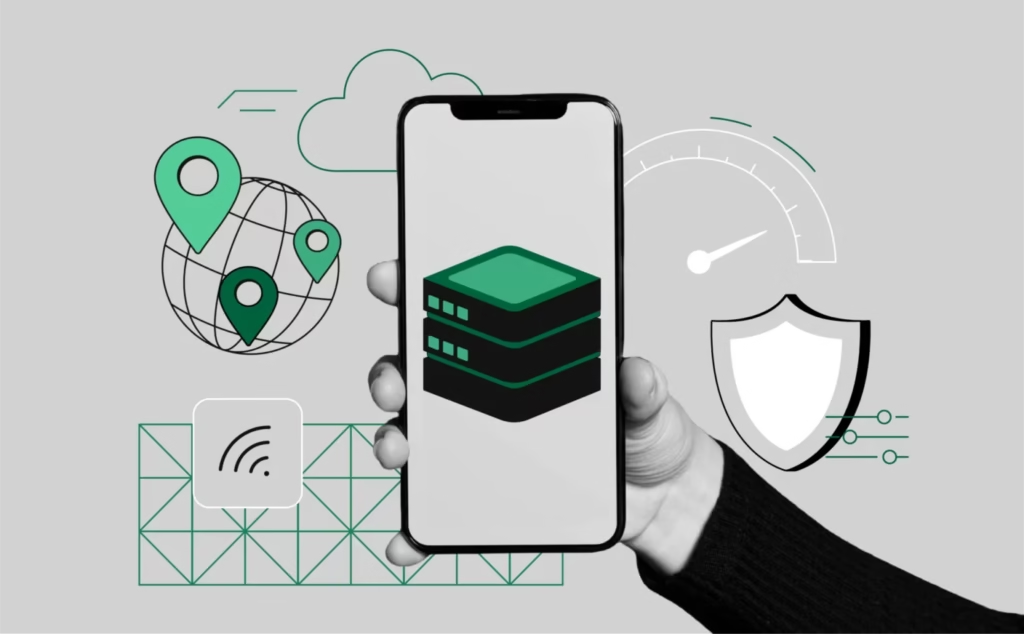
Mobile proxies have become the gold standard for high-trust online operations. In 2026, teams working with social media accounts, e-commerce platforms, ad verification, and sensitive automation workflows increasingly rely on mobile IPs to avoid detection and maintain stability.
Having used mobile proxies across several real projects—ranging from account management to data validation—I’ve learned that the real cost of mobile proxies goes far beyond the price tag. What teams are really paying for is trust: IP reputation, session stability, and long-term reliability.
Why Mobile Proxies Are Considered “High-Trust” IPs
Mobile proxies route traffic through IP addresses assigned by mobile carriers (4G/5G). Because thousands of real users share these networks, websites tend to treat mobile traffic as highly legitimate.
In practice, this means mobile proxies are commonly used for:
• Social media account creation and management
• E-commerce seller accounts
• Ad verification and compliance checks
• Login-heavy or identity-sensitive workflows
• Platforms with aggressive anti-bot systems
But not all mobile proxies work the same way. In 2026, most teams choose between rotating mobile proxies and static mobile proxies, depending on how much trust and stability they need.
Rotating vs. Static Mobile Proxies: Understanding the Trade-Off
From my experience, choosing the wrong mobile proxy type can double costs without improving results. The key is understanding how these two models differ.
Rotating Mobile Proxies
Rotating mobile proxies automatically change IPs at set intervals or per request. This rotation provides strong anonymity and reduces the chance of IP-based blocking.
Best suited for:
• Large-scale automation
• Scraping protected endpoints
• Verification tasks requiring many IPs
• Short sessions with high volume
Key benefit: maximum anonymity
Key trade-off: limited session persistence
OKKProxy’s Rotating Mobile Proxies are designed specifically for these high-volume, high-trust scenarios, making them a practical option when rotation matters more than identity continuity.
Mobile Static Proxies
Mobile static proxies assign a fixed mobile IP that remains consistent over time. These proxies behave more like “real users” returning repeatedly from the same device.
Best suited for:
• Social media account management
• E-commerce seller dashboards
• Long login sessions
• Activities requiring IP consistency
Key benefit: stability and account safety Key trade-off: higher cost per IP
OKKProxy’s Mobile Static Proxies focus on persistence and reliability, which is critical for workflows where losing an IP means losing an account.
What Teams Are Really Paying For in 2026
Many teams assume mobile proxies are expensive simply because they are “mobile.” In reality, the cost reflects several deeper factors:
1. IP Reputation
Mobile carrier IPs naturally inherit high trust from platforms. This reduces blocks, CAPTCHAs, and verification loops.
2. Infrastructure Complexity
Maintaining mobile networks is more complex than datacenter or residential proxies, which impacts pricing.
3. Risk Reduction
Stable mobile IPs reduce account bans, failed automations, and operational downtime—often saving money long term.
A Practical Comparison of Mobile Proxy Types
| Feature | Rotating Mobile Proxies | Mobile Static Proxies |
| IP Change | Frequent | Fixed |
| Trust Level | Very High | Very High |
| Session Stability | Low–Medium | High |
| Cost Model | Per GB / usage-based | Per IP |
| Best Use Case | Automation, scraping | Accounts, long sessions |
Smart teams in 2026 often combine both types instead of choosing just one.
How OKKProxy Fits Modern Mobile Proxy Needs
What stood out to me when evaluating OKKProxy was clarity. Instead of bundling everything under vague “mobile proxy” plans, OKKProxy clearly separates:
• Rotating Mobile Proxies for scalable, anonymous traffic
• Mobile Static Proxies for persistent, account-safe operations
This separation makes it easier to allocate the budget correctly. Instead of overpaying for static IPs where rotation would suffice, or risking accounts with rotating IPs, teams can align proxy type with actual risk level.
FAQs From a Real User Perspective
Q: Are mobile static proxies always better than rotating ones?
No. Static proxies are better for accounts and long sessions, but rotating mobile proxies are more cost-effective for volume-based tasks.
Q: Why are mobile proxies more expensive than residential proxies?
Because mobile IPs carry higher trust, lower block rates, and come from more complex infrastructure.
Q: Should small teams use mobile proxies?
Only when trust really matters. For many tasks, datacenter or residential proxies are sufficient.
Final Thoughts: Cost vs. Trust
In 2026, paying for mobile proxies isn’t about buying bandwidth or IPs—it’s about buying trust. Teams that understand when to use rotating mobile proxies versus mobile static proxies avoid unnecessary costs while protecting their operations.
From a real user’s standpoint, the smartest proxy strategies are built on precision, not excess.