Upgrading a home’s heating and cooling system is one of the most significant investments a homeowner can make. It directly affects comfort, energy efficiency, monthly utility costs, and even property value. When planning such an upgrade, many homeowners face an important strategic decision: whether to replace heating and cooling components separately or plan and budget for them together. Approaching the project as a combined system upgrade can offer long-term advantages, but it also comes with trade-offs that require careful consideration.
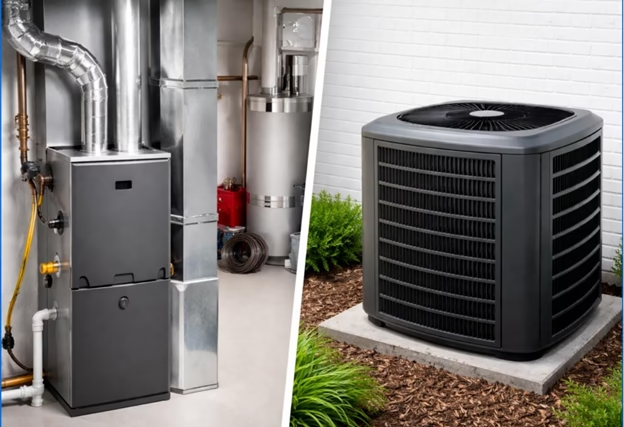
Early in the planning stage, it is common to evaluate the cost of a gas furnace alongside an air conditioning unit, since these components often work as part of an integrated HVAC system. Budgeting for both at the same time allows homeowners to assess compatibility, efficiency gains, and overall lifecycle costs rather than focusing only on upfront expenses. Understanding the factors that influence pricing, performance, and installation complexity can help homeowners make more informed and balanced decisions.
Understanding the Scope of a Full HVAC Upgrade
A complete HVAC upgrade is not simply about replacing old equipment with new models. It involves evaluating how heating and cooling systems interact with the home’s layout, insulation, ductwork, climate conditions, and energy usage patterns. Many homes rely on a residential furnace for heating and an AC unit for cooling, both connected through shared ductwork and controls. Because of this interdependence, replacing one component without considering the other can sometimes limit the overall efficiency of the system.
When homeowners budget for a combined upgrade, they are essentially investing in a coordinated system rather than individual appliances. This approach allows for better system matching, which can improve comfort consistency and reduce unnecessary strain on components. However, it also requires a larger upfront budget, which can be challenging for households that were initially planning a single replacement.
Key Cost Factors That Influence Budgeting
The total cost of upgrading heating and cooling together is influenced by several variables, and understanding these factors is critical for realistic budgeting. Equipment pricing is only one part of the equation. Installation labor, system sizing, ductwork modifications, and long-term operating costs all play a role.
The efficiency rating of a gas heating system significantly affects its price. Higher-efficiency models often cost more initially, but they can deliver lower energy bills over time. Similarly, modern air conditioning systems with higher efficiency ratings tend to have higher upfront costs but may offer long-term savings, especially in regions with extended cooling seasons.
Another major cost factor is system size. Oversized or undersized systems can lead to inefficiency, uneven temperatures, and premature wear. Proper sizing requires professional load calculations based on the home’s square footage, insulation quality, window placement, and climate. Budgeting for both heating and cooling together makes it easier to ensure that both systems are appropriately matched to the home’s needs.
Balancing Upfront Costs and Long-Term Savings
One of the central trade-offs in HVAC budgeting is balancing upfront costs with long-term savings. Homeowners are often tempted to choose the lowest-priced options to reduce immediate expenses. While this approach can make sense in certain situations, it may lead to higher energy bills, more frequent repairs, and shorter equipment lifespan.
Investing in a higher-efficiency residential furnace and AC unit may increase the initial budget, but it can provide measurable savings over time. Reduced energy consumption, fewer maintenance issues, and potential incentives or rebates can offset the higher purchase price. However, these benefits depend on usage patterns, local energy costs, and how long the homeowner plans to stay in the property.
The challenge lies in accurately estimating future savings and determining whether they justify the upfront investment. This decision is rarely straightforward, and it often requires homeowners to consider both financial and lifestyle factors.
Compatibility and System Matching Challenges
When heating and cooling systems are replaced at different times, compatibility issues can arise. Newer air conditioning systems may not perform optimally when paired with older heating equipment, and vice versa. Differences in airflow requirements, control systems, and efficiency standards can reduce overall performance.
Planning a combined upgrade allows homeowners to select components designed to work together. This can improve temperature control, reduce noise, and extend equipment lifespan. However, coordinating a full system replacement may require more planning, scheduling, and temporary disruption during installation.
For homeowners whose existing systems are still partially functional, the decision to replace everything at once can feel wasteful. The challenge is weighing the remaining lifespan of older equipment against the benefits of a fully integrated system.
Installation Complexity and Its Impact on Budget
Installation is often underestimated when budgeting for an HVAC upgrade. Replacing both heating and cooling systems at the same time can simplify certain aspects of installation, such as shared labor and coordinated ductwork adjustments. In some cases, this can reduce overall installation costs compared to handling two separate projects at different times.
On the other hand, a full system upgrade may uncover issues that were not previously apparent. Aging ductwork, inadequate insulation, or outdated electrical components may need to be addressed to support modern HVAC equipment. These additional requirements can increase the project budget and complicate planning.
Homeowners must be prepared for the possibility that a comprehensive upgrade may involve more than just equipment replacement. Factoring in a contingency budget can help manage unexpected challenges without compromising the quality of the installation.
Energy Efficiency and Environmental Considerations
Energy efficiency is a key consideration in modern home improvement decisions. Heating and cooling account for a significant portion of household energy use, making HVAC upgrades an important opportunity to reduce environmental impact. Choosing efficient systems can lower greenhouse gas emissions and reduce reliance on fossil fuels.
A modern gas heating system typically offers better combustion efficiency and more precise temperature control than older models. Similarly, newer air conditioning systems often use advanced compressors and refrigerants that improve performance while reducing environmental impact. Budgeting for both systems together allows homeowners to maximize efficiency gains across seasons.
The challenge is balancing environmental benefits with financial constraints. While high-efficiency systems are more sustainable, they may not fit every budget. Homeowners must consider how much value they place on reduced environmental impact and whether it aligns with their financial goals.
Comfort, Lifestyle, and Home Value Impacts
Beyond cost and efficiency, HVAC upgrades have a direct impact on daily comfort. Inconsistent temperatures, poor humidity control, and noisy operation can affect quality of life. A well-planned upgrade can address these issues by providing more even heating and cooling throughout the home.
From a property value perspective, a modern and efficient HVAC system is an attractive feature for potential buyers. Homes with updated systems may sell faster and command higher prices. Budgeting for a comprehensive upgrade can therefore be seen as both a comfort improvement and a long-term investment.
However, the return on investment varies depending on the local housing market and buyer expectations. Homeowners who do not plan to sell in the near future may prioritize comfort and efficiency over resale value, while those preparing to list their home may focus on upgrades that enhance market appeal.
Financing Options and Budget Flexibility
Financing plays a crucial role in making HVAC upgrades accessible. Many homeowners rely on financing options, rebates, or incentives to manage the cost of a combined upgrade. Spreading payments over time can make higher-quality systems more affordable, but it also increases the total cost due to interest.
Budget flexibility is essential when evaluating financing. Homeowners should consider how monthly payments fit into their overall financial picture and whether future energy savings can realistically offset these expenses. The challenge is avoiding overextension while still investing in reliable and efficient equipment.
Planning both heating and cooling upgrades together can sometimes unlock better financing terms or bundled discounts, but this varies by provider and region. Careful comparison of options is necessary to make informed decisions.
Timing and Seasonal Considerations
The timing of an HVAC upgrade can significantly affect both cost and convenience. Replacing systems during peak heating or cooling seasons may lead to higher prices and longer wait times. Planning ahead and scheduling upgrades during off-peak periods can reduce stress and potentially lower costs.
Budgeting for a combined upgrade allows homeowners to choose timing strategically rather than reacting to system failure. This proactive approach can prevent emergency replacements, which are often more expensive and limit available options.
The challenge is predicting when existing equipment will fail and balancing proactive replacement with maximizing the remaining lifespan of current systems.
Making Informed and Balanced Decisions
Planning a home HVAC upgrade requires balancing multiple factors, including cost, efficiency, comfort, environmental impact, and long-term value. Budgeting for heating and cooling together encourages a holistic view of the system, helping homeowners avoid piecemeal decisions that may lead to inefficiencies.
While a combined upgrade often involves higher upfront costs, it can provide benefits in system performance, compatibility, and long-term savings. The key is understanding the trade-offs and challenges associated with different approaches and aligning decisions with personal priorities and financial realities.
By carefully evaluating needs, consulting qualified professionals, and considering both immediate and future impacts, homeowners can make informed choices that enhance comfort, efficiency, and value for years to come.