For many food brands, adding a new product line can feel like a gamble. New machinery, new staff, compliance work, and stock planning all create pressure before a single pack reaches the shelf. Private-label cookies change that equation. Instead of building a bakery operation from the ground up, a brand can work with established private label manufacturers and launch under its own name with far less capital tied up at the start.
That makes the model especially useful for businesses that want to grow steadily, test demand, and protect margins while still presenting a polished, market-ready product. It is also why private label has become such a practical route for cookie brands looking to scale without heavy infrastructure.
Why Private Label Fits the Cookie Category
The appeal is easy to understand. Cookies are familiar, broadly liked, and easy to place across retail, gifting, travel, and online channels. But the real opportunity lies in how flexible the category is.
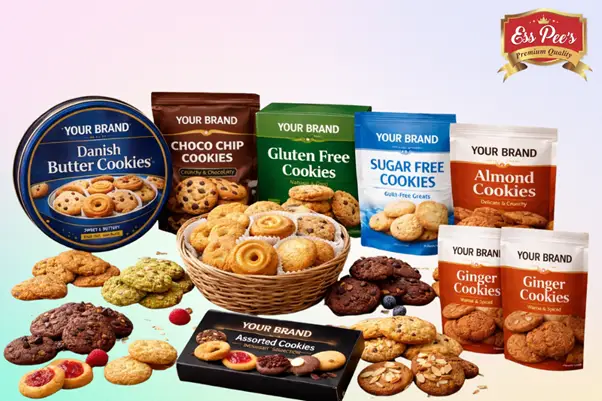
A brand does not need to launch with a huge range. It can begin with a few proven formats, such as:
- Butter cookies
- Chocolate cookies
- Sugar-free cookies
- Gluten-free cookies
- Festive gift packs
Then it can expand once it understands what buyers respond to. That discipline keeps the first launch focused and reduces the chance of overextending too soon.
How a Cookies Manufacturer in India Adds Value
This is where a cookies manufacturer in India can become a strategic partner rather than just a supplier. Indian manufacturers often bring together production experience, ingredient sourcing, packaging support, and export familiarity in one place.
For a growing brand, that combination matters. It means the product can be made to a consistent standard, packed to spec, and prepared for different markets without the brand having to build that capability internally.
A strong manufacturing partner may also offer:
- In-house packaging support
- Flexible minimum order quantities
- Recipe development and customization
- Quality systems such as ISO, HACCP, BRCGS, or Kosher
- Export-ready production for multiple regions
This kind of setup reduces complexity and gives the brand a far cleaner path to market.
Why the Model is Low-Risk
The real strength of private label cookies is operational simplicity. A new product does not need a factory floor to prove itself. It needs a clear concept, a dependable recipe, and a manufacturer capable of turning that idea into a repeatable product.
By outsourcing baking, packing, and often formulation support, the brand keeps its attention on the parts of the business that drive growth:
- Positioning
- Shelf presence
- Sales
- Distribution
- Brand visibility
The first batches can be used to test response in modern trade, general trade, e-commerce, or gifting channels. If the market reacts well, the brand can scale. If the product needs adjustment, it can refine the recipe or packaging before committing to larger volumes.
That is a safer path than investing heavily before demand is validated.
Why Branding Still Matters
Private label also gives brands room to build identity, which is often where the category wins or loses. Cookies are not sold on taste alone. Packaging, naming, and presentation shape the first impression long before the pack is opened.
Strong cookie brands usually pay close attention to:
- Packaging design
- Pack size
- Visual identity
- Flavour naming
- Shelf appeal
- Gift readiness
A premium look can support gifting. A clean, modern design can support health-led positioning. A colourful family pack can sit comfortably in the everyday snack aisle. In each case, the brand is not only selling cookies. It is selling a reason to choose one pack over another.
The Advantage of Speed and Flexibility
There is also a timing benefit. The food market moves quickly, and cookie trends change with consumer interest. Some periods favour indulgent classics. Others reward cleaner labels, plant-based recipes, or reduced sugar options.
The private label model lets brands respond without rebuilding their manufacturing setup each time. If a market opens up for multigrain cookies, assorted gift boxes, or seasonal flavors, a flexible manufacturing partner can support that shift.
That responsiveness is one reason the model works so well for expanding brands. It allows them to stay current without carrying the fixed cost of a production line that may sit underused for part of the year.
A Practical Route for Market Testing
For retailers and distributors, the financial case is equally clear. Private label offers stronger control over pricing and a healthier margin structure because the brand is not paying for a built-out factory or the overhead that comes with one.
It also helps when a brand wants to test demand before going all in. Lower minimum order quantities make the model useful for trying new markets, new flavors, or new pack formats without taking on unnecessary inventory risk.
This is especially useful in a category like cookies, where:
- Shelf life is manageable
- Demand can spike around festivals
- Consumer preference varies by region
- Buying behavior changes by channel
A brand can start with a modest volume, learn from sell-through, and expand with more confidence.
What Separates Strong Launches From Weak Ones
What separates a successful launch from a forgettable one is usually not ambition, but discipline. The strongest private label cookie brands know who they are serving, what format they are entering with, and why the offer deserves attention.
They work with a partner who can handle production details while they focus on demand creation. They also stay realistic about the first range, choosing a small number of products that are easy to understand and simple to stock.
A smart launch usually includes:
- One clear target audience
- A tight product range
- A packaging style that fits the market
- A realistic price point
- A manufacturing partner with proven consistency
In that sense, private-label cookies are not a shortcut. They are a measured way to grow. They let a brand build presence, test markets, and widen its product line without taking unnecessary risks.
Final Thought: A Strong Model for Steady Growth
For businesses looking to expand carefully, that is a powerful model. Private label cookies combine brand ownership with operational flexibility, making it possible to move faster without taking on factory-level exposure.
With the right Private Label Manufacturers, especially one with Indian production strength and export readiness, a cookie line can grow from a single idea into a scalable product range. The opportunity is not just to sell more cookies. It is to build a stronger, more adaptable brand around them.
That is why private label remains such a practical, low-risk choice for companies that want to grow with control, clarity, and room to scale.