Introduction
Data centers and server rooms always have issues around space management. Every square foot becomes important with critical equipment being run. Power testing is very necessary yet conventional load banks are too bulky occupying a lot of space. Facility managers find it important to find small solutions that provide credible results.
The solution to this is the use of Rack mounted load banks. These are unique testing machines that can be inserted in any standard equipment racks. They do not occupy too much of the floor space to test power systems. They can be installed directly adjacent to the equipment they have been tested on. This has simplified power testing in a manner that has never been witnessed before.
What Are Rack Mounted Load Banks?
Rack mounted load banks are small power testing units that are designed to fit standard 19-inch equipment racks. They operate in a similar way as regular load banks, but occupy a small area. These units do test batteries, UPS systems, generators, and power supplies. You do not have to roll out a large portable unit and can just have the load bank already fitted to a rack.
Why Rack Mounted Load Banks Are Popular
Rack mounted load banks become popular because of their use in space savings. Premium prices are given to each square foot of floor space by data centers. The removal of the large floor equipment directly saves money. The use of these small units also minimizations of equipment storing rooms.
Key Features of Rack Mounted Load Banks
Rack mounted load banks are provided with a number of intelligent features. Majority of them have digital screens that provide real time power consumption. Remote monitoring features allow the management of the tests at the desk. Routine testing processes are automated by programmable test sequences. Safety is provided with automatic shut guiding in case the temperatures are too high.
How Rack Mounted Load Banks Work
The fundamental mechanism is clear and clear cut. Rack mounted load banks present a demand on a source of electrical current when you attach the rack mounted load banks to electrical power source. Internal resistors would convert this electricity to heat. The load is also variable depending on your requirements of testing. It is possible to model light loads or push systems to full capacity.
How to Install Rack Mounted Load Banks
Rack Mounted Load Banks Setup Steps
The installation of these units is like a typical rack mounting. To start with, you should wise place your equipment rack. Take into account airlines and cableway routing. Insert the unit in the rack and fix it using mounting screws. Installation times around most installations are only 15 to 30.
Safe Installation Tips
There is a lot of safety concern during installation of power testing equipment. Electrical connections should be made always without power on. Use insulated equipment and use protective equipment. Ensure that your rack can handle the increment of heat. Test the circuit breakers to determine whether they can work at the currents that you want to test.
Applications of Rack Mounted Load Banks
The main users of rack mounted load banks are the data centres. They test the UPS systems periodically so that battery backup can be available as required. They are used in server rooms to make sure that power distribution units are working properly. Telecommunications facilities exercise their back up power plant prior to occurrence of emergencies.
Tips to Use Rack Mounted Load Banks Efficiently
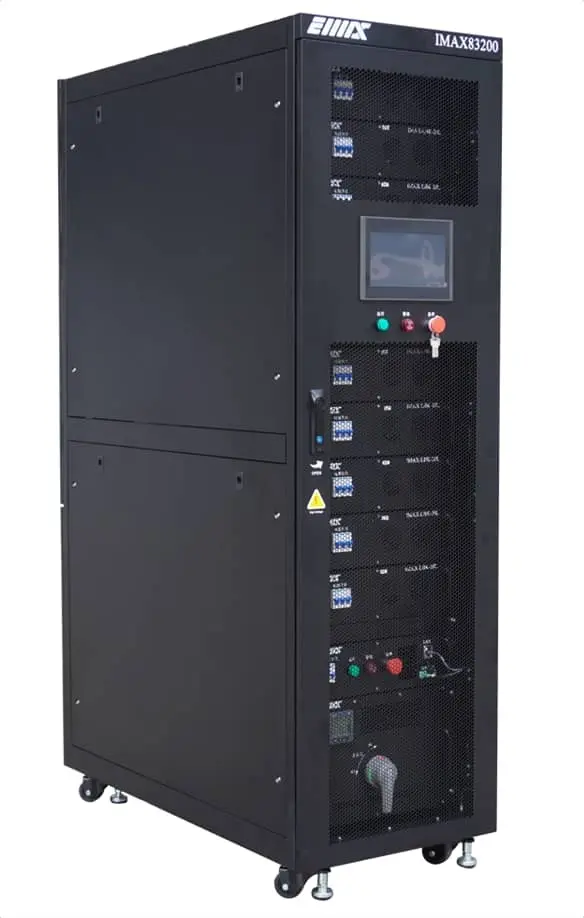
This should be done by starting with less loads and SLOW increase in testing. Full loads may be harsh on electrical systems in a sudden fashion. Check the temperatures during the test process. Record logs on all test outcomes to create trends. This will assist you in noticing what is wrong in order to prevent failures.
Rack Mounted Load Banks Safety and Maintenance
| Feature | Specification | Notes |
| Rack Size | 19-inch standard | Fits most equipment racks |
| Height | 1U to 4U typical | Depends on power capacity |
| Power Range | 1kW to 20kW | Combine units for more |
| Cooling | Fan or liquid | Based on model type |
| Control | Digital display | Often includes remote options |
| Voltage | 120V to 480V | Check your requirements |
| Safety Features | Auto shutdown | Temperature and overload |
Pros and Cons of Rack Mounted Load Banks
Pros:
- Saves valuable floor space
- Convenient location near equipment
- Easy to install in existing racks
- Professional appearance
- Quick access for testing
- Scalable by adding units
- Lower installation costs
Cons:
- Limited power capacity per unit
- Generates heat in equipment rack
- May require rack cooling upgrades
- Higher cost per kilowatt than portable units
- Less flexibility in positioning
Common Problems in Rack Mounted Load Banks
Most common is the overheating. This normally occurs when there is poor ventilation of the racks. Add more cooling fans where the temperatures become too high during tests. It should also monitor ambient temperature in the server room.
Test errors come as a result of electrical connectivity issues. Free ends make resistance and spurious readings. Check and tighten every connection on a regular basis. Calibration drift is an issue that influences the accuracy of the measurement with time. Ensure they schedule annual calibration of their technicians.
Conclusion
Rack mounted load banks can provide feasible solutions to the contemporary power testing issues. They are well space efficient with good performance. These small systems integrate well into the activities of data centres. The frequent testing of rack mounted load banks avoids the expensive power failures.
Long service life may be attained through proper installation and maintenance. Take caution of safety measures and instructions given by the manufacturer. The move is justified by the investment in increased reliability of the power and a decrease in the downtime.
FAQs
Q1: What is the amount of power rack mounted load banks can handle?
The individual units are in the range of 1kW to 20kW. Higher capacity can be combined with several units. Check specifications to match your specification of your exact model.
Q2: Are rack mounted load banks to be specially cooled?
The majority of the units include inbuilt cooling fans. Make sure that the equipment rack has a sufficient airflow. There might be high-powered models that require extra cooling solutions.
Q3: Is it possible to remotely manage rack mounted load banks?
Yes, the majority of the contemporary models have network connectivity. Monitoring and controlling tests is possible when you are on the computer. Others provide smartphone application integration as well.
Q4: Well, how frequently do I have to test my UPS using the devices?
Critical systems should be tested monthly. at least, commission quarterly tests to verify the state of the battery. After conducting maintenance or power outages always test.
Q5: Do rack mounted load banks prove challenging to install?
No, the process of installation resembles mounting servers. General knowledge in electricity comes in handy. Installation of some appliances such as the dishwasher and microwave can be performed by skilled technicians, or adhere to the manual.