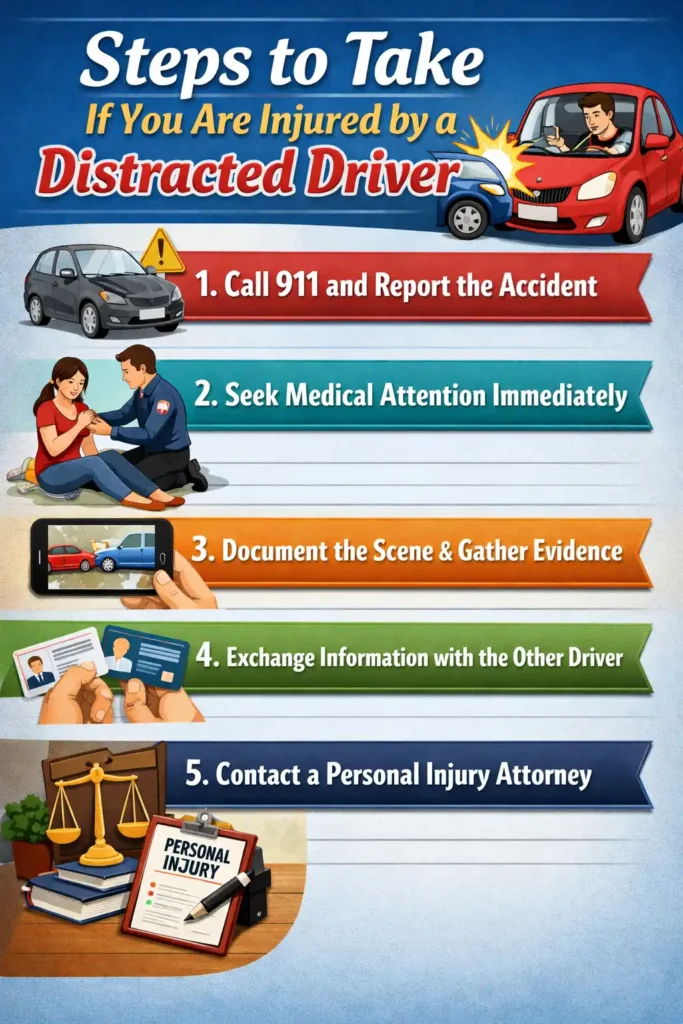
One moment – you are driving through Cherry Hill. The next moment – another distracted driver crashes into you. It happens fast without any warning.
Distracted driving is one of the most common causes of crashes in New Jersey.
- A quick glance at a text message
- Adjusting the GPS
- Reaching for coffee.
This split second can change your life.
If you are injured by a distracted driver – what you do next will count. The steps you take can:
- protect your health
- your finances
- your legal rights
Here is what you need to know.
1. Call police
Request the local police respond to your accident site. Do not attempt to tackle the matter on your own. When cops arrive – they will investigate what occurred and interview with everyone involved.
Make sure you make an official police complaint.
This report will describe the specifics of your accident, including comments and observations from the site. It may later become significant evidence if you need to demonstrate that the other motorist was at fault due to distraction.
2. Get Medical Treatment as Soon as Possible
Even if you can walk away from the accident – it does not imply you are safe. Some injuries may not show up immediately. It may take hours – if not days – for your body to produce visible signs. Pain and stiffness can occur after the shock has worn off.
Common injuries in distracted driving accidents include:
• Whiplash
• Concussions
• Back injuries
• Soft tissue damage
• Broken bones
You should see a doctor as soon as possible. Do not wait for the pain to get worse. Follow every treatment plan and recommendation you receive. Keep all appointments and take your recovery seriously.
Your medical records help link your injuries directly to the crash. Without proper documentation – insurance companies may argue that something else caused your condition. Getting checked early protects both your health and your claim.
3. Document the Scene
If you are physically able, gather evidence before the scene vanishes.
Take photos of:
- All vehicles involved
- License plates
- Skid marks
- Road signs
- Traffic lights
- Your injuries
If you cannot take photos yourself, you must ask a witness to help. Evidence can disappear quickly once vehicles are moved.
4. Gather Information Carefully
Exchange basic information with the other driver:
- Name
- Phone number
- Insurance details
- Driver’s license number
Keep your conversations brief. Do not argue or admit your fault. Even your simple apology can later be twisted into an admission of responsibility.
If witnesses stop to help – you must ask for their contact information. Third-party accounts can be helpful in distracted driving cases.
5. Write Down What You Remember
Your memories can fade quickly. As soon as you can, write down everything you recall.
- Did you see the other driver looking down?
- Were they holding a phone?
- Did they drift into your lane?
- Did they say anything at the scene?
You must record details while they are still fresh in your mind. Sharp observations will strengthen your claim.
6. Notify Your Insurance Company
Report the accident to your insurance company as soon as possible. Share only the basic details, such as:
- the date
- time
- location of the crash
Avoid making a recorded statement without first consulting with a lawyer. Keep your responses concise and clear. Do not guess about fault or discuss the full extent of your injuries.
Remember that insurance companies will protect their own financial interests. Their goal is to limit payouts.
7. Organize All Your Documents
Start a dedicated file for everything related to the crash. Include:
- Medical bills
- Prescription receipts
- Physical therapy invoices
- Car repair estimates
- Police reports
- Proof of missed work
Keep a journal describing your pain levels and how the injury is affecting your daily life. If you struggle to sleep or return to normal activities – document it. These details are important when calculating compensation.
8. Understand What Distracted Driving Means
Distracted driving is not limited to texting. It can include three main types of distractions:
Visual distractions – Taking eyes off the road
Examples include:
- checking a phone
- looking at a GPS
- turning around to speak to passengers
Manual distractions – Taking hands off the wheel
Examples include:
- eating
- adjusting controls
- reaching for objects
Cognitive distractions – Losing mental focus
Examples include:
- daydreaming
- engaging in intense conversations
Texting combines all three. This makes it particularly dangerous.
If you suspect the other driver was using a phone, that information can be vital to your case.
9. Be Careful With Insurance Adjusters
Soon after the crash, the other driver’s insurance company may contact you. The adjuster may sound polite and concerned.
Their job is to reduce the amount their company pays.
They may:
- Ask for a recorded statement
- Request medical authorizations
- Offer a quick settlement
Early settlement offers are usually lower than what your case may truly be worth. Once you accept payment – you cannot ask for more money later.
Before agreeing to anything, consult with a Cherry Hill personal injury lawyer who knows distracted driving cases and how insurance works.
10. Proving the Driver Was Distracted
Proving distraction will require evidence. Your statement alone will not be enough.
Evidence may include:
- Police reports noting phone use
- Witness statements
- Traffic camera footage
- Surveillance video
- Cell phone records
An attorney can request phone records to determine if the driver was texting or using data at the time of the crash. This kind of proof can strongly support your claim.
11. Types of Compensation You May Recover
If a distracted driver caused your injuries, you can seek compensation for several types of losses.
Medical expenses
Your medical compensation can include:
- hospital stays
- doctor visits
- therapy
- medications
- future care
Lost wages
Income is lost while you are recovering. This may include future lost earning ability if you cannot return to the same job.
Pain and suffering
Physical discomfort and emotional strain that was caused by the crash.
Property damage
Repair or replacement of your vehicle and other damaged items.
Every case is different. The amount will depend on:
- injury severity
- long-term effects
- available insurance coverage
12. Why Legal Guidance Matters
Distracted driving cases can be complex. Insurance companies can argue that you share fault. New Jersey follows a comparative negligence system. This means your compensation can be reduced if you are found partially responsible.
An experienced Cherry Hill personal injury lawyer can:
- Investigate the crash thoroughly
- Collect strong evidence
- Calculate full damages
- Handle negotiations
- File a lawsuit if necessary
Legal support will enable you to focus on your recovery while someone else manages your legal process.
Final Thoughts
If you were harmed by a distracted driver, get legal assistance as quickly as possible. Do not wait until issues occur. A competent attorney can defend your rights from the beginning.
Your lawyer will collect the evidence you need and present a compelling argument on your side. They will work to secure fair compensation for your:
- injuries
- medical bills
- lost income
- other damages
Insurance claims and legal processes may rapidly become convoluted. Proving distracted driving will need precise evidence and meticulous planning. With the correct legal representation, you may concentrate on recovering while your attorney handles the legal proceedings.