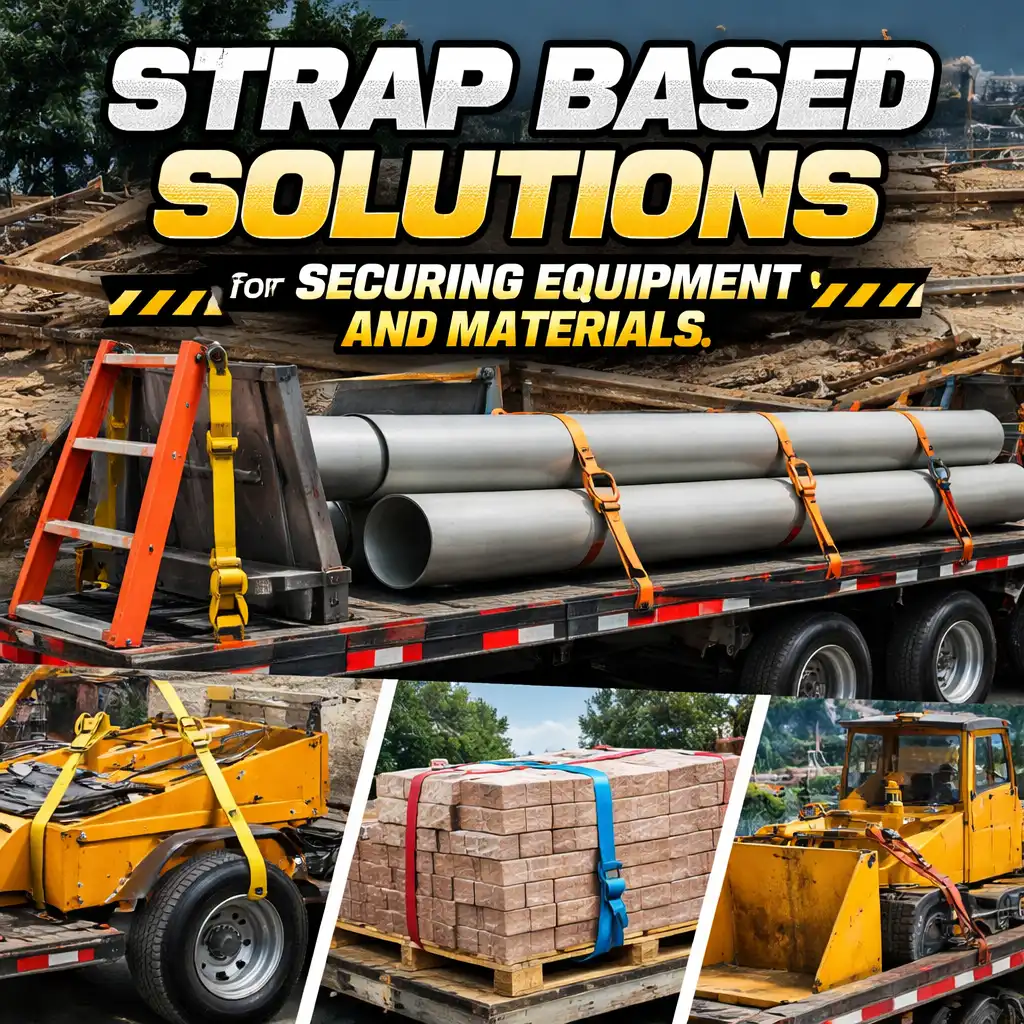
Walk through any industrial facility or commercial workspace and you will notice something subtle but essential. Tools are not just placed on shelves. Cables are not simply draped over racks. Panels are not leaning freely against walls. Behind the scenes, straps are doing much of the work that keeps everything organized, stable, and safe.
In many environments, rigid brackets and permanent fasteners still have their place. But more teams are turning to flexible restraint systems, especially heavy duty hook and loop straps that allow secure fastening without sacrificing adjustability. These strap-based solutions are not just about tidiness. They support safety compliance, equipment longevity, and efficient maintenance.
If you look at strap use from an operational perspective, rather than a hardware perspective, their value becomes even clearer. Straps act as adaptable infrastructure. They hold systems together while allowing those systems to evolve.
Keeping Tools Secure Without Slowing Access
In workshops and manufacturing floors, tools need to be both secure and accessible. Permanent enclosures may protect equipment, but they slow down workflow. Loose storage, on the other hand, increases the risk of damage or injury.
Strap based solutions offer a middle ground. Tools can be anchored to shadow boards, carts, or mobile workstations with adjustable straps that hold firmly during transport but release quickly when needed. This balance supports lean operations where efficiency and safety must coexist.
The Occupational Safety and Health Administration emphasizes proper tool storage and workplace organization to reduce accidents. Their safety guidelines outline how secure storage minimizes hazards in industrial settings. Straps contribute to this goal by preventing tools from shifting or falling without requiring complex locking mechanisms.
Because straps conform to different tool shapes, they are adaptable. A single system can secure drills, measuring devices, or handheld instruments without custom brackets for each item.
Managing Cables in High Activity Environments
Cable management is one of the most common uses for strap-based systems. In industrial plants, data centers, and construction sites, cables run through ceilings, racks, and equipment enclosures. Left unmanaged, they become tangled and vulnerable to damage.
Straps allow teams to bundle and route cables cleanly. Unlike rigid ties that must be cut and replaced, reusable straps can be opened and adjusted as systems change. This flexibility is critical in environments where equipment upgrades or layout changes happen regularly.
From a maintenance perspective, organized cables reduce troubleshooting time. When technicians can easily identify and access lines, downtime decreases. Straps also prevent excessive bending and strain, which can extend the lifespan of wiring and connectors.
In data driven facilities where uptime matters, these small improvements translate into measurable operational gains.
Stabilizing Panels and Removable Components
Industrial and commercial systems often include removable panels for inspection and servicing. These panels need to stay in place during operation but detach easily during maintenance.
Strap based solutions provide secure retention without permanent hardware. Panels can be anchored internally so that even when loosened, they remain tethered to the main assembly. This prevents accidental drops and reduces the risk of losing components.
In construction environments, temporary barriers and protective coverings are frequently secured with straps. Because these installations are not permanent, adjustability is essential. Straps allow crews to reposition coverings quickly without drilling new holes or damaging surfaces.
The National Institute of Standards and Technology highlights the importance of modular and adaptable systems in modern infrastructure design. Their resources discuss how flexibility supports resilience and efficiency. Strap based fastening aligns with this philosophy by enabling quick reconfiguration without structural compromise.
Securing Equipment During Transport
In warehouses and distribution centers, movement is constant. Carts, pallets, and mobile racks carry equipment across large spaces. Securing loads during transport prevents shifting that could damage materials or cause injury.
Straps excel in this role because they can accommodate varying load sizes. Unlike fixed brackets, straps adjust to the dimensions of different tools, containers, or components. This makes them especially useful in mixed inventory environments.
For heavier items, wide straps distribute pressure more evenly, reducing the chance of surface damage. In sensitive equipment transport, padding can be integrated with strap systems to provide both restraint and cushioning.
Transport stability is not just about protecting goods. It is about protecting workers. Securely fastened materials reduce the likelihood of tipping or falling during movement.
Supporting Temporary Installations and Field Work
Commercial and industrial projects often require temporary setups. Event staging, construction scaffolding, and field repairs all involve equipment that must be secured for short periods.
Strap based solutions shine in these situations. They require minimal tools for installation and removal. Teams can adapt to changing conditions without permanent alterations to structures.
In field environments, where surfaces may be uneven or materials inconsistent, straps conform more easily than rigid hardware. This adaptability makes them a practical choice for securing tarps, protective panels, or temporary signage.
Because many strap systems are reusable, they support cost efficiency across multiple projects.
Balancing Strength and Flexibility
One of the key advantages of strap-based systems is their ability to balance strength with flexibility. Industrial environments demand reliable holding power, but they also demand adaptability.
Straps distribute force across a broader area compared to point-based fasteners. This reduces stress concentration and can improve overall durability. At the same time, they remain flexible enough to accommodate shifting loads or thermal expansion.
This balance is particularly valuable in commercial settings where equipment layouts evolve. Instead of redesigning mounting systems every time a component changes, teams can adjust strap placements and maintain secure configurations.
Straps as Operational Infrastructure
It is easy to think of straps as simple accessories. In reality, they function as operational infrastructure in many industrial and commercial environments. They secure tools, organize cables, stabilize panels, and protect materials during movement.
By providing secure yet adjustable fastening, strap-based solutions support safety, efficiency, and long-term equipment performance. They reduce the need for permanent modifications while still delivering dependable restraint.
In spaces where conditions change and equipment evolves, that adaptability is more than convenient. It is essential.