
If you’ve ever wondered how much carbon your weekly laundry routine creates — and how much of it you can actually shrink — you’re in the right place. The good news: with a few small tweaks, you can cut your laundry-related emissions by up to 60% without making your life any harder. We’ve got you covered with simple, real-family solutions.
How Much Carbon Does One Load of Laundry Produce?
A typical load of laundry, including the dryer, produces around 2,4kg of CO₂e depending on your machine, and water temperature. And here’s the part that surprises most people: heating the water accounts for 60–70% of a load’s total emissions. Equipment that consumes a lot of energy tends to contribute more to emissions of CO₂e, the proof of that is if you wash your clothes without using the dryer, the production of CO will fall to 0,7kg of CO₂e.
What Contributes Most to Laundry-Related Emissions?
Each load’s carbon footprint comes from a mix of energy use, water use, and product choices. Here’s a quick breakdown, no jargon, just real-world clarity.
1. Water Heating Energy Usage
Most of your laundry’s carbon footprint is simply the energy required to heat water. The EPA notes that washing in cold water significantly cuts energy demand.
Martin Wolf, M.A. in Chemistry, Environmentalist and expert contributor to The Laundry Guru explains: The big savings from using laundry sheets, powders, or tabs is that you are not expending the energy to ship huge quantities of liquid.
2. Dryer Energy Demand
Electric dryers are energy-intensive because they heat air and tumble clothes for extended periods. Even one cycle can consume more energy than your washer uses in a week.
3. Machine Efficiency & Load Size
High-efficiency (HE) and Energy Star–rated washers use less water and energy per load. Meanwhile, running half-empty loads increases per-item emissions.
4. Packaging Waste & Transport Emissions
Heavy plastic jugs and liquid detergents require more fuel to ship. Packaging that isn’t recyclable adds to your household’s overall environmental footprint.
How to Cut Your Laundry Carbon Footprint by 60%
These steps are simple, realistic, and tested, the kind of changes busy households can actually maintain, and are verified by the National Park Service
1. Commercial Laundry
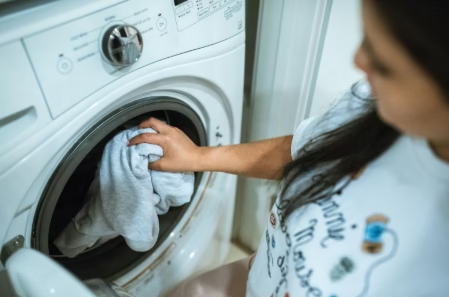
The change needs to start by laundry companies, like the ones responsible for making the machines. Studies show that if these companies improve washing machines can result in savings of 9.3 to 29.6 gallons of water and reductions in dryer use can save 25,000 to 38,000 BTUs per wash cycle.
2. Upgrade Your Laundry Machine
If you change your current washing machine to a START certified model you can contribute to reducing energy consumption and consequently emit less pollution.
3. Run Full Loads
Full loads use resources more efficiently. You’re basically spreading the same energy use across more clothing.
4. Choose Eco-Friendly Laundry Products
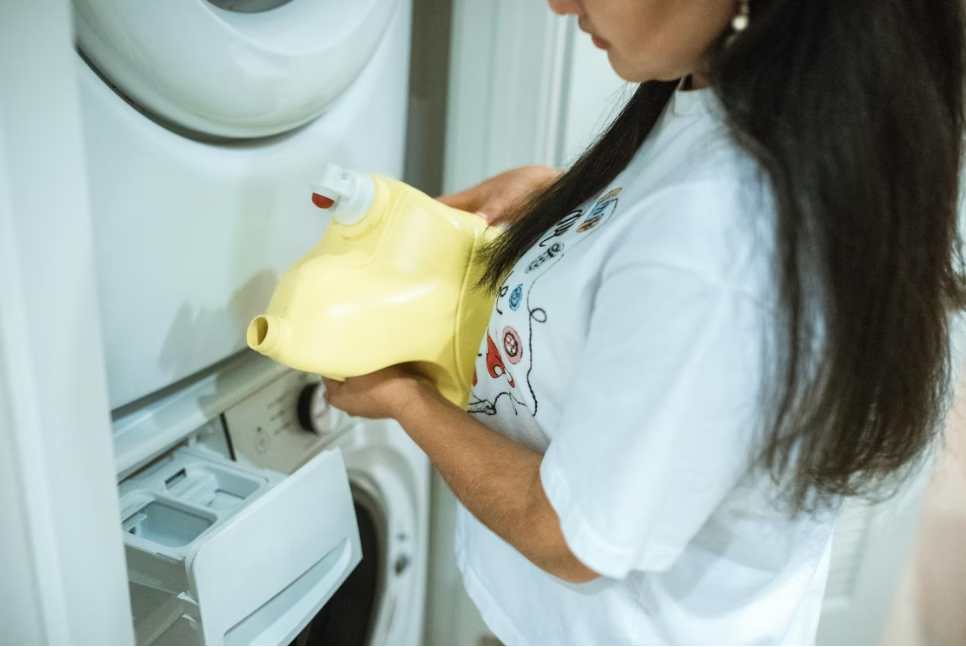
Choose brands that use as little material as possible to package products, in addition to using recycled material. Combine this method with the use of products made with vegan ingredients that do not impact nature. Currently, there are laundry sheets, detergent sheets and all kinds of products you can use to wash your clothes without having to use chemicals. It’s good for the environment and for your skin.
5. Cold Water
Cold water uses less energy because it does not require electricity to heat it up. Combine this with the use of cold-water detergents.

Why Low-Waste Laundry Products Matter
This isn’t about buying more stuff, it’s about understanding the environmental impact behind the products you already use. Follow the tips below to change your laundry routine, spending less and being more eco-friendly:
- Lighter shipping footprint: Low-waste detergent formats weigh far less than liquid jugs, meaning fewer emissions from transport.
- No Plastic Jugs: Americans throw away millions of laundry jugs each year. Choosing plastic-free options reduces waste before it starts.
- Less Chemical Runoff: Many eco-friendly detergents use simpler, more biodegradable formulas that are gentler on waterways. All of this aligns with a bigger picture: making life (and cleaning) easier while reducing household waste.
Small Tweaks, Big Impact
Sustainability doesn’t have to be all-or-nothing. When you make a few small changes to a habit you already have — like laundry — the impact adds up fast. You don’t need perfection. You just need consistent, doable steps that fit your everyday routine. Whenever you are unsure about how to be more conscious when washing your clothes, seek help from eco-friendly websites, such as The Laundry Guru. By researching more and learning more about actions that make your laundry routine more economical, you not only contribute to your financial life, but also to the preservation of the environment. And now you’ve got a clear path to cutting your laundry footprint by up to 60%.
References:
National Park Service. “Laundry Practices and Water Conservation” https://www.nps.gov/articles/laundry.htm
CO2 Everything. “Carbon Footprint: Washing Load with Dryer” https://www.co2everything.com/co2e-of/washing-load-40c-with-dryer#:~:text=including%20the%20dryer.-,One%20load%20of%20Washing%20including%20the%20dryer%20is%20equivalent%20to,equivalent%20to%202.4kg%20CO2e.
EPA. “Start Saving” https://www.epa.gov/watersense/start-saving