Let’s be honest: for the last couple of years, we’ve all been a bit distracted. We’ve spent so much time staring at AI generated art or getting chatbots to write funny limericks that we’ve missed the real story. While we were playing with the creative side of the tech, the financial world was busy giving it the keys to the safe.
We’re moving past the “Generative AI” phase now. That was the era of the smart assistant. Now, we’re entering the era of “Agentic AI,” and it’s a completely different beast. We aren’t just asking algorithms to summarise a messy earnings call anymore; we’re giving them the power to execute trades, move capital, and manage risk without us holding their hand.
Stop Chatting, Start Doing
To really get what’s happening, you have to understand the difference in the tools. Back in 2024, if you were a trader at a big firm, you’d use AI as a super-powered intern. You’d ask it to sift through a thousand pages of Fed minutes and find the hawkish comments. It’d give you a summary, but you still had to press the button to buy or sell.
Today’s agents don’t wait for the button press. They’re built to act.
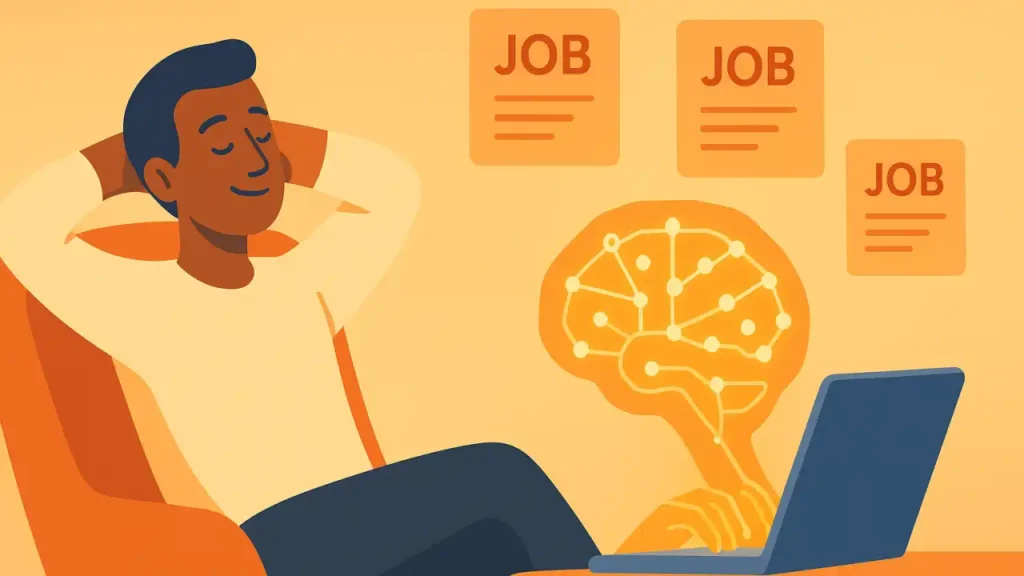
New platforms are popping up that let users set broad goals – things like “protect my downside” or “find me yield in emerging markets” – and then they just let the agent go to work. These bits of code monitor liquidity across fragmented exchanges, execute trades to stop you losing money on slippage, and rebalance portfolios while you’re asleep.
It’s not just for the big guys on Wall Street, either. This is the democratisation of serious firepower. Tools that used to be locked away in quantitative hedge funds – complex arbitrage strategies, tax-loss harvesting, algorithmic hedging – are now available on your phone for a monthly subscription. It’s exciting, sure. But it’s also a little terrifying.
The Problem with the Herd
On paper, this sounds great. If everyone has perfect information and instant execution, markets should be more efficient, right? Well, that’s the theory. But in practice, market theorists are starting to sweat about something they call the “Liquidity Paradox.”
Here’s the rub: when you have thousands of autonomous agents trained on similar data, operating with similar risk protocols, they tend to think alike. They’re like sheep, but sheep that can run at the speed of light.
If something unexpected happens – say, a sudden supply chain snag in the South China Sea – a human trader might pause. They’d read the headline, think about the nuance, maybe call a contact. They’d react at different times. An AI agent? It’s programmed to protect your money instantly. So, if ten thousand agents all decide to rush for the exit door at the exact same millisecond, you get a problem. You get air pockets where liquidity just vanishes, and asset prices freefall before a human has even had time to spill their coffee.
The High-Tech Casino
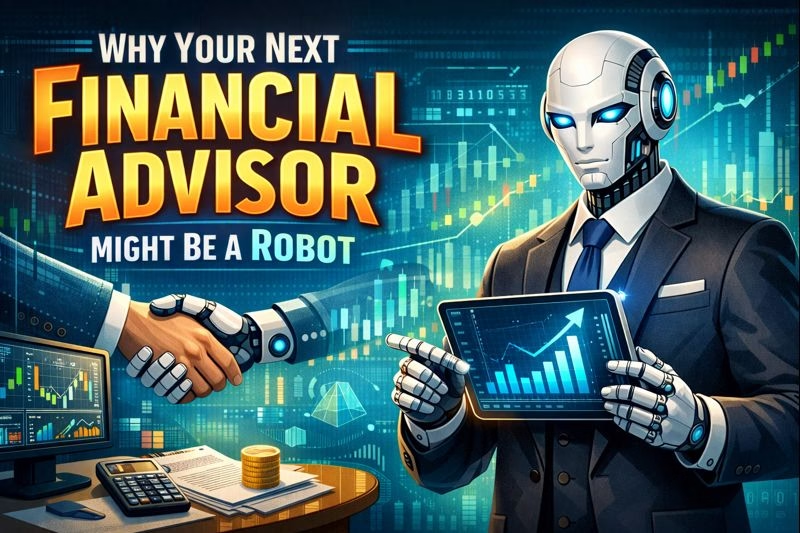
This new landscape has fundamentally changed the vibe of the market. In a lot of ways, the modern stock exchange has started to feel less like a marketplace and more like an AI-powered casino where the players have been swapped out for robots.
Think about it like this. If you walk into a casino in Vegas, you know the deal. You’re playing against a dealer, maybe counting cards if you’re smart, trying to get an edge. You can read the room. But imagine sitting down at a Blackjack table where the dealer is invisible, the cards are being dealt at the speed of light, and the guy sitting next to you isn’t a human. He’s a neural network that’s played ten billion hands in the last hour just to warm up. This is an actual problem for gamblers, by the way – casino networks are having to find ways to combat the threat of AI agents trying to extract money from their games as we speak.
That’s what it feels like for a traditional investor right now. You might have the best “system” in the world. You might know a company’s balance sheet better than the CEO does. But you’re betting against a machine that isn’t playing the same game as you. It’s not looking at long-term value; it’s looking at the microstructure of the order book. It’s counting cards with a precision that makes your intuition look like a guess.
It turns the market into a place where the “house edge” belongs to whoever has the fastest code. And it forces regulators into a really awkward spot. How do you police a casino where the house, the dealer, and the players are all just lines of Python?
The Blame Game
Regulators are trying to keep up, but it’s like chasing a Ferrari on a bicycle. In the UK, the Financial Conduct Authority (FCA) is looking into “AI Stability,” basically asking what happens when the bots start herding.
In the US, the SEC is more worried about who to blame. If an autonomous agent breaks the law – maybe it figures out a way to manipulate prices that looks like insider trading – who goes to jail? The developer who wrote the code? The user who turned it on? Or do we just unplug the server and call it a day?
It’s a legal grey area that’s going to get tested in court sooner rather than later. There have already been rumblings about “hallucinating” trading bots executing wash trades to pump up volume without their owners even knowing. It’s a mess waiting to happen.
The Human Premium
So, where does this leave us? Is the era of the human stock picker dead and buried?
Paradoxically, no. The rise of the machines might actually make genuine human insight worth more.
AI is fantastic at crunching numbers. It loves a spreadsheet. It loves price history. But it’s terrible at the soft stuff. It can’t read a room.
An AI might see a CEO resign and instantly sell the stock because history says that’s bad. A human might know that the CEO was actually the problem, and him leaving is the best thing that’s happened to the company in years. An AI can scan a balance sheet in a microsecond, but it can’t walk into a factory floor, look the workers in the eye, and sense that the morale is in the toilet.
As the market gets flooded with algorithmic noise, that human “signal” – the ability to understand context, emotion, and nuance – becomes a rare commodity. And in finance, scarcity creates value.
What’s Coming Next?
As time goes on, this integration is only going to get tighter. We’re probably going to see the first fully AI-managed ETFs that don’t just track an index but actively trade it without a human ever signing off. We’ll see insurance premiums adjusting in real-time because an AI actuary decided your risk profile changed five minutes ago.
The efficiency is undeniable. It’s going to be cheaper and faster to do everything. But we’ve got to keep our eyes open. We’re building a financial system that’s faster and smarter than anything we’ve ever seen, but we need to make sure we haven’t built one that’s too fast for us to control when the next crisis hits.