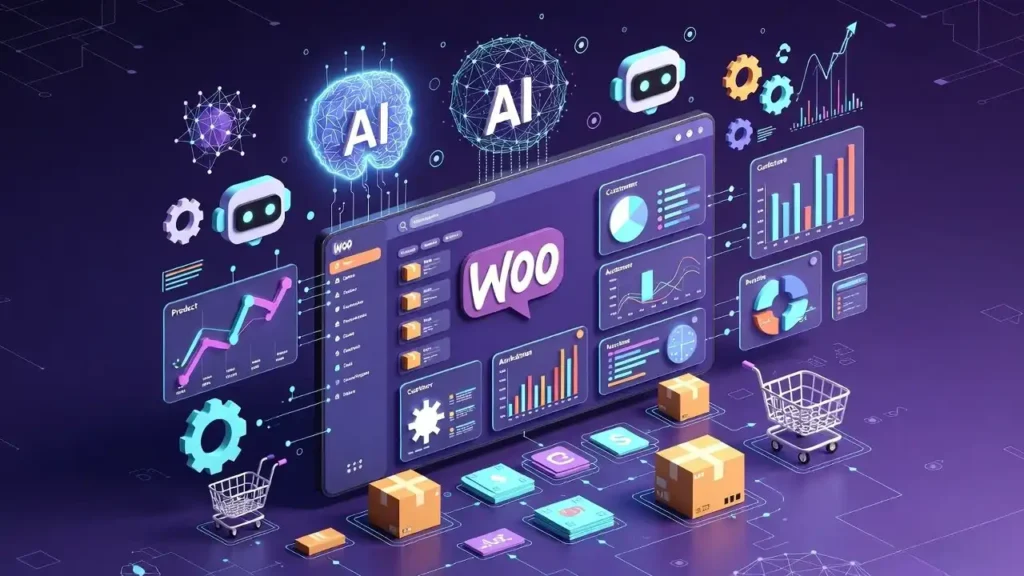
Back in 2011, WooCommerce was just a plugin. A pretty handy one, sure, but still just a bolt-on for WordPress that lets you throw up a product page without losing your mind. Fast forward to today and it powers something like 29% of all online stores globally. That’s not an accident.
What changed? A lot, honestly. The whole ecommerce world shifted. Customers got more demanding. Competition got fierce. And suddenly just “having a store” wasn’t enough anymore. Now everyone’s talking about AI in ecommerce, smart automation, data-driven decisions, and WooCommerce has had to keep up with all of it.
Here’s the thing though, the future of WooCommerce isn’t some vague concept. It’s already happening. Stores are using WooCommerce AI tools to recommend products, automate emails, manage inventory without lifting a finger, often with help from a WooCommerce Development Company. If you’re still running things the old way, you’re already a step behind. This post breaks down where things are headed and what you actually need to know.
Why WooCommerce Continues to Lead the eCommerce Market
People ask this sometimes, with Shopify and BigCommerce out there, why does WooCommerce still dominate? Honestly it comes down to a few things that matter a lot to businesses with any serious ambitions.
- Open source flexibility, you’re not locked into anyone else’s roadmap
- Massive plugin ecosystem, thousands of extensions, many free
- WordPress integration content and commerce in one place, which is genuinely powerful
- Cost effectiveness no forced monthly fees eating into margins
- Custom WooCommerce development developers can build literally anything on top of it
That last point matters more than people give it credit for. When a platform’s open, developers can go deep. That means WooCommerce store optimization isn’t limited by what the platform allows, it’s limited by what you can imagine (and budget for).
| Feature | WooCommerce | Other Platforms |
| Customization | Very High | Limited |
| Ownership | Full Control | Platform Controlled |
| Cost | Flexible | Subscription Based |
| Integrations | Extensive | Moderate |
Look, no platform is perfect. But for businesses that want real control without being nickel-and-dimed on features, WooCommerce just makes sense. That foundation is what makes AI and automation additions so powerful here.
The Role of AI in the Future of WooCommerce
WooCommerce AI isn’t just a buzzword people throw around at conferences. It’s genuinely changing how stores operate, and the gap between stores using it and stores ignoring it is growing fast.
AI-Powered Product Recommendations
This one’s big. Like, actually big. When someone lands on a product page, showing them relevant items they might actually want, not just random related products, changes everything. Amazon figured this out years ago and built an empire on it.
WooCommerce personalization through AI recommendation engines works by analyzing customer behavior: what they browse, what they buy, what they abandon. Then it makes smart suggestions. The results?
- Average order value goes up, sometimes significantly
- Customers find things faster, which means less friction
- Cross-selling and upselling happens automatically, without being pushy
Plugins like Clerk.io or even built-in tools from some hosting providers are bringing this kind of Amazon-style functionality to regular WooCommerce stores. It’s not just for enterprise anymore.
AI Chatbots for Customer Support
Nobody wants to wait 48 hours for an email reply to find out if something’s in stock. AI chatbots solve this, and they’ve gotten really good. Like, surprisingly good.
Modern WooCommerce chatbots handle a lot of the repetitive stuff:
- Order tracking and status updates
- Product guidance (“which size should I get?” type questions)
- Automated FAQ responses
- Returns and refund processes
The result is 24/7 support without paying a team around the clock. Customer service costs drop. Response times go to near-zero. And your actual human support people can focus on the weird edge cases that actually need a human brain.
Predictive Analytics for Sales Forecasting
This one flies under the radar but it’s probably the most useful for store owners who’ve been around a while. Predictive analytics uses historical data, sales, seasonality, browsing patterns, to forecast what’s coming.
Real example: imagine an outdoor gear store. Summer’s coming. Instead of guessing how many hiking boots to stock, the AI looks at last year’s data, current trend signals, and even external factors, and says “you’re going to need 40% more of this SKU in 6 weeks.” That’s not magic, that’s just good data use.
The payoff is avoiding stockouts (which kill sales and tank customer trust) and not over-investing in inventory that just sits there collecting dust.
Automation in WooCommerce: Making eCommerce Smarter
WooCommerce automation is where a lot of the day-to-day grind gets eliminated. Not replaced by robots taking over, more like setting smart systems in place so you’re not manually doing things that a computer can handle better and faster.
Automated Marketing Campaigns
Email marketing is still one of the highest ROI channels in ecommerce. But manually sending campaigns? Exhausting and often inconsistent. Automation changes that completely.
- Abandoned cart emails, triggered automatically, personalized, timed right
- AI-based product recommendation emails based on browse/purchase history
- Smart promotional campaigns tied to customer segments and behavior
- Win-back sequences for customers who haven’t bought in a while
Tools like Klaviyo, Mailchimp, or AutomateWoo plug directly into WooCommerce and handle all of this in the background. Set it up once, it runs forever. That’s the dream, honestly.
Inventory & Order Management Automation
Manual inventory tracking is one of the biggest time sinks in ecommerce. And mistakes are brutal, oversell something you don’t have and you’re dealing with unhappy customers and refunds. Automation fixes the whole thing.
| Automation Type | Benefit |
| Inventory automation | Prevent stockouts and over-ordering |
| Order automation | Faster fulfillment, fewer errors |
| Marketing automation | Higher conversions, less manual effort |
Supplier integrations can even trigger automatic reorders when stock hits a threshold. The whole supply chain runs smoother. Less stress, fewer mistakes.
Key WooCommerce Trends Businesses Should Watch
WooCommerce trends shift fast. Here’s what’s worth paying attention to right now.
Voice Commerce
Smart assistants, Alexa, Google Assistant, Siri, are becoming shopping tools. “Hey Alexa, reorder coffee” is already a thing. WooCommerce stores that optimize for voice search are positioning themselves ahead of a wave that’s still building. It’s not mainstream yet but ignoring it now would be a mistake.
Hyper-Personalization
Basic personalization is “hi, [first name].” Hyper-personalization is a completely different thing. It means the store actually adapts, layout, products shown, offers presented, based on:
- Individual browsing behavior
- Past purchase history
- Location and time of day
- Stated and inferred preferences
WooCommerce personalization at this level is powered by machine learning. It makes customers feel like the store was built for them specifically. That’s not creepy, that’s just good retail.
Headless WooCommerce
This is more of a developer-facing trend but it has real business implications. Headless architecture decouples the frontend from the WooCommerce backend. Your store’s content and commerce logic live in WooCommerce, but what the customer sees can be built in React, Vue, or any modern framework.
The result? Blazing fast performance, complete creative freedom, and experiences that feel more like apps than traditional websites. WooCommerce development is heading this direction fast, especially for brands competing at a higher level.
Benefits of AI and Automation for WooCommerce Stores
Let’s just be straight about what you actually get from embracing these tools:
- Better customer experience, faster support, relevant products, smoother checkout
- Higher conversion rates, personalization and smart recommendations move people toward purchase
- Reduced manual workload, automation handles repetitive tasks so your team does more valuable work
- Smarter decision making, data and predictive analytics replace gut-feeling guesses
- Scalable ecommerce operations, systems that grow with you without proportionally growing headcount
The compounding effect of all this is significant. A store doing WooCommerce store optimization properly, AI recommendations, automation, real personalization, doesn’t just perform a little better. It performs in a fundamentally different category than stores that haven’t made these investments.
Challenges Businesses May Face
Being realistic here, it’s not all smooth sailing. There are genuine challenges.
- Data privacy concerns, AI tools need data to work, and customers (and regulators) are increasingly watchful about how it’s collected and used. GDPR, CCPA, and evolving privacy laws create real compliance complexity.
- Implementation complexity, integrating AI tools into an existing WooCommerce setup isn’t always plug-and-play. Conflicts happen. Custom work is sometimes needed.
- Initial setup cost, good AI and automation tools aren’t free. There’s investment involved, and the ROI isn’t always instant.
- Learning curve for store owners, these tools have real power but they also have real configuration requirements. Not everyone has time to become an expert.
None of these are reasons to avoid the tools, they’re just things to go in with eyes open about.
How Businesses Can Prepare for the Future of WooCommerce
Practical steps, not theory:
- Invest in AI-powered tools, start with one area (recommendations or email automation) and build from there. You don’t have to do everything at once.
- Use automation plugins, AutomateWoo, Klaviyo, and similar tools integrate well with WooCommerce and have strong support communities.
- Focus on customer data, clean, structured data is the foundation everything else builds on. Get your analytics in order first.
- Improve store performance, speed matters for AI and for users. A slow store undermines everything else you’re trying to do.
- Working with experienced WooCommerce developers, custom WooCommerce development for AI integration isn’t something to DIY if you don’t have the technical depth. Good developers who understand both WooCommerce and modern AI tooling are worth finding.
Conclusion
The future of WooCommerce is already arriving, piece by piece. AI and automation aren’t replacing what makes WooCommerce great, they’re stacking on top of it, making everything faster, smarter, and more responsive to what customers actually need.
Stores that adopt these tools early aren’t just getting a temporary edge. They’re building systems and data advantages that compound over time. The gap between AI-enabled stores and traditional ones is going to keep widening.
You don’t need to overhaul everything overnight. But sitting still isn’t really an option anymore. Start somewhere, a recommendation engine, an abandoned cart sequence, better inventory automation, or simply hire WooCommerce expert support to implement the right tools. WooCommerce development has never had more powerful tools to work with. Use them.
FAQs
1. How is AI changing WooCommerce stores?
AI is transforming WooCommerce stores by enabling smarter product recommendations, automated customer support through chatbots, and predictive analytics for inventory and sales forecasting. Instead of guessing what customers want, stores can respond to real behavioral data in real time.
2. What are the benefits of WooCommerce automation?
Automation saves time, reduces human error, and scales operations without proportionally increasing costs. Key benefits include automated marketing campaigns, streamlined order processing, and inventory management that runs in the background without constant manual oversight.
3. Can small businesses use AI in WooCommerce?
Yes, and this is one of the most encouraging shifts in recent years. Many WooCommerce AI tools have tiered pricing, free plans, or low-cost entry points. Small stores can start with basic email automation or a simple recommendation plugin and scale up as they grow. You don’t need enterprise budgets to get started.
4. What are the best AI tools for WooCommerce?
Popular options include Clerk.io for product recommendations, Klaviyo for AI-driven email marketing, AutomateWoo for workflow automation, and Tidio or Intercom for AI chatbots. The right tool depends on your store’s size, goals, and technical setup.
5. Is WooCommerce future-proof for ecommerce?
Strong signs point to yes. WooCommerce’s open-source nature means it adapts, the platform isn’t locked to one company’s product roadmap. Headless WooCommerce, AI integrations, and an active developer community all point to a platform that evolves with the industry rather than falling behind it.
6. How can developers build AI-powered WooCommerce stores?
Experienced WooCommerce developers can integrate AI through REST APIs, third-party ML platforms, and purpose-built plugins. Headless architecture using WooCommerce as a backend opens up even more possibilities, React frontends, custom AI layers, and deeply personalized experiences. Custom WooCommerce development with an AI focus is a growing specialization for good reason.