In modern manufacturing and engineering environments, maintaining consistent quality is not optional—it is a competitive necessity. As products become more complex and customer expectations continue to rise, manufacturers rely on precise measurement tools to ensure reliability, safety, and performance. Among these tools, digital force gauges have become essential instruments in quality control and testing processes across a wide range of industries.
Digital force gauges provide accurate, repeatable force measurements that help organizations validate product integrity, meet regulatory standards, and reduce costly defects. From delicate component testing to high-precision assembly verification, these devices play a critical role in ensuring that products perform exactly as intended.
Understanding Digital Force Gauges
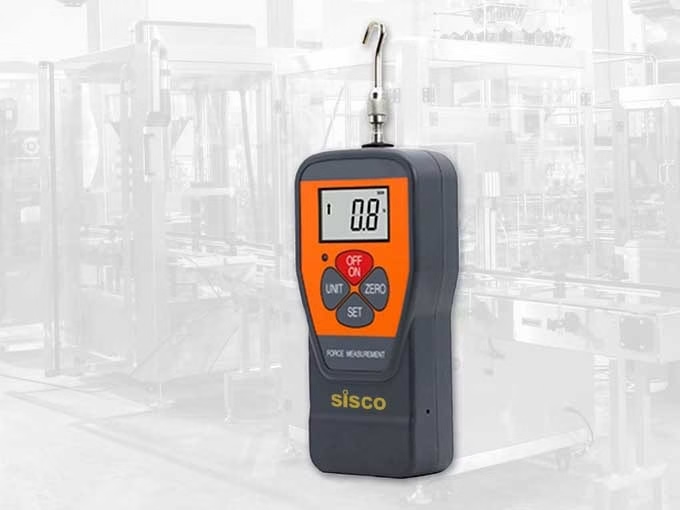
Digital force gauges are electronic measurement devices designed to measure tension and compression forces with high accuracy. Unlike traditional mechanical gauges, digital force gauges use electronic sensors and digital displays to deliver precise, real-time readings.
These instruments are widely used in laboratories, production lines, and inspection facilities to test push, pull, break, and compression forces. Their ability to provide consistent and data-driven measurements makes them indispensable in quality-driven manufacturing environments.
Key Components of Digital Force Gauges
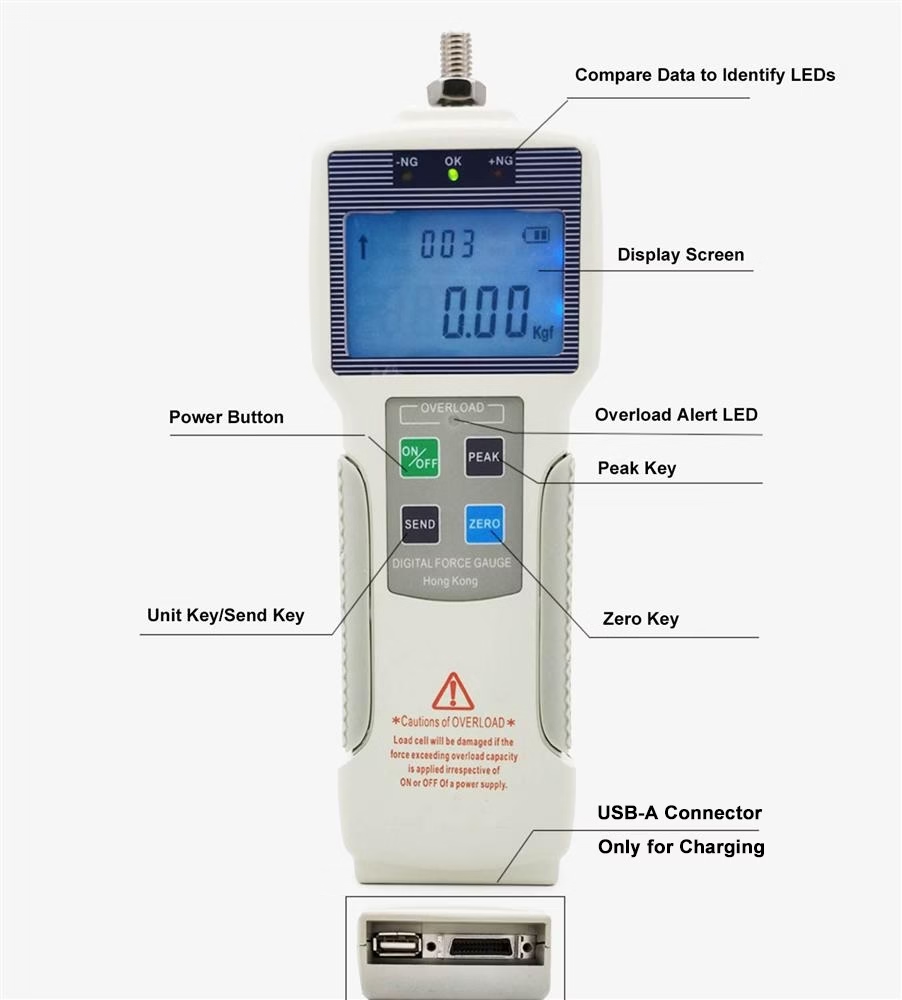
A typical digital force gauge includes:
* A high-precision load cell or force sensor
* A digital display for real-time force readings
* Internal electronics for data processing
* Connectivity options such as USB or RS232 for data transfer
Advanced models may also include peak hold functions, programmable limits, and data logging capabilities, further enhancing their usefulness in quality control applications.
Importance of Force Measurement in Quality Control
Force measurement is a critical parameter in many manufacturing and testing processes. Inadequate or excessive force can lead to product failure, safety hazards, or premature wear. Quality control teams use force measurement to ensure that every component meets predefined specifications.
Digital force gauges enable organizations to:
* Verify assembly forces
* Test material strength and durability
* Ensure product consistency across production batches
* Identify defects before products reach customers
By incorporating force measurement into routine inspections, manufacturers significantly reduce rework, returns, and warranty claims.
Applications Across Industries
Digital force gauges are used in a wide range of industries, each with unique quality control requirements.
Manufacturing and Assembly
In manufacturing environments, force measurement is crucial for ensuring proper assembly. Digital force gauges help verify press-fit operations, insertion forces, and fastening strength. Consistent force application ensures that components are securely assembled without damage.
Electronics and Micro-Component Testing
Electronics manufacturing often involves fragile components that require precise force control. A digital force gauge is particularly valuable in these applications, as it allows technicians to measure very low forces with high resolution. This ensures that delicate connectors, switches, and micro-components are tested without risk of deformation or failure.
Automotive and Aerospace Testing
In the automotive and aerospace industries, safety and reliability are paramount. Digital force gauges are used to test springs, switches, cables, and mechanical assemblies to ensure they meet strict performance standards. Accurate force measurement helps prevent component failure in critical applications.
Medical Device and Healthcare Equipment
Medical devices must comply with rigorous regulatory requirements. Digital force gauges are used to test syringe plungers, catheter insertion forces, and surgical instrument resistance. Precision measurement ensures patient safety and regulatory compliance.
Advantages of Digital Force Gauges Over Mechanical Gauges
The transition from mechanical to digital force gauges has transformed quality control practices.
Higher Accuracy and Repeatability
Digital force gauges offer significantly higher accuracy than mechanical alternatives. Their electronic sensors minimize human error and provide repeatable measurements, which is essential for consistent quality control.
Real-Time Data and Analysis
With digital displays and data output options, digital force gauges allow real-time monitoring and recording of force measurements. This data-driven approach supports better decision-making and process optimization.
Ease of Use and Efficiency
Digital force gauges are user-friendly, requiring minimal training. Features such as peak force capture and programmable thresholds streamline inspection processes and reduce inspection time.
Integration with Quality Management Systems
Many digital force gauges can integrate with quality management and statistical process control systems. This enables automated data collection, trend analysis, and audit-ready documentation.
The Role of Low-Range Force Measurement
Not all quality control tasks involve high forces. In many industries, especially electronics, packaging, and medical devices, low-force measurement is critical.
A digital force gauge is designed specifically for applications requiring high sensitivity and precision. These gauges allow quality teams to:
* Measure gentle insertion or extraction forces
* Test soft materials without damage
* Ensure ergonomic compliance in consumer products
Low-range force measurement ensures that products function smoothly and safely, even in delicate applications.
Supporting Compliance and Standards
Regulatory compliance is a major concern for manufacturers. Digital force gauges support compliance with international quality standards by providing traceable, documented measurements.
Calibration certificates, data logs, and consistent measurement accuracy help organizations meet requirements set by ISO, FDA, and other regulatory bodies. Reliable force measurement reduces audit risk and enhances overall quality assurance programs.
Enhancing Process Optimization and Continuous Improvement
Beyond inspection, digital force gauges contribute to process improvement initiatives. By analyzing force measurement data, manufacturers can identify trends, detect deviations, and optimize production parameters.
This proactive approach allows organizations to:
* Improve product consistency
* Reduce material waste
* Enhance operational efficiency
* Support lean manufacturing initiatives
Force measurement data becomes a valuable asset in continuous improvement strategies.
Choosing the Right Digital Force Gauge
Selecting the appropriate force gauge depends on application requirements, force range, accuracy, and environment. While high-capacity gauges are suitable for heavy-duty testing, low-range instruments such as a 0-5N digital force gauge are essential for precision tasks.
Factors to consider include:
* Measurement range and resolution
* Accuracy and repeatability
* Data output and connectivity
* Environmental conditions and durability
Choosing the right tool ensures reliable results and long-term value.
Conclusion
Digital force gauges play a vital role in modern quality control and testing by providing accurate, reliable, and repeatable force measurements. Their ability to support compliance, improve efficiency, and enhance product quality makes them indispensable across industries.
From high-force structural testing to delicate applications requiring a digital force gauge, digital force gauges enable manufacturers to maintain consistent standards and meet growing quality expectations. As industries continue to demand higher precision and accountability, these tools will remain central to effective quality control and testing strategies.