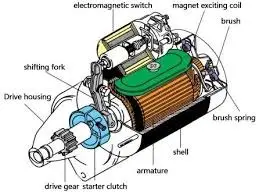
An automotive starter is a key part of your car. It helps the engine start quickly and smoothly every time you turn the key or push the start button. Without it, your vehicle would not move. In this article, we will look at what a starter is, its main parts, and how it works. We will explain everything in simple terms so you can understand the basics.
What is an Automotive Starter?
The automotive starter is also called a starter motor. It is an electric motor that turns the engine to get it running. When you start your car, the starter draws power from the battery. It spins the engine until it reaches a speed where the engine can run on its own using fuel.
Starters are found in almost all gasoline and diesel cars, trucks, and other vehicles. They sit near the engine, usually on the side or bottom. A good starter works quietly and fast. If it fails, your car may make clicking sounds or not start at all.
Modern starters are reliable, but they still need regular checks as part of car care. They work together with other systems like the battery and alternator to keep your vehicle running.
Main Parts of a Starter
A typical automotive starter has several important parts that work together. Let’s go through them one by one.
First, there is the electric motor. This is the main piece that creates the spinning force. It uses coils of wire and magnets to turn electrical energy into mechanical movement.
Next comes the solenoid. This is like a switch. When you turn the ignition, the solenoid gets power and pushes a small gear into place. It also closes the circuit to send full power to the motor.
The drive gear, or pinion gear, is another key part. It is a small gear that connects to the engine’s flywheel. The solenoid moves this gear forward so it can turn the larger flywheel and start the engine. Once the engine starts, the gear pulls back to avoid damage.
Other parts include the housing, which protects everything, and brushes that carry electricity inside the motor. There are also bearings that help the shaft spin smoothly with less friction.
Some starters have a reduction gear system. This makes the motor turn faster while giving more power to the engine. These parts work as a team to deliver the right amount of force at the right time.
How Does a Starter Work?
The working principle of an automotive starter is based on basic electricity and mechanics. It follows a clear sequence every time you start the car.
When you turn the key to the start position or press the button, a small signal goes to the solenoid. The solenoid then does two jobs at once. It pushes the drive gear out to meet the flywheel teeth. At the same time, it connects the battery directly to the starter motor.
Now the motor gets full battery power. Electricity flows through the coils, creating a strong magnetic field. This field makes the armature (the spinning part) turn very quickly. The turning force goes through the drive gear to the engine’s flywheel, which rotates the crankshaft.
The engine needs to reach about 200 to 300 revolutions per minute to start. Once the engine fires up and runs on its own, the starter must stop immediately. A special one-way clutch in the drive gear prevents the engine from spinning the starter too fast, which could break it.
This whole process usually takes less than two seconds in a healthy car. The starter then rests until the next start.
The Working Principle Step by Step
Let’s break the working principle into clear steps:
- Ignition signal: You turn the key. A small current goes to the solenoid.
- Solenoid activation: The solenoid coil pulls a plunger. This moves the drive gear forward and closes heavy contacts for main power.
- Motor spins: High current from the battery reaches the motor. The armature turns fast.
- Engine cranks: The pinion gear turns the flywheel, rotating the pistons and valves.
- Engine starts: Combustion begins. The engine speeds up.
- Disengagement: When you release the key, the solenoid pulls back. The gear moves away, and power to the motor stops.
This cycle repeats thousands of times over the life of a car. Heat, dirt, and wear can affect each step, which is why good maintenance matters.
Types of Starters
There are a few common types of automotive starters.
Direct drive starters are simple and used in many older cars. The motor connects straight to the drive gear.
Gear reduction starters are more popular today. They use extra gears to increase torque, making them smaller and lighter while still powerful. These are good for big engines.
Permanent magnet starters use strong magnets instead of field coils. They are even lighter and use less power from the battery.
Some modern cars have stop-start systems with special reinforced starters that can handle many more starts per day.
Each type follows the same basic working principle but has small differences in structure to fit different vehicle needs.
Common Problems and How to Fix Them
Starters can have issues after years of use. The most common problem is a weak battery that does not give enough power. Always check the battery first.
Other problems include worn brushes, bad solenoid contacts, or a damaged drive gear. You might hear a clicking sound with no cranking, or the starter may spin without turning the engine.
If the starter stays engaged too long, it can overheat. Regular cleaning and tight connections help prevent this.
For maintenance, keep the battery clean and charged. Listen for strange noises when starting. If you notice slow cranking, have a mechanic test the starter.
Many people replace the whole starter when it fails because rebuilding can be complex. Choosing quality parts makes a big difference in how long it lasts.
If you want to learn the differences between the starter and the alternator, you can view more.
Why Understanding Your Starter Matters
Knowing the structure and working principle of an automotive starter helps you take better care of your car. You can spot problems early and avoid being stuck with a car that won’t start.
A well-maintained starter improves reliability and saves money on repairs. It works closely with the battery and charging system, so good overall electrical health is important.
For quality automotive parts and expert advice, check out Unitech Motor on their website. They offer reliable starters and other components for many vehicle models.
In summary, the automotive starter is a smart, powerful device. Its simple but effective design has changed little over the decades because it works so well. From the solenoid to the drive gear, every part plays a clear role in getting your engine running fast.