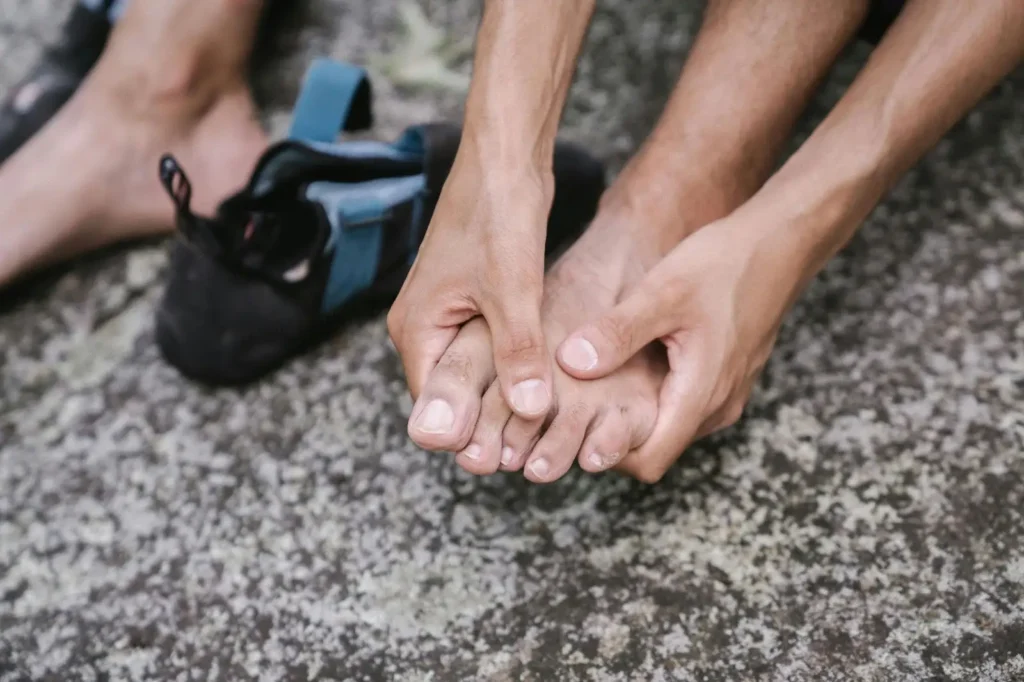
You finished a long walk. Your feet are throbbing. Your arches ache. Your toes feel like they’ve been in a fistfight with your shoes — and lost.
Sound familiar? Most people blame the distance. Or the pavement. Or their age. But the real culprit is usually sitting right there on the shoe rack.
The wrong footwear doesn’t just fail to help your feet. It actively works against them. And the worst part? The shoes you think are protecting you might be the ones doing the most damage.
Why Your Feet Hurt After Walking — and How Footwear Plays a Bigger Role Than You Think
Foot pain after walking isn’t random. There’s a mechanical reason behind it, and shoes sit at the center of that equation.
Most conventional walking shoes have elevated heels, stiff soles, and narrow toe boxes. That combination forces your foot into a position it wasn’t built for. Your toes get squeezed together. Your heel strikes the ground at an unnatural angle. Your arch, trapped under a rigid support, stops doing its job.
Over miles, those small compromises add up. Muscles fatigue faster because they’re compensating for a shoe that’s working against your anatomy. It’s like trying to type while wearing oven mitts. Technically possible. Wildly inefficient.
Your feet weren’t meant to be passengers. They were built to drive.
How Cushioned Shoes Weaken Your Feet Over Time
Cushioning sounds helpful. More padding, less pain — right? Not exactly.
Thick cushioning blocks sensory feedback from the ground. Your brain can’t feel the surface, so it tells your feet to strike harder. Studies call this the “cushioning paradox.” More padding often leads to higher impact forces, not lower.
Then there’s the muscle problem. When foam does the shock absorption, your foot muscles go dormant. Arches flatten. Tendons stiffen. After years of cushy shoes, your feet lose the strength they need for basic walking.
It’s the same idea as strapping on a back brace from morning to night. It feels supportive at first. But your core muscles weaken because they never have to engage. The same principle applies to your feet. The support becomes the problem.
Signs Your Walking Shoes Are Causing Foot Fatigue
Not sure if your shoes are the issue? Your feet are probably already telling you. Here’s what to watch for:
- Sore arches after moderate walks — a sign your foot muscles are overcompensating for poor shoe design
- Numb or tingling toes — usually caused by a toe box that’s too narrow, cutting off circulation
- Heel pain in the morning — often linked to shoes with excessive heel elevation that strain your plantar fascia overnight
- Blisters in the same spots repeatedly — friction from a shoe that doesn’t match your foot’s natural shape
- Heavy legs by afternoon — your lower limbs are burning extra energy fighting footwear that restricts natural movement
If three or more of these sound like your daily reality, the shoes deserve a serious second look. Brands like Rutsu Barefoot Shoes have built their entire approach around eliminating these exact problems.
What to Look for in Shoes That Actually Support Long-Distance Walking
Forget brand names for a second. Focus on function. A shoe that supports long walks needs a few non-negotiable features.
First, a wide toe box. Your toes need room to splay and grip with each step. Cramped toes mean lost stability and wasted energy. Second, a thin and flexible sole. You want ground feel — that direct feedback that keeps your gait efficient and your muscles engaged. Third, zero or minimal heel-to-toe drop. A flat sole keeps your body aligned from the ground up. No forward tilt, no chain reaction of compensation through your knees, hips, and back.
Weight matters too. Heavy shoes drain energy over distance. A lighter shoe lets you walk farther with less effort. Simple physics, big payoff.
Minimalist Shoes vs Traditional Walking Shoes — Which Ones Reduce Foot Tiredness
Traditional walking shoes pile on features: gel inserts, arch supports, motion control, reinforced heels. They treat the foot like a fragile thing that needs constant protection.
Minimalist shoes take the opposite approach. They strip away everything that interferes with how your foot naturally moves. Less material. More freedom. The foot does the work it was designed for.
Research backs this up. A 2020 study in Scientific Reports found that people who wore minimalist footwear for six months showed measurable increases in foot muscle size and arch strength. Traditional shoe wearers showed no change.
That doesn’t mean minimalist shoes are magic. They ask more from your feet, especially early on. But over time, they build a foundation of strength that cushioned shoes simply cannot match. Less fatigue on long walks is one of the clearest benefits people report after making the switch.
How to Transition to Better Footwear Without Making Your Feet Worse
Switching cold turkey is a mistake. Your feet have spent years — maybe decades — relying on cushioning and support. Pull that away overnight, and you’ll trade one type of pain for another.
Start with an hour a day. Wear your minimalist shoes around the house or on short errands. Let your calves, arches, and toes adapt gradually. Increase wear time by about 30 minutes each week.
Strengthen your feet alongside the transition. Toe spreads, calf raises, and walking on varied surfaces all help. Think of it as physical therapy for muscles that have been asleep.
Listen to your body. Mild soreness is part of the process. Sharp or persistent pain means you’re pushing too fast. Patience here pays off in lasting comfort down the road.
Stop Blaming the Walk — Start Fixing the Shoe
Long walks shouldn’t end in pain. If they do, the distance isn’t the enemy — your footwear is.
The right shoe works with your foot, not against it. It lets muscles engage, toes spread, and joints move freely. It turns every walk into quiet strength training instead of slow-motion damage.
Stop settling for shoes that look supportive but leave you limping by evening. Your feet already know how to walk. Give them a shoe that lets them prove it.
Frequently Asked Questions
Why do my feet ache even in expensive walking shoes?
Price tags don’t fix bad design. If the shoe squeezes your toes or blocks ground feel, your feet will protest regardless of the receipt.
Can walking shoes cause knee or hip pain?
Absolutely. Your foot is the first domino. A shoe that throws off your gait sends compensation rippling upward through knees, hips, and lower back.
How do I know if my shoes are too cushioned?
Try standing on one foot barefoot, then in your shoes. If balance is easier without them, your cushioning is stealing sensory feedback your body needs.
Will switching to minimalist shoes make plantar fasciitis better or worse?
Better. Strengthening foot muscles often addresses the root cause. But transition slowly and consult a professional if pain is severe.
How often should I replace walking shoes?
Most shoes lose structural integrity after 300 to 500 miles. If the sole compresses unevenly or the shoe leans to one side on a flat surface, it’s time.