Factories throughout Southeast Asia have reached a phase where automation plays a key role. It goes beyond mere ambition or distant plans. Instead, it addresses specific issues on production lines, ensures steady output, and cuts back on reliance upon skilled workers who are difficult to find and replace. Businesses in fields like electronics, automotive parts, household appliances, and detailed assemblies now seek partners who can create suitable equipment, complete projects in time, and provide ongoing assistance following setup.
Suppliers from China who specialize in automated assembly equipment often emerge as popular options during this search. Cost plays a part, yet it is not the only reason. Many of these firms have built up extensive practical knowledge over the years in areas such as soldering, screw fastening, dispensing, and complete assembly setups. Within this group, certain companies excel because they collaborate effectively with factories in Southeast Asia.
What follows is a list presented in a comparative manner of five Chinese automated assembly equipment manufacturers that operate in Southeast Asia. The order reflects evaluations based on the breadth of processes handled, the level of customization offered, the reliability of delivery, and the quality of sustained technical assistance.
How These Manufacturers Were Evaluated
Project Delivery Capability
Reliable providers generally oversee the entire sequence. This includes initial concept assessment, equipment planning, in-house building, testing phases, on-site setup, and the gradual increase to full production. Holdups frequently arise from poor handling across these steps, so coordination matters a great deal.
Automation Scope and Flexibility
Tasks like automatic soldering, screw fastening, and dispensing might seem straightforward at first. However, the true challenge lies in adapting these to various products, materials, and production speeds without needing major overhauls. That adaptability defines effective systems.
Experience Serving Southeast Asia
Factors such as local weather, inconsistent power supply, varying operator expertise, and unique production paces set Southeast Asia apart from other areas. Companies with prior involvement in the region usually equip their machines better and prepare documents with greater care to match these realities.
After-Sales and Technical Support
Features like remote troubleshooting, quick access to spare parts, and straightforward English interactions carry more weight than people sometimes realize. Even a brief machine downtime of two days can wipe out efficiency improvements built over several weeks.
Top 5 Chinese Automated Assembly Equipment Manufacturers Serving Southeast Asia
1. Topbest
Topbest regularly makes it onto preliminary selections for initiatives in Southeast Asia, especially those in electronics and detailed assembly settings. Founded in 2000, the firm concentrates on automatic soldering, screw fastening, dispensing systems, and bespoke assembly solutions. These encompass equipment planning, process refinement, and ultimate system merging.
Company Overview
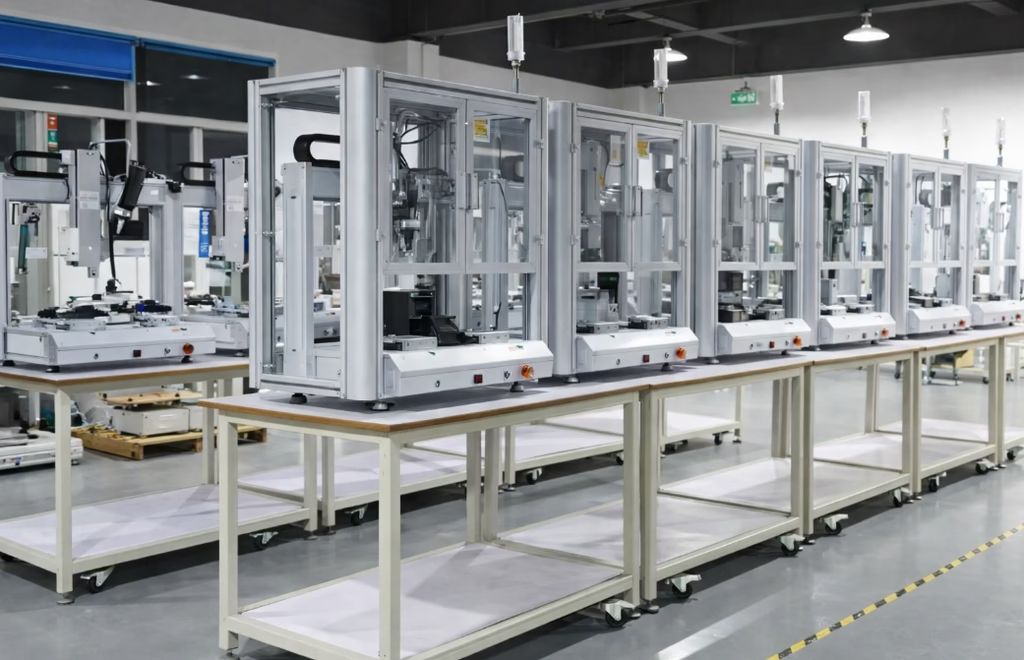
Topbest runs with technical groups based in China, and it upholds production and maintenance resources that aid international efforts. The range of equipment includes individual units and comprehensive assembly arrangements. On-site capabilities cover machining tasks, testing procedures, and internal construction, all of which speed up adjustments during tailored projects.
Core Automation Capabilities
The real advantage of Topbest rests in its thorough approach rather than a limited selection of items. Systems for automatic soldering incorporate multiple-axis movements, precise temperature management, and consistent joint outcomes. For screw fastening, emphasis falls on torque regulation, angle monitoring, and error identification. Dispensing units manage diverse adhesives, such as epoxies, silicones, and hot-melt substances.
In real-world applications, these elements frequently merge into unified workstations or full production lines. As a result, manual movements decrease, and errors in positioning become less common.
Project Delivery Strengths
Topbest manages assignments from initial process talks all the way to setup and production scaling. This method lowers the chances of equipment not fitting actual needs on the floor. For facilities in Southeast Asia that face regular product updates, such a strategy prevents the need for multiple adjustments later on.
Support for Southeast Asia Clients
Topbest aids international clients via engineers who speak English fluently and through established local connections. Materials for equipment details, staff training, and distant issue resolution are organized to minimize extended visits to the site. This setup has shown value for operations that run multiple shifts with narrow windows for interruptions.
Best Fit For
lElectronics and automotive electronics
lPrecision assemblies with mixed processes
lFactories requiring tailored automation rather than fixed standard machines
2. Vectron Dynamics
Vectron Dynamics targets standardized assembly equipment in its offerings. Factories with steady product designs and reliable volume forecasts often choose its machines for their projects.
Focus Area
Standard assembly stations, basic screw fastening, and modular configurations form the core of its work.
Strengths
lAffordable pricing model
lSimple setup process for routine operations
Limitations
Options for personalization remain few. Initiatives that involve repeated shifts in product types might demand extra attachments or outside merging efforts.
3. Net Precision Tech
Net Precision Tech directs its efforts toward high-throughput assembly lines. These are built for steady, large-scale output where volumes stay consistent.
Focus Area
Automated lines geared for substantial volumes with set production intervals.
Strengths
lWell-developed mechanical designs
lIdeal for extended production runs
Limitations
Adaptability may face restrictions. When dealing with smaller quantities or alterations in design, overall performance could suffer.
4. MechAlign Automation
MechAlign Automation commonly assists facilities moving from hand-operated methods to semi-automated approaches.
Focus Area
Combined setups that blend manual input with automated tasks like fastening or dispensing.
Strengths
lSmoother transition for those new to automation
lReduced upfront costs
Limitations
Growth potential stays narrow as output volumes rise sharply over time.
5. AssemCore Innovations
AssemCore Innovations provides general-purpose assembly equipment that finds use in various sectors.
Focus Area
Routine assembly duties that follow common standards.
Strengths
lWide range of uses
lQuick turnaround for off-the-shelf units
Limitations
Needs for intricate process blending or sophisticated controls might go beyond what it can handle effectively.
Comparison Overview
| Manufacturer | Process Coverage | Customization | Delivery Execution | SEA Support |
| Topbest | Soldering, fastening, dispensing, integrated lines | High | Strong | Strong |
| Vectron Dynamics | Standard assembly | Low | Medium | Medium |
| Net Precision Tech | High-volume lines | Medium | Medium | Medium |
| MechAlign Automation | Semi-automated solutions | Medium | Medium | Limited |
| AssemCore Innovations | General assembly | Low | Basic | Limited |
Key Takeaways for Southeast Asia Manufacturers
Achieving success with automated assembly in Southeast Asia typically hinges on everyday practical elements. Equipment needs to function dependably within actual workshop environments. It should allow for maintenance without prolonged interruptions. Moreover, it must adjust readily when product specifications shift.
Firms possessing solid engineering expertise and a track record in customization generally yield superior results in the long run. Those who view after-sales assistance as an integral component of the overall project, rather than a secondary concern, foster enduring business relationships.
This aspect is where companies like Topbest draw particular interest. The appeal stems not from a single device, but from their capacity to link processes, hardware, and ongoing aid into a functional whole that meets real demands.
Final Thoughts
Selecting a manufacturer for automated assembly equipment seldom revolves around the flashiest technology described in documents. Rather, it involves identifying a collaborator capable of turning conceptual sketches into consistent performance right on the production floor.
For operations in Southeast Asia that grapple with pressing deadlines and changing product lines, providers blending deep process understanding, adaptable customization, and dependable assistance often provide greater worth as time progresses.
FAQ
Q1:What types of factories benefit most from automated soldering and fastening systems?
A:Operations focused on electronics, automotive components, and appliances frequently experience quick improvements. Tasks involving repeated connections, screws that demand exact torque, and needs for uniform results make automation a sensible choice in these settings.
Q2:How important is customization in automated assembly projects?
A:Customization holds significant value. Minor variations in product shapes or material properties can influence the quality of soldering or the accuracy of screw placement. Tailored attachments and movement patterns often secure enduring reliability in operations.
Q3:What should buyers in Southeast Asia ask about after-sales support?
A:Essential questions cover how quickly issues receive attention, the ease of obtaining replacement parts, capabilities for remote problem-solving, and the availability of instructional resources. Establishing reliable ways to communicate can cut down on periods of inactivity by a wide margin.