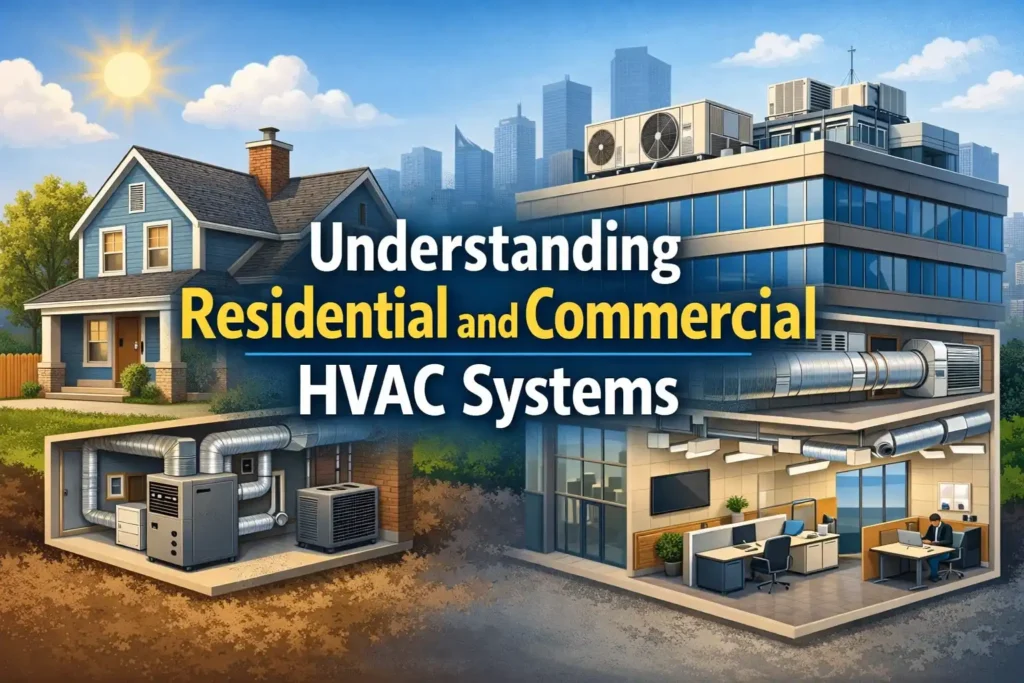
Residential & Commercial HVAC Solutions play a critical role in modern life, helping families and businesses stay comfortable year-round regardless of outside weather conditions. Whether it’s the peak of summer heat or the chill of winter, HVAC systems quietly regulate temperature, improve indoor air quality, and create healthier, more productive spaces. While many people only think about heating or cooling when something stops working, these systems are essential every single day.
What Is an HVAC System?
HVAC stands for heating, ventilation, and air conditioning. Together, these components manage indoor temperature, humidity, and airflow. A heating system keeps indoor spaces warm during colder months. Air conditioning removes heat and excess moisture during warmer seasons. Ventilation ensures fresh air circulates throughout the building while filtering out pollutants.
In both homes and commercial buildings, HVAC systems are designed to create stable, comfortable environments. However, the scale and complexity can differ. A single-family home may rely on a centralized heating and cooling unit, while a large office building may use multiple interconnected systems to maintain consistent conditions across various rooms and floors.
The Importance of HVAC in Residential Spaces
At home, comfort directly affects quality of life. A well-functioning HVAC system does more than keep the temperature pleasant. It helps regulate humidity, which reduces mold growth and protects furniture, flooring, and personal belongings. Proper ventilation also removes airborne contaminants such as dust, pollen, and pet dander.
For families with children, older adults, or individuals with respiratory conditions, indoor air quality is especially important. Poor ventilation can trap pollutants indoors, leading to allergies or breathing difficulties. Regular maintenance and properly functioning systems ensure cleaner air and safer living conditions.
Energy efficiency is another key factor. Modern HVAC systems are designed to use less energy while delivering consistent performance. When systems are properly installed and maintained, they consume less power, which can lower monthly utility costs and reduce environmental impact.
The Role of HVAC in Commercial Buildings
Commercial HVAC systems serve a broader purpose. Beyond comfort, they support productivity, safety, and operational efficiency. In offices, consistent indoor temperatures help employees focus and work comfortably. In retail spaces, a pleasant environment encourages customers to stay longer. In healthcare settings, precise temperature and humidity control are critical for patient care and equipment performance.
Large commercial spaces often have varying heating and cooling needs. For example, server rooms may require constant cooling, while conference areas might need adjustments based on occupancy. A reliable system allows for flexible climate control in different zones of a building.
Ventilation in commercial environments is also essential for meeting health and safety standards. Proper airflow reduces the spread of airborne contaminants and ensures fresh air circulation in high-traffic areas.
Why Routine Maintenance Matters
Many HVAC problems develop slowly. A clogged filter, worn-out component, or small refrigerant leak might not cause immediate failure but can gradually reduce efficiency. Over time, minor issues can lead to higher energy bills, uneven temperatures, or complete system breakdowns.
Routine inspections and maintenance help prevent these problems. Cleaning filters, checking ductwork, inspecting electrical connections, and ensuring proper airflow all contribute to long-term performance. Preventive care often costs less than emergency repairs and extends the lifespan of the equipment.
For both residential and commercial settings, scheduling seasonal maintenance is a practical way to stay comfortable year-round without unexpected disruptions.
Energy Efficiency and Environmental Impact
Heating and cooling account for a significant portion of energy use in most buildings. As energy costs rise and environmental concerns grow, efficiency has become a priority. Modern Residential & Commercial HVAC Solutions are designed with advanced technology that optimizes performance while minimizing waste.
Programmable thermostats, zoning systems, and high-efficiency units allow users to control when and how energy is used. For example, reducing heating during unoccupied hours in an office building can lead to substantial savings over time. Similarly, adjusting home temperatures while away at work can make a noticeable difference on monthly bills.
Efficient systems not only lower costs but also reduce carbon emissions. Choosing energy-conscious options and maintaining them properly benefits both property owners and the environment.
Indoor Air Quality: An Often Overlooked Benefit
Temperature control often gets most of the attention, but ventilation is just as important. Indoor air can contain dust, allergens, bacteria, and even chemical pollutants from cleaning products or building materials. Without proper airflow, these contaminants accumulate.
HVAC systems equipped with high-quality filtration can capture many airborne particles before they circulate through the building. Balanced humidity levels also discourage mold and mildew growth. In commercial spaces with high occupancy, proper ventilation helps maintain a healthier environment for employees and visitors.
Over time, attention to indoor air quality can reduce sick days, improve comfort, and support overall well-being.
The Value of Professional Installation
An HVAC system is a long-term investment. Proper sizing and installation are crucial for performance. A system that is too large may cycle on and off frequently, wasting energy and causing uneven temperatures. One that is too small may struggle to keep up with demand, leading to constant operation and premature wear.
Professional assessment considers factors such as building size, insulation, layout, and climate. This ensures the system matches the specific needs of the space. Correct installation also improves safety and efficiency from the start.
Planning for Long-Term Comfort
Whether in a home or commercial setting, HVAC systems should be viewed as part of long-term building planning. Regular upgrades, system evaluations, and energy audits can help identify opportunities for improvement. As technology advances, new features can offer better control and efficiency.
Staying comfortable year-round is not just about reacting to extreme weather. It involves thoughtful system design, regular maintenance, and attention to indoor air quality. Reliable heating, ventilation, and air conditioning systems quietly support daily life, making homes livable and workplaces productive.
When these systems operate efficiently, people often forget they are even there. That is usually a sign everything is working as it should. By understanding the importance of HVAC systems and investing in proper care, property owners can create stable, healthy environments that perform well in every season.