Losing teeth is about more than the loss of your smile; it can do a number on your ability to chew, speak with confidence and well-being.
Teeth implants replacements now strongly hold a great place in the world of restorative dentistry. These are made to appear, feel and work like your natural teeth, unlike dentures or bridges.
Keep reading, we’ll explain what dental implants are, how they work and what makes them such an attractive option for modern dentistry.
What is a Teeth Dental?
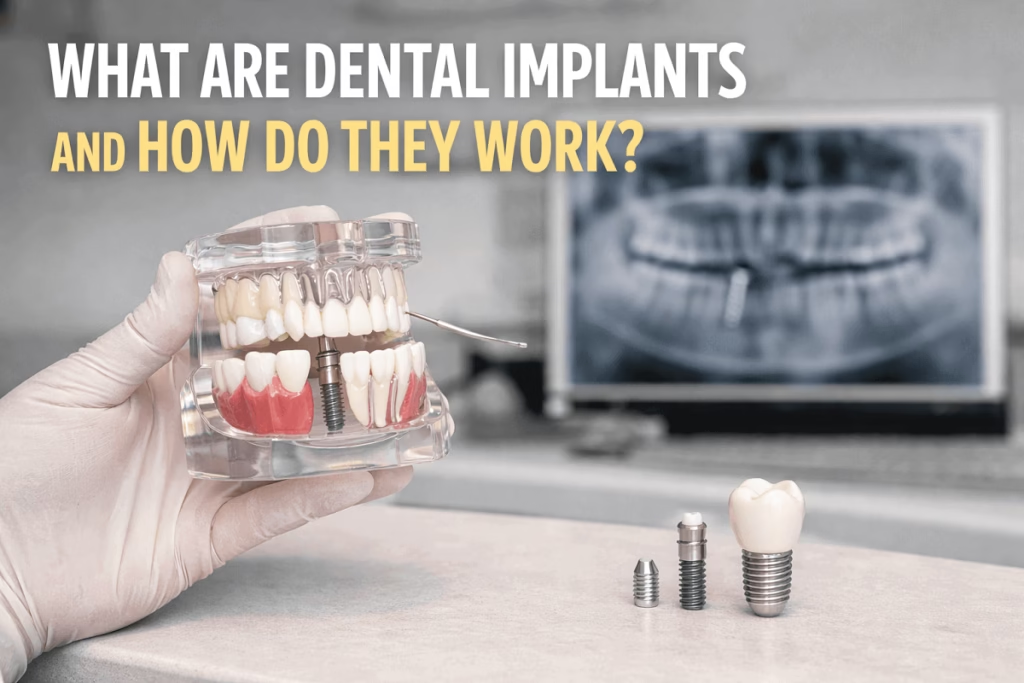
These are artificial tooth roots, typically made of titanium or titanium alloys and surgically inserted in the jawbone. Once healed, they serve to make a strong base for one or more teeth, such as crowns, bridges or dentures.
Unlike traditional methods of tooth replacement, implants actually go into the jawbone. It creates a solid and long-lasting foundation similar to that of our own teeth.
The Parts of a dental implant are:
- Implant post: The screw like post is implanted into the jawbone
- Abutment: The piece that joins the implant to the crown
- Crown: The part you can see and that looks like a tooth.
Why Do You Need Teeth Implants?
The following is a list of conditions in which dental implants can often be used to replace teeth lost from:
- Tooth decay
- Gum disease (periodontitis)
- Injury or trauma
- Accidental tooth loss
- Failed root canals or bridges
Missing teeth should be replaced for cosmetic reasons and to make sure the health of our jawbone and the nearby tooth structure.
How Do Dental Implants Work?
The process behind dental implants is designed to bond with the jawbone through their connection to the implant-supported denture implanted on top of them, a process called osseointegration.
This biological process allows the bone to grow onto, and become attached to, the surface of the implant, thus holding it really securely.
The Process of How Dental Implants Work Step-by-Step
Initial Consultation and Planning
The dentist checks your oral health with X-rays or 3D scans. Dental x-rays determine bone structure, health of gums and if the jaw is suitable for implants.
Implant Placement
The implant itself is an insertion into the jawbone that requires local anesthesia to perform. This serves as the fake root.
Healing and Osseointegration
The implant then bonds with the jawbone over a period of a few months. This stage is where the long-term success lies.
Abutment Placement
After you have healed, an abutment is mounted on the implant so the crown can join to the implant.
Crown Attachment
A customized crown is attached, replacing the lost tooth.
Types of Dental Implants
There are a few different types of dental implants available, according to different needs and situations.
Endosteal Dental Implants
These are placed within the bone and they are the most widely used dental implants. They are fixed into the jaw and typically look like tiny screws or cylinders.
Best for:
- Patients with good jawbone density
- Single or multiple tooth replacement
Subperiosteal Dental Implants
Subperiosteal implants are located on the top of the jaw but beneath the gums. They are offered when the patient lacks sufficient bone height and is unsuitable for bone augmentation.
Best for:
- Patients with shallow jawbones
- Those who are not able to handle invasive operations
Zygomatic Dental Implants
Zygomatic implants are longer posts that attach to the cheekbone (zygoma) as opposed to the jawbone.
Best for:
- Loss of bone in the upper jaw is particularly difficult to treat
- Patients who want to avoid bone grafting
What are the Advantages of Implants?
Dental Implants are one of the most reliable option after tooth replacement options because there are so many benefits to this treatment vs. other types of treatments.
Looks Natural
Implants are created to mimic a natural tooth, and their size, shape and color will match your other teeth. After they’re placed, they go with your regular smile.
Long-Term Durability
With proper care implants can last 20 years and beyond, indeed they will often be lifelong.
Better Chewing and Speech
They function much like regular teeth. This leaves you with the freedom to eat, speak and chew without anything shifting around.
Preserves Jawbone Health
They help maintain bone, which dentures and bridges are not able to do.
Protects Surrounding Teeth
Implants, unlike a bridge, do not require neighboring teeth to be ground down to support it.
Gives Confidence
The patient is given a beautiful stable smile that can help restore self-confidence and overall health.
Who Should Go for Dental Implants?
Dental implants may be right for you if:
- Have healthy gums
- You have an adequate jawbone
- Have good overall health
- Non-smokers or agree to stop smoking until healed
Are They Safe?
Teeth Implants are over 90% successful when placed by trained dental clinics such as SmileOn Dental in Lahore. They are regarded as a safe and predictable procedure with low risk, when followed by proper care.
Dental Implant Care and Maintenance
The care of dental implants is much the same as the maintenance of regular teeth, with a few exceptions:
- Brush twice daily
- Floss regularly
- Go to the dentist twice a year for regular visits
- No biting on hard/fierce things and only a small force.
Good oral hygiene will help your implant last and keep your gums healthy.
Conclusion
The Dental Implant option is a great alternative to tooth replacement that has been available for decades. Because they are so similar to how teeth naturally look and feel, these restorations bring back not just your smile but with it your confidence, ease and oral health.
Hence, understanding what dental implants are, how they’re done and why they might be a good choice for you.
If you want a permanent solution that feels natural and can stay for years, teeth implants could be the option for you.