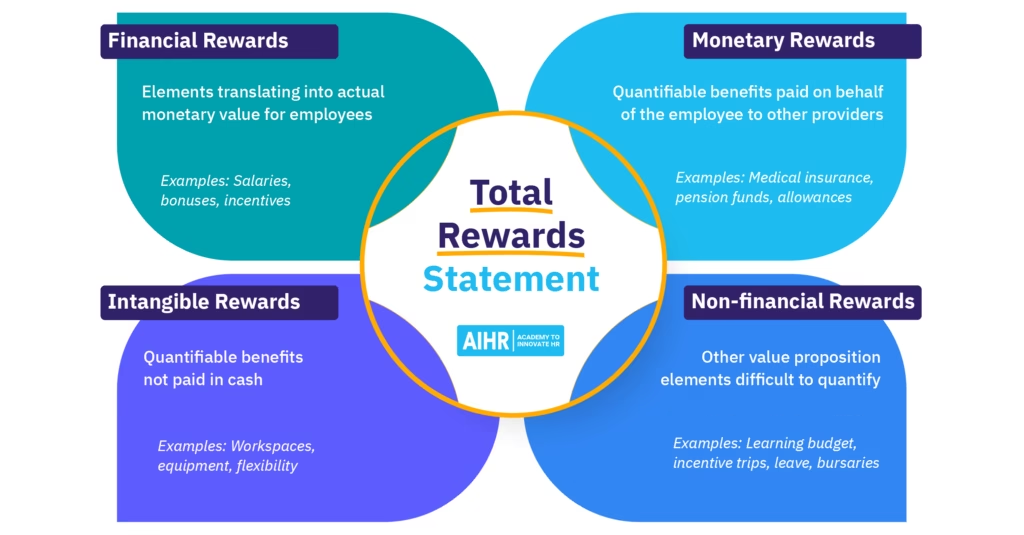
Modern employees do not want to be given a paycheck; they want transparency and meaning. The Total Rewards Statement uses transparency and recognition in delivering it to companies. It defines the entire package that employees are getting, or their basic pay.
Through a single document, it gains trust, loyalty, and financial wisdom. This blog will tell about its use, its advantages, as well as how to create a blog properly.
Understanding the Concept of a Total Rewards Statement
A Total Rewards Statement is a summary of the amount of total compensation of an employee, which is not merely his/her salary. It has benefits, perks, incentives, and employer contributions at a single glance. This piece of paper enables employees to realize the complete worth of their services.
It promotes openness, gratitude, and intelligent career design. It helps companies to increase both engagement and retention with obvious financial rewards. It is a necessary element of a people-first compensation program in the modern world.
Why Total Rewards Statements Drive Employee Engagement
By knowing what the rewards are, the workers feel appreciated and committed. An open Total Rewards Statement enhances communication among employers and groups. It also focuses on the benefits that are sort of minor and occasional and can be ignored, such as insurance benefits or wellness benefits.
This creates more loyalty, satisfaction, and motivation in the workplace. It minimizes turnover in the long run and develops employer-employee relationships. This is the reason why award visibility is a key priority for most of the leading companies in terms of their HR strategies.
What Should a Total Rewards Statement Include?
A good Total Rewards Statement must cover all aspects of employee compensation.
- Base Salary & Bonuses: Basic remuneration, pay variable, and performance bonus.
- Health & Wellness Benefits: Health, dental, vision, mental health, and gym memberships.
- Retirement & Savings Plans: 401 (k), pensions, stock options, and company match programs.
- Paid Time Off: Holidays, vacation, sick leave, and personal leave.
- Additional Perks: compensation on travel, education, and remote-work stipends.
How to Communicate Total Rewards Effectively
The beginning of effective communication is to know what the employees value most in their rewards. Write in clear language and simple illustrations to illustrate each of the benefits given. Adjust the presentation to comply with the style you have at your company.
Repeat the statements in the yearly performance assessment or at the time of integrating people into the company to enhance relatability. Be suitably prepared to give an explanation or more statements in case needed. The statement is more believable when it sounds personal.
Common Mistakes to Avoid in Total Rewards Statements
When major benefits are not outlined, this brings in confusion, and it under-sells the package. Largely using jargon or poorly understood formats can cause a misunderstanding or loss of interest. Failure to keep data up-to-date creates the impression that the statement is old-fashioned and unrelated.
The repetition of numbers without explanation is a case of insufficient knowledge of the importance of adding more context to a situation. This is a case of a lack of sensitivity to things. When one fails to personalize, the document may appear like a form.
Refusal to listen to feedback reduces the area of improvement and destroys the channel of confidence in the information given.
Comparing Basic Pay Slips vs. Total Rewards Statements
The Total Rewards Statements are more than a monthly paycheck or a salary slip.
| Feature | Basic Pay Slip | Total Rewards Statement | Key Difference |
| Scope of Information | Only salary & deductions | Complete compensation package | Rewards beyond salary |
| Frequency | Monthly | Annual or quarterly | Broader planning cycle |
| Visual Appeal | Basic format | Graphs, pie charts, summaries | More engaging and informative |
| Personalization | Standard layout | Tailored to each employee | Customized experience |
How It Supports Recruitment and Retention Strategies
The candidate should get a big picture of compensation using a Total Rewards Statement. It makes your brand sound open and supportive at the onset. Job seekers cherish transparency when choosing between the offers of two employers.
It sends a message of appreciation when applied in recruiting new employees. To the current workers in the company, it serves to show them the reasons why it is worth remaining in the firm, other than just the remuneration.
This mechanism assists the HR leaders in the attraction, retention, and motivation of talent in a holistic way.
Choosing the Right Tool or Partner for Implementation
Choose a provider that is experienced in the work of data visualization and the design of Total Rewards Statements. Assess their capability to process payroll, benefits, and equity integrations safely. Select the companies that would provide mobile-friendly and readily accessible formats to different groups of employees.
A personal and effective experience is ensured by strong support and the options for customization. Also, request samples, demonstrations, and feedback from clients prior to any partnership. The good match converts a report into a recognition moment.
Tips for Creating Effective Total Rewards Statements
The development of a successful Total Rewards Statement requires the care and necessities of the employees.
- Know Your Audience: Deal in easily understood language to consider the demographics of your workforce.
- Visualize the Data: The use of charts and summaries enhances clarity and interest.
- Highlight Hidden Benefits: Display goods that employees could overlook, such as education or insurance.
- Ensure Accuracy: Triangulate against payroll, HRIS, and benefits systems.
- Update Periodically: Publish new statements when you reach important milestones or once every year.
- Offer Explanation: Add contacts or guides to understand complicated factors.
The Strategic Power of Total Rewards Statements
A Total Rewards Statement is not quite an accounting document; it is an engagement tool. It is a demonstration by a firm that it aims to treat people in the best possible manner. It can make teams understand the linkage between their growth, business investment, and care.
When it is distributed on a routine basis, it builds up trust, pride, and openness in the culture. Leaders can use it during transition, review, and goal-setting discussions. It is now one of the significant communications that motivates retention and performance in the contemporary workforce.
The Bottom Line
An effective Total Rewards Statement enables employees to comprehend their total worth. It does not just depict compensation, but it tells all about money and looking after. When used adequately, it becomes a fundamental element of the employee experience.
Northcove Consulting provides revolutionary practices on compensation, benefits as well and reward communications. They can design their own Total Rewards Statements very professionally and dependent upon client culture and objectives.
They make confusing things simple, and their strategic acumen and people-centred approach are motivating. Northcove assists organizations in making compensation connections, engagement, and long-term compensation.
The creation of powerful business teams becomes possible when individuals feel that they are visible, embraced, and appreciated. This tool builds a stable trust and alignment in the world of changing work.
FAQs:
What does a Total Rewards Statement mean?
Costs of total compensation of employees, in addition to salary.
What is so critical about it?
It enhances information disclosure, esteem, and retention.
At what frequency is it shared?
Typically, on an annual basis or at an important milestone.
What does it cover?
Salaries, wages, fringe benefits, vacations, and contributions to employee benefits.
Who designs it?
The HR departments or the third-party consultants who have a background in compensation.
Is it customized?
Yes, each employee has a profile of total compensation adjusted to their needs.