Among card games that reward careful thinking, Mậu Binh continues to attract players who enjoy making calculated decisions rather than relying on luck alone. Its unique hand-arranging mechanics create a competitive environment where foresight and judgment matter in every round. Across many Game bài đổi thưởng platforms, the game remains a popular choice for those seeking a deeper and more engaging card-playing experience.
- Understanding the Basic Rules Before Playing Mậu Binh Online
- Learn Card Structure
- Know Hand Rankings
- Arrange Cards Properly
- Understand Comparison Methods
- Avoid Common Errors
- How Card Arrangement Can Influence Results in Mậu Binh
- Hand Structure Balance
- Strategic Card Split
- Hidden Strength Setup
- Risk Distribution Control
- Winning Flow Design
- Common Mistakes New Players Often Make in Mậu Binh Games
- Conclusion

Understanding the Basic Rules Before Playing Mậu Binh Online
Understanding the Basic Rules Before Playing Mậu Binh Online
Before joining any Mậu Binh online table, players should spend time learning the fundamental rules that shape the game. A clear understanding of card arrangements, hand rankings, and comparison methods can make each match more enjoyable. Strong knowledge also helps avoid common mistakes that often affect overall results.
Learn Card Structure
Mậu Binh uses a standard 52-card deck, with each participant receiving thirteen cards. These cards must be divided into three separate hands following specific strength requirements. Knowing how the structure works creates a solid foundation and allows players to approach every round with greater confidence and control.
Know Hand Rankings
Success in Mậu Binh depends heavily on recognizing the value of different card combinations. Pairs, straights, flushes, and stronger formations all carry unique rankings. Familiarity with these patterns helps players build effective arrangements while minimizing the chance of creating weak or unbalanced hands.
Arrange Cards Properly
Card placement plays a major role in determining the outcome of a match. The back hand must remain stronger than the middle hand, while the middle hand should outrank the front hand. Breaking this order leads to a foul hand, resulting in an automatic loss regardless of card quality.
Understand Comparison Methods
After all participants finish arranging their cards, each hand is compared against opponents. Points are awarded based on victories across the three sections. Learning how comparisons are calculated provides valuable insight into scoring mechanics and helps players make smarter decisions during card organization.
Avoid Common Errors
Many beginners focus only on creating one powerful hand and overlook overall balance. Others rush through arrangements without checking the ranking order. Careful review before submitting cards can prevent costly mistakes and improve performance. Consistent attention to detail often produces better outcomes over time.

How Card Arrangement Can Influence Results in Mậu Binh
How Card Arrangement Can Influence Results in Mậu Binh
In Mậu binh, the way cards are arranged often shapes the final outcome more than the raw luck of the draw. Players who understand how to structure their hands can turn average cards into competitive setups, while poor arrangement can weaken even strong combinations.
Hand Structure Balance
A well-balanced hand in Mậu Binh often decides how stable each round feels. Strong players tend to distribute power evenly across three rows instead of overloading one. When the arrangement is too top-heavy, the lower hands become vulnerable and easy to lose points. Smart structuring keeps each level competitive enough to avoid a complete sweep.
Strategic Card Split
Splitting cards correctly can shift the entire direction of a match. High pairs, potential straights, or flush possibilities must be placed with intention so they support overall strength. Poor separation often leads to broken combinations that lose value. A thoughtful split increases the chance of winning multiple comparisons instead of just one strong row.
Hidden Strength Setup
Some hands in Mậu Binh look weak at first glance but become powerful after rearrangement. Players often hide key combinations in lower rows to surprise opponents during reveal. This setup can create unexpected wins, especially when the opponent misjudges the overall structure. The strength lies not only in cards but also in placement logic.
Risk Distribution Control
Card arrangement also affects how risk spreads across the entire hand. Concentrating all strong cards in one section may secure a single win but risks heavy losses elsewhere. A controlled distribution allows more stable scoring across all rows. This approach reduces volatility and keeps the outcome within manageable limits during close matches.
Winning Flow Design
Designing the flow of a Mậu Binh hand means thinking beyond individual cards. Each row should connect logically to create a consistent path of strength. When the arrangement flows smoothly from top to bottom, the hand becomes harder to break. This structure often separates experienced players from those relying only on luck or high-value draws.
Common Mistakes New Players Often Make in Mậu Binh Games
Common Mistakes New Players Often Make in Mậu Binh Games
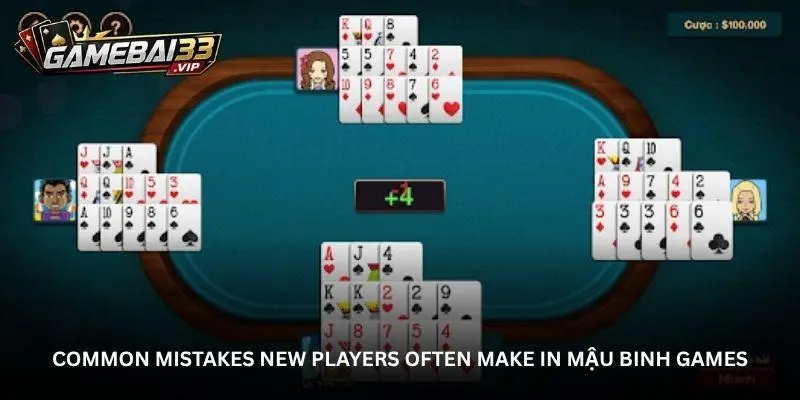
New players stepping into Mậu Binh online often face a steep learning curve. The game demands logical thinking, card arrangement skill, and patience in decision making. Small missteps during early rounds can lead to quick losses, even when the initial hand looks promising. Recognizing frequent errors helps improve long-term performance.
Wrong Card Setup
Many beginners place strong cards in a single row while ignoring overall structure. This leads to an unbalanced formation where weaker hands cause failure in comparisons. Proper distribution across front, middle, and back sections is essential to maintain stability and avoid automatic penalties during scoring.
Ignore Hand Order
A common issue appears when players forget the required strength hierarchy between the three hands. The back must be strongest, followed by the middle, then the front. Breaking this rule results in a foul arrangement, causing instant defeat regardless of how powerful individual cards may seem.
Rush Decisions Early
Fast decisions without careful observation often lead to poor outcomes. New participants tend to arrange cards quickly without analyzing possible combinations. A brief pause to review all options can reveal stronger setups and reduce unnecessary mistakes during gameplay situations.
Overvalue Single Hand
Focusing too much on creating one powerful hand while neglecting the remaining two is another frequent problem. Although a strong combination looks attractive, Mậu Binh requires balance across all sections. Uneven distribution weakens overall strength and often results in losing multiple comparisons.
Lack Game Awareness
Some players enter matches without understanding opponent tendencies or table dynamics. Ignoring patterns and general flow reduces the ability to adapt strategies. Observing how others arrange their cards can provide useful hints and improve decision-making in future rounds, leading to more stable results.
Conclusion
Success in card games often comes from understanding patterns, reading situations, and making smart choices under pressure. Those qualities are exactly why Mậu binh has earned lasting appeal among strategic players. Each match presents fresh possibilities, encouraging participants to refine their skills while enjoying a format that balances challenge, excitement, and rewarding gameplay.