You must have been told by the people close to you that it is crucial to find the right health care facility for your loved one. But selecting the facility your senior actually needs is one of the most important considerations. This is because they may need hospice respite care or memory care while you are looking for another type of service. Similarly, when people search for “assisted living memory care near me,” they may not even realize that the two terms differ. This blog will help you know what memory care assisted living is and the key differences between the two.
Meaning of Assisted Living for Older Adults?
Health care communities for Seniors offer many services, such as hospice care, memory care assisted living, etc. The assisted living program at health care or at assisted living communities for seniors is a type of service that is provided to older adults who require support for doing routine activities like bathing, walking,etc. These services provide them with assistance while ensuring they remain fairly independent.
What is Memory Care for Seniors?
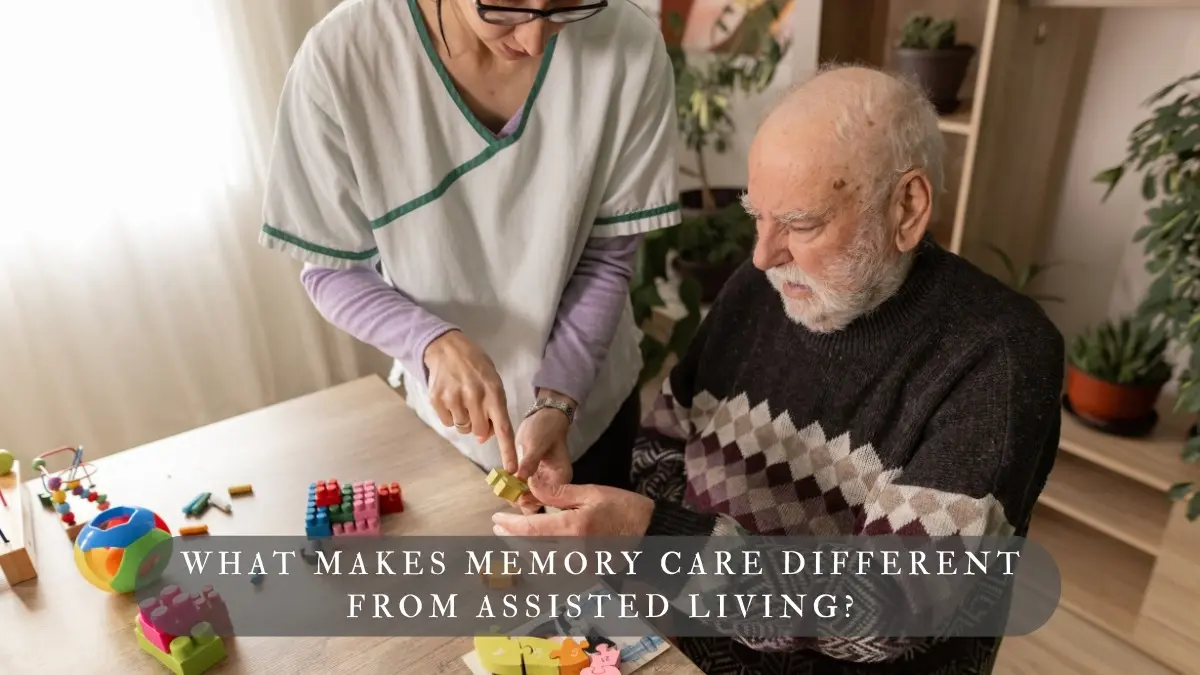
Memory care is a specialised service for older adults who have memory-related diseases or disorders and face behavioral and other challenges due to them. These services provide your loved one with the support of caregivers who have been specifically trained to deal with seniors facing cognitive issues by making them participate in memory care activities, etc.
Memory Care vs Assisted Living: Which is Better?
Memory care assisted living is not one but two distinct services provided at a health care community for seniors. Let us know their key differences.
| Feature | Assisted Living | Memory Care |
| Staff | Generally trained to provide basic help in routine activities | Specially trained for dealing with memory-related issues |
| Services & Amenities | Common facilities for entertainment and physical activity | General and Special facilities, such as color-coded walls |
| Activities | Focus is on the overall well-being and socialization of the resident | Focus is on stress reduction through therapeutic activities |
| Safety | Common safety features such as ERS and alert systems are included | Assisted living and specific memory safety features are provided, e.g., a fall-prevention system. |
| Cost | Cheaper than memory care | May require additional cost for specialised memory care services |
Staff
The staff for memory care facilities is trained specifically for that purpose. They are trained for a set number of hours and taught methods to help them address the behaviors associated with cognitive disorders. However, staff in assisted living receive general training to provide routine assistance with medications, hygiene, and other tasks.
Services & Amenities
Assisted living facilities in a senior living community offer amenities and services like workout spaces and equipment, transportation, a living room, entertainment sources, a balcony, restaurant-style dining, etc. In memory care, most of these services will be included, along with others specifically designed to help cognitively challenged individuals, such as color-coded walls. Here, the focus is mainly on keeping the resident safe and secure.
Activities
The activities in an assisted living community are generally focused on the resident’s overall well-being. They ensure that your loved one can improve their physical fitness while also being socially active. This is important because studies show that nearly 43% of seniors in the U.S. are suffering from loneliness. Residents can participate in games, book club activities, outings, and more. In a memory care facility, activities are structured in a therapeutic way to reduce the stress your senior may be facing due to their condition. Some of their therapies include reminiscence, nurturing, and art therapy.
Features to Ensure Safety
On one hand, assisted living centers have general safety features such as emergency response systems, registered nurses, other required medical staff, alert systems, etc. On the other hand, communities for memory care have extra safety features because people with memory disorders or diseases are more prone to risks like getting lost.
Features 24-hour supervision, guards, fall prevention systems, etc
Cost
The cost of memory care and assisted living may vary. Generally, memory care is pricier than its variant in the U.S. This is because of the differences in the kind of therapies, activities, location, whether the space is shared or not, special training for the staff, extra security measures, and other facilities.
Conclusion
Whether you choose memory care or assisted living for your loved one, the decision is completely dependent on the kind of support they need. If they need regular assistance in their daily tasks, like walking, getting dressed, etc., then assisted living is the best option for them. While for older adults with memory conditions such as Alzheimer’s who need special care, extra security along with other features, memory care would be a more suitable option for them. Make sure to do thorough research before making the final decision so your loved one can get the best possible treatments and services out there.