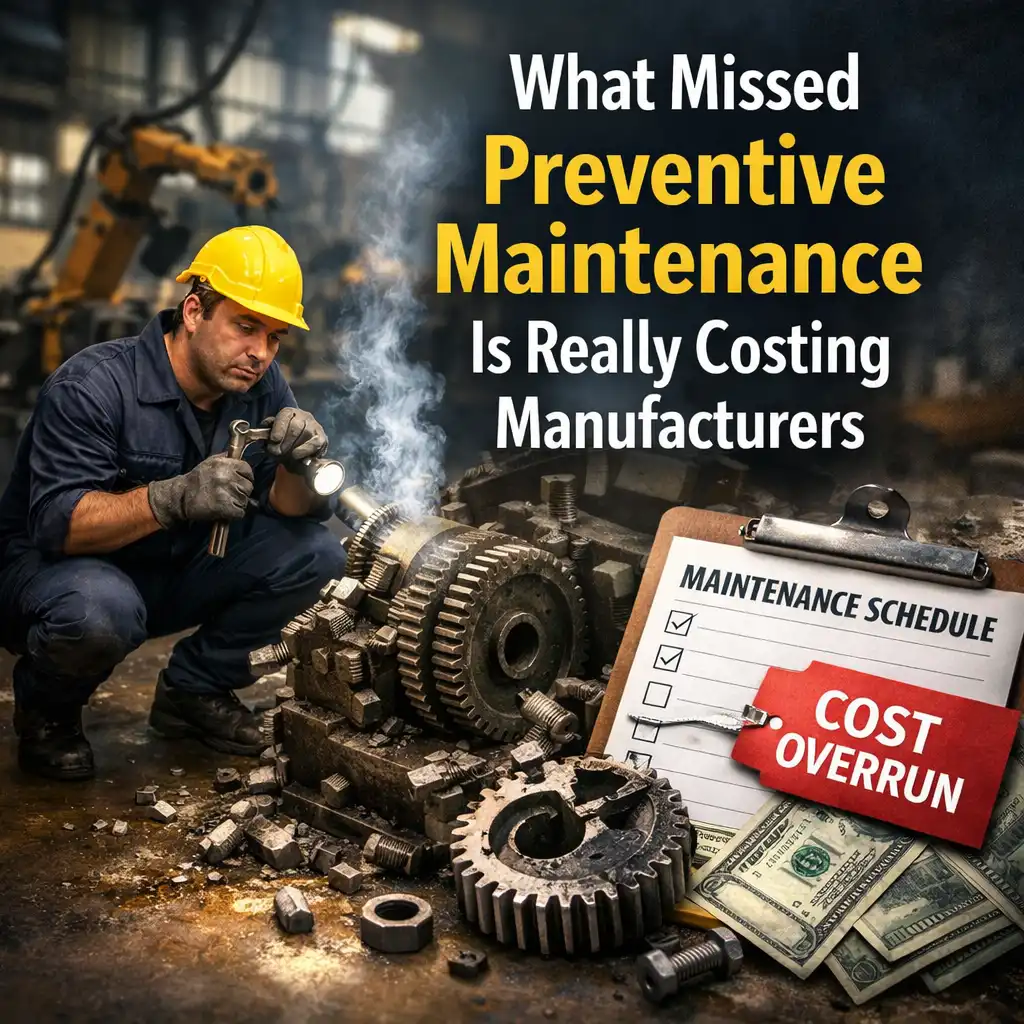
Most manufacturers understand the value of preventive maintenance in theory. The problem is that even when the plan exists, the work does not always happen on time. A task is delayed to protect production, an inspection is pushed to the next shift, or a routine service keeps moving down the list. Preventive maintenance is meant to reduce unexpected failures by servicing assets before problems grow, but once that rhythm starts slipping, the cost is rarely limited to one missed task. It spreads into downtime, labor pressure, repair quality, and asset performance.
That is usually the point where teams start looking more closely at the best preventive maintenance software for manufacturing. When preventive work slips often enough, the cost starts showing up across the plant in ways that are easy to underestimate at first but can lead to severe problems later.
Unplanned Downtime Gets More Expensive Than It Looks
Even downtime, the most obvious cost, often goes unnoticed. When a preventable issue escalates into a stoppage, the loss extends beyond the cost of the repair. Manufacturers can also lose output, endure restart delays, pull labor into urgent work, and disrupt upstream or downstream activity. Research and industry guidance on production downtime consistently show that the true cost of an interruption extends well beyond the machine that failed.
That is why missed preventive maintenance tends to be pricier than it first appears. What looked like a small delay in servicing can end up affecting throughput, scheduling, and the day’s production plan.
Emergency Repairs Put Pressure on Labor
Maintenance teams typically lose control over the timing of the next intervention when they neglect preventive work. The job comes back as an urgent repair, often at the worst possible moment. That changes the nature of the work. Instead of doing the task properly, the team is troubleshooting under pressure, finding parts quickly, and trying to restore operation with as little disruption as possible.
This kind of work is harder on people and on planning, too. It also tends to pull skilled labor away from scheduled tasks that still need attention. Over time, one missed preventive job can start a pattern where the team spends more time reacting than maintaining.
Small Problems Turn Into Costlier Failures
One reason preventive maintenance matters is that wear rarely becomes severe all at once. Components degrade over time, alignment shifts, and lubrication conditions change. If you leave minor issues unattended for too long, they can escalate into larger failures. Preventive maintenance guidance across industrial sources consistently emphasizes timely service for lower failure risk and longer equipment life.
This is where the financial impact becomes harder to ignore. The later the issue is caught, the more likely the repair is to require extra parts, more labor, longer downtime, or additional follow-up work.
Production Stability Starts To Slip
Manufacturing teams do not just feel “missed maintenance” in the maintenance department. They feel it in their production performances! An asset that is not maintained on time may still run, but its stability is uncertain. Minor stoppages become more frequent, and output becomes less predictable. Also, operators start adjusting around equipment that no longer performs as consistently as it should.
This kind of instability is easy to normalize, especially when the line has not had a major failure yet. But it still has a cost. When equipment becomes less reliable, production planning becomes less reliable along with it.
Asset Life Gets Shorter
Equipment that runs too long without the right routine care can wear down faster than expected. Missed lubrication, delayed inspections, and repeated minor faults all add strain over time. Studies and industry guidance on maintenance strategies regularly connect effective preventive maintenance with better asset longevity and lower lifecycle cost. Such evidence matters because replacing or overhauling equipment is far more expensive than protecting asset condition through steady, well-timed maintenance.
The Process Gets Harder To Trust
Once preventive work starts slipping regularly, teams begin adjusting around the process. People rely more on memory, informal reminders, and workarounds. Tasks still get done, but not always through a system the whole team can trust. This issue creates another hidden cost: weaker visibility! It becomes harder to see what was delayed, what was completed, and what keeps getting pushed aside.
At that point, missed preventive maintenance stops being an isolated scheduling problem. It becomes a broader reliability problem!
Final Thoughts
The real cost of missed preventive maintenance is not just one breakdown or one rushed repair. It is the steady loss of control that occurs when timing, visibility, and follow-through weaken simultaneously.
Manufacturers usually feel that cost comes first in downtime and labor pressure, but it often reaches much further into production stability and asset life. That is why strong preventive maintenance is not just about having a schedule. It is about keeping the schedule workable enough for the plant to rely on every day.