If you’re building a product-based business around custom goods, signage, or personalized gifts, material choice becomes a strategic decision, not just a creative one. A laser can open doors to lucrative opportunities, but only if you understand its limits. Too many new shop owners invest in equipment before fully grasping what it can realistically handle, and that’s where margins start slipping.
A wood laser cutter is an incredibly versatile production tool, but it isn’t a magic wand. It excels at certain substrates, struggles with others, and is all wrong for some materials. Knowing the difference protects your equipment, your time, and your reputation.
Best Woods for Laser Cutting
Solid Woods
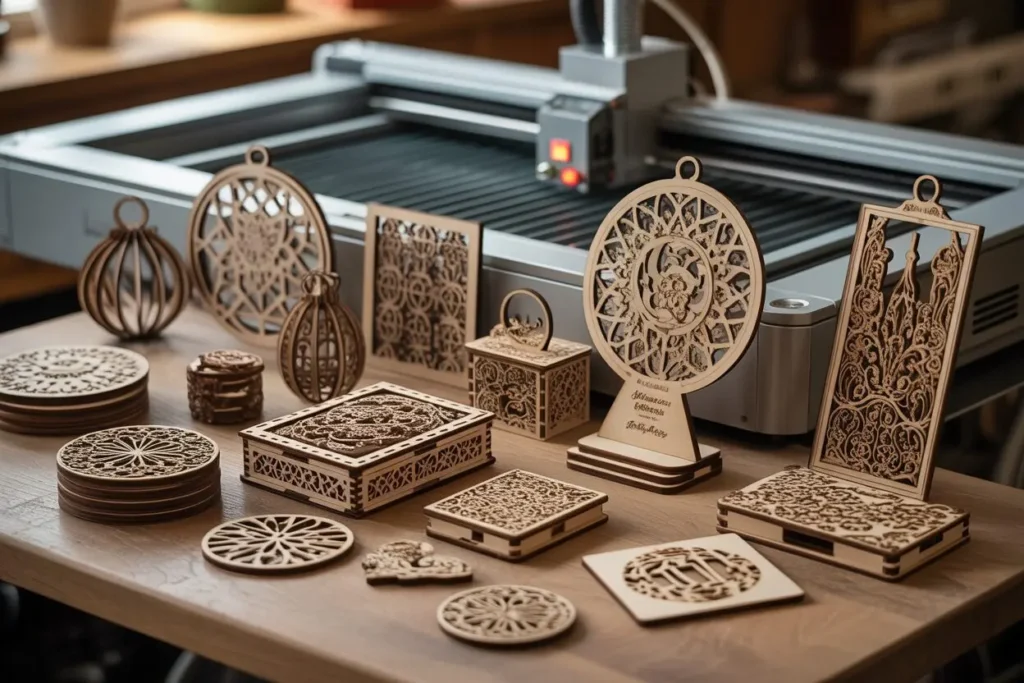
Hardwoods like maple, cherry, walnut, and birch cut cleanly, engrave with contrast, and hold fine detail well. For product businesses selling ornaments, wall art, jewellery, educational toys, or branded corporate gifts, they offer consistent results.
Softwoods like pine can also work, though resin pockets and uneven grain density may produce slight variations in burn tone. That’s not always a flaw. In rustic- or farmhouse-themed spaces, those variations can actually enhance the finished look.
The key is moisture content and quality. Kiln-dried, flat lumber reduces warping and uneven cuts.
Plywood
Laser-grade plywood is a staple for small-batch manufacturing. Baltic birch, in particular, is popular because it has minimal voids and consistent inner layers. That consistency matters when you’re cutting intricate shapes or slot-fit assemblies.
Standard construction plywood is another story. Hidden gaps and glue inconsistencies can interrupt cuts or cause flare-ups. For a business owner fulfilling 200 units on a deadline, that unpredictability might get expensive.
MDF
Medium-density fiberboard cuts smoothly and engraves evenly because it has no grain. That makes it ideal for paint-ready signage and dimensional lettering. It’s cost-effective, which matters if you’re testing a new product line or running volume orders.
That said, MDF produces more residue and smoke than many hardwoods. Proper ventilation is non-negotiable if you plan to use it regularly.
Veneers and Thin Sheets
Thin hardwood sheets and veneers allow for delicate, lightweight products like earrings, layered wall art, and custom inlays. These materials expand design flexibility without increasing production time significantly.
What It Can Engrave but Not Necessarily Cut Well
These materials respond well to engraving but present challenges when cutting.
Painted or Finished Wood
You can engrave through paint to reveal the wood beneath, which creates sharp contrast for signage. However, cutting fully finished boards can produce inconsistent edge quality and additional smoke. Pre-finishing after cutting often produces cleaner results.
Laminated Surfaces
Certain laminated woods can engrave well, especially when the top layer contrasts with the core. But adhesives between layers can behave unpredictably during full cuts. Always test before committing to production runs.
What It Shouldn’t Cut
Here’s where entrepreneurs need to be disciplined. Just because something looks wood-based doesn’t mean it belongs in your laser.
Pressure-Treated Lumber
This is an absolute no. Pressure-treated wood contains chemical preservatives. When burned, those chemicals release hazardous fumes that are dangerous for both the operator and the machine.
Certain Composite Boards
Some engineered woods use adhesives that release corrosive or toxic gases when cut. If you can’t verify the composition, don’t risk it. Manufacturers typically publish material safety data sheets for a reason.
Thick Hardwood Slabs
Technically, a laser can cut thicker stock depending on wattage, but at a certain point, you’re fighting physics. Cutting very thick hardwood increases charring, reduces edge quality, and dramatically slows production time. If your business model relies on thick cutting boards or butcher blocks, a CNC router may be a better primary tool.
Kerf, Fit, and Why Precision Pays
One factor that rarely gets enough attention in new laser businesses is kerf, the tiny amount of material removed by the beam as it cuts. That fraction of a millimetre can determine whether your tab-and-slot products snap together perfectly or wobble like a bad prototype.
Kerf calibration is essential if you’re designing layered signs, 3D puzzles, packaging inserts, or flat-pack products. Different woods, densities, and even humidity levels can slightly alter the width of a cut line. Business owners who take the time to dial in material-specific settings create tighter fits, fewer returns, and less post-production sanding.
Successful small shops build internal material libraries. They document speed, power, air assist settings, and resulting edge finish for every wood they use. Over time, that database becomes a competitive advantage. It shortens onboarding for new staff, improves consistency across batches, and reduces costly trial and error when launching new products.
Precision is about more than clean cuts, as building a repeatable system supports growth without sacrificing quality.
Where Entrepreneurs Win or Lose
The real business advantage is understanding how material behaviour affects scalability.
For example:
- Hardwood signage can command premium pricing but requires more testing for consistent burn depth.
- MDF reduces material cost but increases cleanup and airflow demands.
- Laser-grade plywood improves reliability, which matters when you’re fulfilling wholesale contracts.
Mompreneurs running Etsy shops from home workshops often prioritize low waste and repeatability. Small manufacturers scaling into retail partnerships prioritize consistency and throughput. Material selection directly impacts both.
The Strategic Mindset
A laser becomes profitable when you treat materials as part of your production system. Test small batches. Track cut speed versus cleanup time. Factor in ventilation costs and consumables.
If you’re planning to expand into new categories, evaluate whether your current wattage supports thicker or denser woods efficiently. Sometimes the upgrade decision is less about power and more about workflow.
Most importantly, resist the temptation to experiment recklessly with unknown materials. Equipment damage and health risks erase profits quickly.
The Bottom Line
A laser thrives on clean, consistent wood substrates. Solid hardwoods, quality plywood, MDF, and veneers form the backbone of most profitable wood-based product businesses. Chemically treated lumber, questionable composites, and overly thick slabs introduce unnecessary risk.
Entrepreneurs who succeed with laser-based businesses are rarely the ones chasing every possible material. They understand their equipment’s strengths, build product lines around those strengths, and standardize their inputs.
In short, cut smart, scale intentionally, and let your materials work for you, not against you.