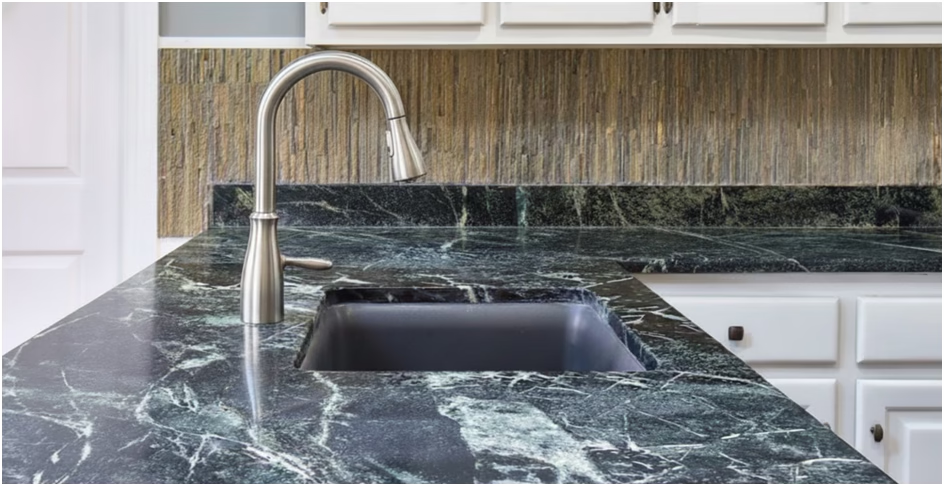
Soapstone countertops offer a distinctive look that appeals to homeowners seeking natural beauty in their kitchens. This metamorphic rock provides characteristics different from granite or quartz, making it worth understanding before you commit to this material. We spoke with Columbus Granite, a trusted countertop shop in Columbus, Ohio, to explore soapstone countertops. We met Columbus Granite after reading their famous review of Soapstone Countertops which has some geniune insights and advices about using Soapsone in kitchens.
What Exactly Is Soapstone?
Soapstone, also known as steatite, is a metamorphic rock that contains the mineral talc. Yes, the same talc found in talcum powder. This mineral composition is why sculptors have loved working with soapstone for centuries.
The level of talc within different soapstone slabs determines how hard or soft the stone is. This variation affects both the appearance and performance of the material in your kitchen.
Soapstone has a relatively warm aesthetic that provides a distinctive character to any space. Slabs typically fall on the darker end of the spectrum, which limits your color range compared to materials like quartz or granite. However, what soapstone lacks in color variety, it makes up for in natural beauty. The stone delivers an authentic natural look that many homeowners seek for their kitchens.
Understanding Soapstone Hardness and Durability
The Mohs scale ranks minerals on their hardness from 1 to 10. Quartz sits around 7 on this scale, making it incredibly durable and harder than glass. Soapstone doesn’t fare as well on this measurement.
Talc, a major component of soapstone, measures at 1 on the Mohs scale. This makes talc the softest mineral. Soapstone slabs contain anywhere from 30 to 80 percent talc. Slabs with 30 percent talc are harder, while those with 80 percent talc are very soft.
Most soapstone countertops sit around 50 percent talc. Because countertops aren’t pure talc, they measure somewhere around 2.5 to 3.5 on the Mohs scale. The remaining minerals in soapstone include magnesite, quartz, chlorite, and carbonates.
This varying hardness level comes down to the talc percentage and the makeup of remaining minerals in each slab.
The durability news isn’t all bad. Yes, soapstone is soft and will scratch and ding more easily than other natural stones. However, this softness also prevents the stone from cracking easily. This gives soapstone a level of durability slightly higher than marble and other natural stones that are more prone to cracking.
The Benefits of Soapstone Countertops
Soapstone Resists Cracking
The softness that makes soapstone susceptible to scratches also helps it resist cracking. This gives soapstone an advantage over harder natural stones that can crack under impact or stress.
Soapstone Is Non-Porous
Here’s something remarkable: soapstone is a non-porous natural stone. This means it doesn’t require any chemical sealing throughout its lifespan. The lack of porosity also means soapstone doesn’t react to acidic substances. Spills like wine, coffee, vinegar, or citrus won’t etch or stain the surface. You can breathe easier when working in your kitchen.
Scientific laboratories around the world use soapstone because it resists chemicals, spills, and stains that affect other materials.
Soapstone Handles Heat
Soapstone is heat resistant. If you grab hot items from your oven or a hot pot from your cooktop and place them directly on your countertop, the stone can handle it. This gives soapstone a major advantage over quartz. You don’t need to worry about discoloration or cracking when hot items touch your countertops.
Soapstone Looks Beautiful
The natural dark appearance that soapstone provides is difficult to match with other materials. The stone has character and depth that appeals to homeowners seeking something different from standard granite or quartz.
Soapstone Can Create Seamless Designs
Because soapstone is soft and easy to carve, it can be used for everything from countertops to drain boards to sinks. This creates a completely seamless look, though this works best for standalone sink sections rather than entire kitchen layouts.
Soapstone Installation Can Be DIY-Friendly
The softness of soapstone makes it easier to work with during installation. You can cut soapstone with a regular circular saw equipped with a diamond blade. For straight cuts, use a straight edge. You can radius edges using a router with a diamond blade. If you have general carpentry skills, you might be able to install these countertops yourself.
The Downsides of Soapstone Countertops
Soapstone Is Soft
The same softness that provides benefits also creates problems. Soapstone scratches, dings, and dents relatively easily. Drop a can from your cabinet and it will probably leave a mark. Drop a cast iron pan too hard and you’ll likely create a ding. Even sliding plates or dishes across the surface can leave noticeable scratches.
You can fix these issues. Scratches and dings can be sanded out with light sanding, returning the stone to its natural state. However, if you only sand problem areas rather than entire countertops, you’ll end up with unevenly matched sections.
Soapstone Develops a Patina
Whether this is positive or negative depends on personal preference. Some people love that their countertops develop character over time. Others find the uneven darkening unsightly.
Certain areas darken more than others, typically in the most-used sections. High-traffic areas around the sink or stove will look different from less-used sections. This natural aging process gives soapstone personality, but not everyone appreciates this quality.
Oily Substances Leave Marks
Even though soapstone is non-porous, oily substances will darken the stone. This creates uneven dark spots across your countertops. Some distributors or installers recommend spreading mineral oil across the entire surface to prevent these uneven marks. This maintenance requirement brings us to a larger discussion about care.
Soapstone Has a Unique Texture
Soapstone has a leathery, soap-like feel. This is where the name comes from. The texture is not slick like polished granite. Whether you like this feel comes down to personal choice, but you should experience it before committing to soapstone throughout your kitchen.
Slab Size Can Be Limited
While soapstone can create seamless designs for standalone sink areas, larger kitchen layouts might require seams. Historically, finding large soapstone slabs has been difficult, though this is changing. You might end up with seams in areas you didn’t expect, like across a large kitchen island.
Soapstone Costs More
Soapstone falls on the pricier end of the countertop spectrum. Pricing ranges from $40 to $100 per square foot for materials alone. Professional installation roughly doubles these costs.
The exact price depends on where the stone comes from and the talc content. Harder soapstone with less talc costs more than softer stone. Pricing also varies based on your location and who installs the material. Columbus Granite can provide accurate local pricing for your specific project.
Maintaining Soapstone Countertops
If you want completely maintenance-free countertops, soapstone might not be your choice. However, if you don’t mind scratches, dings, and the surface developing a patina over time, soapstone could be perfect. In fact, these characteristics might be exactly what draws you to this material.
The most common maintenance involves applying mineral oil across your countertops every few months. This maintains the rich, dark look. The downside is you’re left with an oily feeling texture for a while. Remember that soapstone is non-porous, so the oil sits on the surface rather than sinking in.
If you choose to oil your soapstone, understand that wear will still happen unevenly. A patina will develop over time. If you dislike the natural aging, you’ll need regular oiling to maintain a uniform dark appearance.
Is Soapstone Environmentally Friendly?
Overall, soapstone is an environmentally positive choice. Several factors support this conclusion.
Domestic quarries in both the United States and Canada extract soapstone. Choosing domestic sources reduces your carbon footprint compared to imported materials.
Soapstone often comes from open pit quarries using equipment that doesn’t require blasting or chemicals to excavate. This reduces environmental impact during extraction.
Because soapstone is non-porous, it doesn’t require harsh chemicals to seal or clean. This reduces chemicals used in your home that ultimately enter the ecosystem.
Soapstone has an incredibly long lifespan. You’ll likely get several decades of use in your kitchen. When you eventually replace it, soapstone can be completely recycled or repurposed. Old countertops become pizza stones, coasters, or whiskey rocks, giving them new life.
Soapstone is natural, sustainable, and recyclable. The material can essentially last forever in one form or another.
Is Soapstone Right for Your Kitchen?
Only you can answer whether soapstone fits your lifestyle and expectations. Consider how you use your kitchen and what you expect from your countertops.
If you love the idea of countertops developing character over time and showing evidence of kitchen use, soapstone might be perfect. The patina and aging become part of the story of your home.
However, if you want surfaces that look nearly identical 5, 10, or 15 years down the road, soapstone isn’t the best choice.
Consider your household. Families with young children need to think about how dropped items affect countertops. Active kitchens where kids help with cooking might be better served by more durable materials.
The texture of soapstone differs from polished granite or quartz. Some people love the feel, while others prefer smoother surfaces.
The dark aesthetic of soapstone works beautifully in certain kitchen styles. Modern kitchens, industrial designs, and spaces with dark cabinetry showcase soapstone well. However, small kitchens or spaces with limited natural light might feel too dark with soapstone countertops.
Visit Columbus Granite in their Hilliard, Ohio or Lewis Center, OH showrooms to see and touch soapstone in person. Feeling the texture and seeing the color variations helps you understand whether this material fits your vision. The team can discuss maintenance requirements, pricing, and whether soapstone makes sense for your specific kitchen layout and lifestyle.
Soapstone offers unique benefits that other materials cannot match. Understanding both the positives and the challenges helps you make a decision you’ll be happy with for decades.