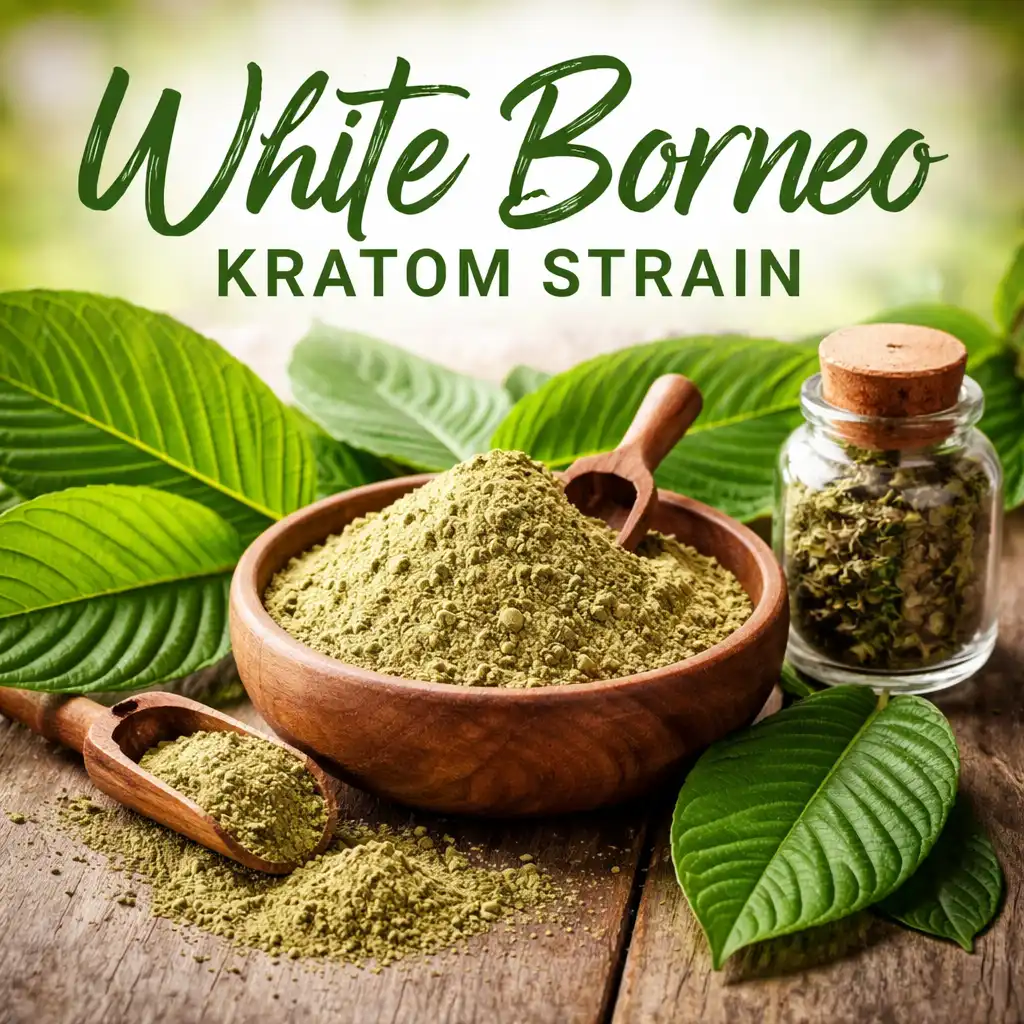
Kratom has attracted growing attention in the herbal supplement market. Among the many varieties available today, the White Borneo kratom strain often appears in discussions among users and vendors. However, when people hear the word “strain,” they sometimes imagine something similar to cannabis genetics. In reality, kratom naming works differently.
Understanding how kratom varieties are classified helps consumers make more informed decisions. It also helps separate marketing language from real botanical information.
This guide explains what the White Borneo kratom strain actually is, how producers create it, and what scientific research says about kratom’s effects and risks. The information here relies on trusted organizations such as the National Institute on Drug Abuse (NIDA), the U.S. Food and Drug Administration (FDA), and the American Kratom Association (AKA).
The goal is simple: clear facts, logical explanations, and responsible information.
What Is Kratom?
Kratom comes from the leaves of Mitragyna speciosa, a tropical tree native to Southeast Asia. The plant grows naturally in countries such as Indonesia, Malaysia, and Thailand.
Farmers harvest the leaves, dry them, and grind them into powder. That powder becomes the base for kratom products such as capsules, extracts, and loose powder.
According to the National Institute on Drug Abuse, kratom leaves contain several alkaloids. The two most studied compounds include:
- Mitragynine
- 7-hydroxymitragynine
These alkaloids interact with receptors in the brain that influence mood, energy, and pain perception.
Scientists continue to study kratom’s full effects and potential risks.
What Does “White Borneo” Mean?
The name White Borneo kratom strain refers to a specific category of kratom products that vendors classify based on leaf vein color and geographic origin.
Let’s break that down.
“White” Vein
Kratom leaves show different vein colors. Producers commonly categorize them as:
- White vein
- Green vein
- Red vein
These categories usually refer to the color of the leaf’s central vein and stem during harvesting.
White vein kratom often comes from younger leaves that growers harvest earlier in the plant’s growth cycle.
“Borneo”
Borneo refers to the island where much of the world’s kratom supply originates. The island includes parts of Indonesia, Malaysia, and Brunei.
Indonesia currently serves as one of the largest exporters of kratom products globally.
However, the term “Borneo” in kratom marketing does not always indicate a specific farm location. Vendors sometimes use the name as a general regional label.
How White Borneo Kratom Is Processed
After harvesting, producers process kratom leaves through several steps.
First, workers wash the leaves to remove dirt and debris. Next, they dry the leaves using sunlight or controlled indoor drying systems.
Drying conditions influence the final color and chemical profile of the product. Once the leaves dry completely, processors grind them into fine powder.
Some suppliers then send samples to independent laboratories for testing. These tests check for contaminants such as heavy metals or microbial growth.
Quality control matters because kratom remains an agricultural product.
Alkaloids Found in the White Borneo Kratom Strain
Kratom’s effects depend on its alkaloid content.
Mitragynine represents the dominant compound in most kratom products. According to research summarized by the National Institute on Drug Abuse, mitragynine interacts with several neurological receptor systems.
These receptors influence functions such as:
- Pain perception
- Mood regulation
- Energy levels
Another compound, 7-hydroxymitragynine, appears in smaller concentrations but interacts strongly with certain receptors in the brain.
The exact alkaloid profile can vary depending on:
- Soil conditions
- Harvest timing
- Drying methods
- Storage practices
Because of these variables, different kratom products may produce different experiences.
Reported Characteristics of White Vein Kratom
Many kratom vendors describe white vein varieties as more stimulating compared with red or green varieties. Some users report experiences such as increased alertness or improved focus.
Historically, workers in Southeast Asia sometimes consumed kratom leaves during physically demanding labor.
However, it is important to emphasize that research on kratom remains limited. The U.S. Food and Drug Administration has not approved kratom products for medical use or treatment of any condition.
Consumers should approach anecdotal claims carefully.
Scientific studies continue to explore kratom’s potential effects.
Quality and Safety Considerations
Product quality plays a major role in kratom safety.
Because kratom grows in soil environments, contamination risks may occur if producers do not follow proper farming and processing practices.
Possible contamination sources include:
- Heavy metals absorbed from soil
- Bacterial contamination during drying
- Mold growth during storage
The U.S. Food and Drug Administration has previously issued warnings about contaminated kratom products found in certain markets.
Consumers should look for products that provide independent laboratory testing results.
Certificates of Analysis (COAs) help confirm product purity and alkaloid levels.
Understanding the Limits of Kratom Research
Scientific research on kratom remains ongoing.
The National Institute on Drug Abuse continues to study kratom’s pharmacology, safety profile, and potential public health implications.
Some researchers investigate whether kratom compounds may influence pain perception or mood regulation. However, these studies remain in early stages.
At present, the FDA has not approved kratom as a treatment for any medical condition.
Consumers should avoid assuming therapeutic benefits based solely on marketing claims.
Potential Risks and Side Effects
Like many substances that affect the nervous system, kratom may produce side effects.
Reported side effects may include:
- Nausea
- Dry mouth
- Dizziness
- Increased heart rate
- Loss of appetite
Public health agencies also report cases where kratom appeared alongside other substances in adverse event reports.
The Centers for Disease Control and Prevention continues to monitor these cases.
Risk levels often depend on dosage, frequency of use, and individual health conditions.
Legal Status of Kratom
Kratom laws vary widely across the world.
In the United States, kratom remains legal at the federal level. However, some states and cities restrict its sale or possession.
Other countries maintain stricter regulations or bans.
Consumers should always check local laws before purchasing kratom products.
Legal access does not necessarily mean universal approval.
Responsible Consumer Practices
Consumers interested in the White Borneo kratom strain should follow several practical safety steps.
These include:
- Choosing products with third-party laboratory testing
- Verifying Certificates of Analysis
- Avoiding mixing kratom with other substances
- Consulting healthcare professionals when necessary
Responsible use begins with reliable information and careful decision-making.
Transparency from vendors also improves consumer safety.
Final Thoughts on the White Borneo Kratom Strain
The White Borneo kratom strain represents one of many kratom varieties available in today’s botanical supplement market. The name reflects a combination of leaf vein color and regional labeling rather than a strictly defined genetic strain.
Kratom contains active alkaloids that interact with the human nervous system, but scientific research continues to explore its effects and risks.
Trusted organizations such as the National Institute on Drug Abuse, the U.S. Food and Drug Administration, and the Centers for Disease Control and Prevention continue to study kratom safety and regulation.
For consumers, the smartest approach includes:
- Learning from credible scientific sources
- Choosing lab-tested products
- Using botanical products responsibly
Curiosity about herbal products is natural. Informed decisions make that curiosity far safer and far more meaningful.