Modern electrical infrastructure is expected to do more than simply deliver power. It must operate continuously, adapt to changing loads, remain safe under mechanical stress, and support maintenance without disruption. Whether in industrial plants, commercial buildings, data centers, or large residential complexes, electrical systems are no longer static installations. They are living systems that evolve as technology, compliance requirements, and operational needs change.
In this environment, reliability is not determined only by major components such as switchgear, panels, or conduits. It is shaped just as strongly by how cables are routed, restrained, and supported over time. Poor cable management rarely causes immediate failure, but it introduces gradual risks that surface later as faults, downtime, or safety incidents. This is where wire holder clamps become a structural element of modern electrical design rather than a secondary accessory.
Why the Electrical Wire Holder Clamp Is a Core Infrastructure Component
An electrical wire holder clamp is designed to secure cables in a fixed, controlled position along their intended route. In modern electrical infrastructure, this function directly supports system stability. Cables that remain properly restrained experience less mechanical stress, fewer contact hazards, and more predictable aging characteristics.
As electrical systems grow denser and more interconnected, the margin for unmanaged movement decreases. Power cables, control wiring, and data lines often run in close proximity. Without consistent restraint, vibration, thermal expansion, and routine human interaction gradually displace wiring. Clamps establish physical discipline, ensuring that cables stay aligned with their design intent rather than drifting into unsafe or inefficient configurations.
In this sense, wire holder clamps contribute to infrastructure integrity in the same way structural supports contribute to buildings. They do not attract attention, but their absence is eventually felt.
Cable Stability and Long-Term System Reliability
Electrical failures often develop quietly. Insulation wears at contact points. Conductors loosen at terminations. Strain accumulates where cables bend or flex repeatedly. These issues are rarely caused by electrical overload alone. They are often mechanical in origin.
Wire holder clamps reduce these risks by stabilizing cables against unintended movement. By fixing cables at defined intervals, clamps prevent sagging, twisting, and vibration-induced motion that accelerates wear.
Stable cable routing supports reliability by:
- Reducing strain on connectors and terminals
- Preventing abrasion against sharp edges
- Maintaining consistent bend geometry
- Limiting fatigue caused by repeated flexing
Over years of operation, this stability significantly lowers the likelihood of unplanned outages and hard-to-diagnose faults.
Safety in High-Density Electrical Environments
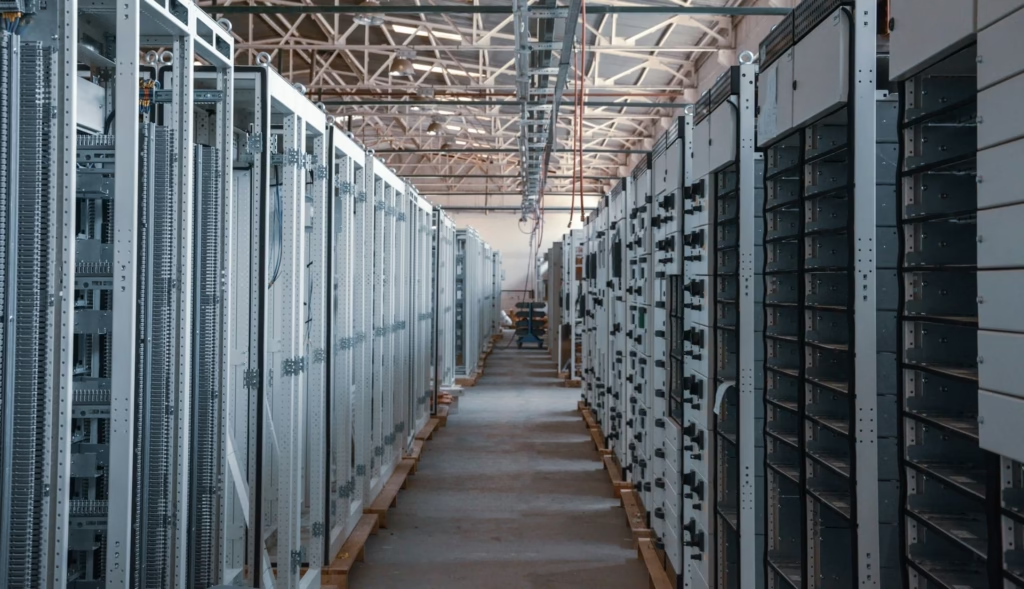
Modern electrical infrastructure is increasingly compact. Control panels, server rooms, and industrial enclosures often contain a high density of wiring within limited space. In such environments, uncontrolled cables pose direct safety risks.
Loose or drifting wires can:
- Obstruct access paths during maintenance
- Come into contact with moving parts
- Increase the risk of accidental contact with live conductors
- Obscure identification of circuits
Wire holder clamps support safety by enforcing predictable routing. When cables are held in place, technicians can work with confidence, knowing where lines run and how they are supported. This predictability is especially important during fault response or emergency interventions, where time pressure increases risk.
Managing Vibration and Mechanical Stress
Many modern installations operate in environments with continuous mechanical vibration. Industrial machinery, HVAC systems, generators, and transportation infrastructure all transmit motion through structures. Over time, this vibration migrates into cable systems.
Unrestrained cables respond to vibration by shifting, rubbing, and pulling against anchor points. This gradual movement degrades insulation and weakens connections.
Wire holder clamps counteract this effect by anchoring cables securely to stable surfaces. This reduces the transfer of vibrational energy along cable runs and prevents slow migration that compromises system integrity.
In vibration-prone environments, proper clamping helps:
- Preserve insulation quality
- Prevent connector loosening
- Maintain alignment within trays and enclosures
- Extend overall service life of wiring systems
Thermal Behavior and Controlled Expansion
Electrical infrastructure operates across varying temperature conditions. Load changes generate heat, while ambient temperatures fluctuate with seasons and operational cycles. Cables naturally expand and contract under these conditions.
Without proper restraint, thermal movement causes cables to bow, shift, or press against adjacent components. Over time, this movement introduces stress at fixed points such as terminals and glands.
Wire holder clamps provide controlled restraint. They hold cables securely while allowing minimal, distributed movement rather than concentrated stress at a single point. This balance supports:
- More even thermal expansion
- Reduced insulation cracking
- Stable spacing between conductors
- Lower risk of heat-related degradation
Proper thermal behavior is essential in modern systems where loads vary dynamically rather than remaining constant.
Organization as an Infrastructure Requirement
In contemporary electrical design, organization is not cosmetic. It is functional. Clear cable routing supports faster troubleshooting, safer modifications, and easier compliance verification.
Clamps contribute to organizational discipline by fixing cables in intentional paths. This clarity helps teams understand system layout even years after installation.
Organized wiring supports:
- Faster fault isolation
- Clear circuit identification
- Reduced error during upgrades
- Easier documentation alignment
Standards bodies such as the International Electrotechnical Commission emphasize proper cable support and routing as part of safe and maintainable electrical installations, reflecting the role of physical organization in system integrity.
Supporting Inspection and Compliance
Modern electrical infrastructure is subject to regular inspection, whether internal, regulatory, or insurance-driven. Inspectors look not only for electrical correctness but also for physical condition and support adequacy.
Loose or poorly supported cables are often flagged because they signal increased long-term risk. Even when no immediate hazard is present, unmanaged wiring suggests a higher likelihood of future failure.
Proper use of wire holder clamps demonstrates:
- Intentional system design
- Adherence to installation standards
- Reduced likelihood of hidden damage
- Easier verification during audits
This compliance readiness becomes increasingly important as systems age and modifications accumulate.
Maintenance Efficiency and Reduced Downtime
Maintenance is inevitable in modern infrastructure. Systems are expanded, components are replaced, and loads are adjusted. The ease with which these changes can be made depends heavily on how cables are managed.
Clamped wiring systems are easier to service because cables remain in position when individual lines are removed or replaced. This prevents bundle collapse and accidental disturbance of adjacent circuits.
Maintenance benefits include:
- Faster access to target cables
- Reduced need for temporary restraints
- Lower risk of introducing new faults
- Shorter service windows
In environments where downtime carries high cost, these efficiencies have tangible operational value.
Supporting Mixed Cable Systems
Modern infrastructure often combines power, control, data, and communication cables within the same physical spaces. Each cable type has different sensitivity to interference and mechanical stress.
Wire holder clamps help maintain functional separation by fixing cables in designated routes. This physical discipline reinforces system design intent and reduces unintended interaction.
Effective separation supports:
- Signal integrity in control and data lines
- Reduced electromagnetic interference
- Clear identification of cable purpose
- Safer working zones during live maintenance
As systems become more integrated, this level of control becomes increasingly important.
Adaptability in Evolving Systems
Electrical infrastructure rarely remains unchanged. New equipment, regulatory updates, and capacity expansions all require wiring adjustments. Systems that were not designed with change in mind become fragile as modifications accumulate.
Clamped cable systems adapt more easily because structure is preserved as changes are made. New cables can be added without disturbing existing routes, and older wiring remains supported.
This adaptability supports:
- Incremental expansion
- Cleaner retrofit work
- Lower rework risk
- Longer useful life of original installation
In modern infrastructure planning, adaptability is a key measure of quality.
Material and Design Considerations
Not all wire holder clamps perform equally under modern conditions. Material choice, mounting method, and load capacity all influence long-term effectiveness.
Clamps used in contemporary infrastructure are selected based on:
- Environmental exposure
- Cable size and weight
- Mounting surface characteristics
- Expected service duration
Choosing appropriate designs ensures that clamps continue to perform their stabilizing role rather than becoming points of failure themselves.
Cost Perspective: Prevention Over Repair
From a cost standpoint, wire holder clamps represent preventive investment. They reduce the likelihood of failures that are expensive to diagnose and repair. While their individual cost is low, their impact accumulates over the lifespan of the system.
Preventive benefits include:
- Fewer emergency repairs
- Lower fire risk from insulation damage
- Reduced replacement frequency
- More predictable maintenance planning
In modern infrastructure, cost control increasingly depends on preventing small issues from becoming major events.
Conclusion: Small Components With Structural Impact
Modern electrical infrastructure is defined by complexity, density, and continuous operation. In such systems, stability is achieved through attention to detail rather than reliance on major components alone.
Wire holder clamps play a foundational role in this stability. By controlling cable movement, supporting organization, and reducing mechanical stress, they help electrical systems remain safe, maintainable, and reliable over time.
The electrical wire holder clamp is not merely a fastening device. It is a structural control that supports the long-term performance of modern electrical infrastructure, ensuring that systems function as designed long after installation is complete.