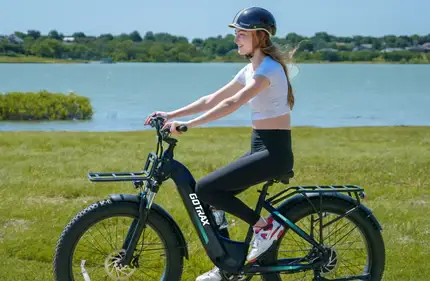
In cities from Victoria to Halifax, a cargo e-bike is increasingly seen parked where a second family SUV used to be. For decades, the North American dream was synonymous with a heavy internal combustion vehicle in the driveway, but rising costs, changing urban infrastructure, and environmental concerns are rapidly shifting that narrative. This quiet revolution on two or three wheels represents a practical evolution for Canadian families, offering a level of utility and weight-bearing capacity that a standard electric bike often cannot match for heavy-duty daily hauling tasks.
While some commuters might first test the waters of micro-mobility with an electric scooter for a short “last-mile” journey to the transit station, they are quickly finding that the substantial carrying capacity of a cargo model is what truly enables them to transition away from car dependency. In a country known for its vast distances, the localized nature of urban living is being redefined by these high-torque, battery-assisted machines.
Cutting Through the High Cost of Living
The primary driver behind this growing Canadian trend is undeniably economic. With the average cost of vehicle ownership—factoring in provincial insurance, maintenance, and fuel—now exceeding $10,000 annually, households are looking for substantial relief. A cargo e-bike requires no provincial registration, no expensive monthly insurance premiums, and zero carbon tax at the pump. In a country where gas prices fluctuate wildly based on global markets, the ability to charge a high-capacity battery for roughly 15 cents to travel 60 kilometres is an irresistible financial win. For many urbanites, the initial investment in a quality cargo model is recouped in less than a year through saved parking fees and fuel costs alone.
Built for the Canadian Urban Landscape
Canadian municipalities are finally catching up to the cycling demand. Cities like Montreal and Vancouver have set the gold standard by investing in separated, “all-ages-and-abilities” bike networks. These wider, protected lanes are essential for cargo bikes, which are naturally bulkier than a traditional cycle.
Furthermore, the technology has evolved to meet our “Great White North” climate. Modern mid-drive motors and cold-weather-rated batteries mean that even a fully loaded bike—carrying two kids and a week’s worth of groceries—can tackle the slushy inclines of a Gatineau or North Vancouver hill without the rider breaking a sweat. With the addition of studded winter tires, these machines become true year-round transit solutions. They prove that you do not need a massive 4×4 to navigate a Canadian winter, provided the municipality commits to clearing bike lanes with the same urgency as arterial streets.
The Practicality of the “Two-Wheeled Minivan”
What sets the cargo e-bike apart from any other form of micro-mobility is its sheer versatility. Whether it is a “Longtail” model with an extended rear rack or a “Front-loader” (Bakfiets) style, these bikes are designed to carry heavy payloads of up to 200kg.
- The School Run: Many parents find that zipping past a line of idling cars in a school drop-off zone is the most satisfying part of their day.
- Grocery Hauling: With massive panniers or front crates, a trip to a major grocery chain is no longer a logistical nightmare involving a hunt for parking in a crowded lot.
- Small Business Logistics: From flower deliveries in downtown Toronto to mobile bike repair shops in Calgary, businesses are finding that e-cargo fleets are faster and cheaper than delivery vans in gridlocked traffic.
Government Incentives Paving the Way
The transition is being accelerated by aggressive rebate programmes across several provinces. From British Columbia’s CleanBC Go Electric rebates to the generous point-of-sale incentives in Prince Edward Island and the Yukon, the government is effectively handing Canadians a “cheque” to go green. These subsidies often cover a significant portion of the upfront cost, making the switch to electric mobility more accessible to the average middle-class family than ever before.
Conclusion
The rise of the cargo e-bike in Canada is not just a passing environmental fad; it is a pragmatic, “made-for-Canada” solution to urban congestion and inflationary pressures. By combining the efficiency of electric propulsion with the rugged hauling capacity of a small truck, these bikes are redefining what it means to move in the North. As infrastructure continues to improve and more Canadians experience the joy of a car-free commute, the “two-wheeled minivan” is set to become a permanent and common fixture of our suburban and urban fabric.