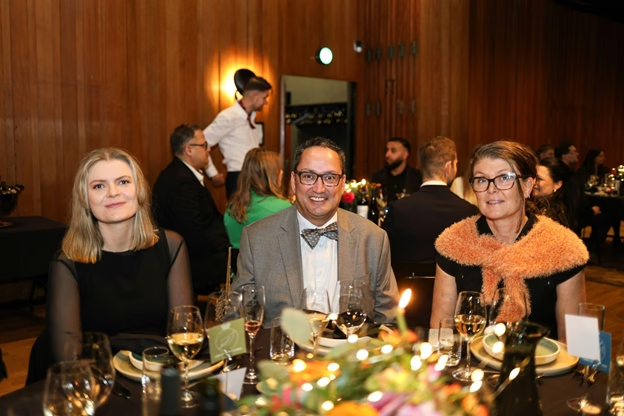
In business settings, food is rarely the focus. It is expected to work quietly in the background while meetings, presentations, and conversations take center stage.
When it is done well, it supports everything. When it is overlooked, it disrupts more than most planners anticipate.
Food catering has become an essential part of how modern business events function, shaping timing, engagement, and overall experience without demanding attention.
Catering Is an Operational Decision, Not Just a Hospitality One
At a business event, food is not simply about feeding people. It is about keeping schedules on track and energy levels consistent.
Meals and refreshment breaks structure the day. They create natural pauses, support transitions between sessions, and help maintain focus during long agendas. When catering aligns with the event schedule, everything runs more smoothly.
This makes catering as much an operational choice as a hospitality one.
How Food Influences Focus and Productivity
Business events ask a lot of attendees. Long sessions, dense information, and constant networking can be draining.
Well-timed, thoughtfully planned food service helps:
- Maintain attention during key sessions
- Reduce fatigue during long days
- Encourage informal conversations and networking
When people are comfortable and well fed, they engage more fully with the content and with each other.
Reliability Is the Core Value of Professional Catering
In a business environment, reliability matters more than novelty.
Food must arrive on time, be served efficiently, and meet expectations without creating distractions. There is little room for improvisation when schedules are tight and venues are unfamiliar.
This is why organizations rely on experienced food catering providers who understand logistics, timing, and scale. Their role is to remove uncertainty from one of the most complex moving parts of an event.
Scale Changes the Equation Quickly
What works for a small internal meeting does not automatically scale to larger events.
As guest counts increase, catering requires careful coordination. Staffing levels, food safety protocols, service flow, and storage all become more complex. Planning for these variables early prevents delays and bottlenecks later.
Professional catering teams are structured to scale smoothly, adjusting operations without compromising service quality.
Dietary Needs Are Now a Standard Expectation
Business events increasingly serve diverse audiences with a wide range of dietary requirements.
Vegetarian, vegan, gluten-free, halal, kosher, and allergy-sensitive options are no longer exceptions. They are expected.
Thoughtful catering plans address these needs from the outset through menu design, labeling, and staff training. This ensures inclusivity without drawing unnecessary attention or slowing service.
Timing Keeps Events Running on Schedule
Food service directly affects event pacing.
Meals served too early can interrupt sessions. Meals served too late can derail schedules and reduce engagement. Well-planned catering integrates seamlessly with the agenda, supporting transitions rather than disrupting them.
When timing works, attendees move naturally through the day without friction.
Catering as a Reflection of Organizational Standards
Guests often view catering as a reflection of the host organization.
Efficient service, clear planning, and attention to detail signal professionalism and competence. Disorganized food service sends the opposite message, even if the rest of the event is well executed.
For corporate events, conferences, and client-facing gatherings, catering contributes to brand perception more than many planners realize.
Supporting Networking Without Competing for Attention
Some of the most valuable moments at business events happen outside formal sessions.
Meals and breaks create space for informal conversations, relationship building, and idea sharing. Effective catering supports these interactions without dominating them.
The goal is not to impress with spectacle, but to create an environment where people feel comfortable connecting.
Why Preparation Matters More Than Presentation
Behind every smooth event is careful preparation.
Catering teams coordinate with venues, event planners, and organizers well in advance. Load-in times, service windows, staffing plans, and contingency scenarios are all addressed before guests arrive.
This preparation allows events to adapt to small changes without disruption.
The Long-Term Value of Getting It Right
While food is temporary, the impression it leaves is not.
Attendees remember whether an event felt organized, considerate, and well run. Catering plays a quiet but consistent role in shaping that perception.
For organizations that host regular events, investing in reliable catering supports consistency and reduces risk over time.
A Practical Takeaway for Event Planners
Food catering works best when it is treated as a strategic element rather than an afterthought.
By prioritizing reliability, timing, and thoughtful planning, organizations can create events that feel polished and purposeful. When catering supports the agenda instead of competing with it, everyone benefits.
The most successful business events are not remembered for the food alone. They are remembered for how smoothly everything came together.