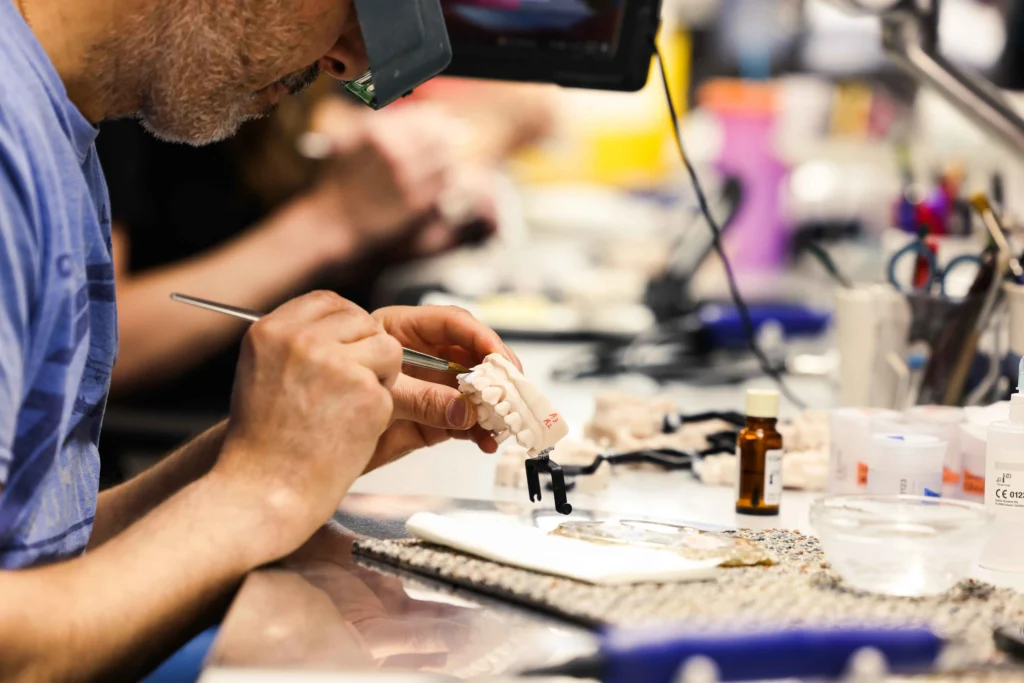
When most people think about visiting the dentist, they picture the dentist and maybe the dental chair. What often goes unnoticed is the team working behind the scenes — particularly the dental laboratory that creates crowns, bridges, veneers, dentures, and implant restorations.
Yet the quality of that lab work can make a significant difference in how a patient feels, functions, and smiles after treatment.
From comfort and durability to appearance and long-term oral health, high-quality dental laboratory services play a vital role in patient outcomes. Let’s explore why.
Precision Makes the Difference Between “Okay” and Exceptional
Dental restorations aren’t one-size-fits-all. A crown or veneer must be carefully crafted to match the exact shape, size, and bite of a patient’s teeth.
Even tiny inaccuracies can cause discomfort.
For example, if a crown sits slightly too high, the patient may feel uneven pressure when chewing. Over time, this can lead to jaw pain or wear on surrounding teeth. If a denture doesn’t fit properly, it may cause irritation or difficulty speaking.
High-quality dental laboratories use precise measurements and advanced technologies to ensure restorations fit naturally and comfortably.
Modern labs often rely on digital scanning and CAD/CAM (Computer-Aided Design and Computer-Aided Manufacturing) systems. These tools allow technicians to design restorations digitally with remarkable accuracy, reducing the margin for error compared to older manual techniques.
Precision isn’t just about comfort — it protects long-term oral health.
Aesthetic Results That Restore Confidence
For many patients, dental restorations are not only functional but cosmetic. A chipped tooth, missing tooth, or worn enamel can affect how someone feels about their appearance.
High-quality lab work ensures that restorations blend seamlessly with natural teeth.
Consider the difference between a crown that looks slightly opaque and one that mimics the translucency of real enamel. The latter creates a smile that feels authentic and natural.
Dental technicians carefully match:
- Tooth shade
- Surface texture
- Shape and contour
- Light reflection
When restorations are designed thoughtfully, patients often report feeling more confident in social and professional settings.
Just as a tailor adjusts clothing for a perfect fit, a skilled dental lab customises each restoration to the individual.
Durability Reduces Future Problems
Dental work should last.
Poorly made restorations may crack, loosen, or fail prematurely. This can lead to additional appointments, higher costs, and patient frustration.
High-quality materials and craftsmanship significantly improve longevity.
For example, well-manufactured ceramic crowns can withstand years of chewing forces when fabricated properly. Implant restorations require even greater precision to ensure stability and integration.
By partnering with experienced laboratories, dental practices can reduce the likelihood of remakes and complications.
In the long run, durable restorations mean fewer disruptions and better patient satisfaction.
Collaboration Between Dentists and Technicians
A strong relationship between dentists and dental laboratories improves outcomes.
Effective communication ensures the lab understands:
- The patient’s bite alignment
- Aesthetic expectations
- Functional needs
- Any special considerations
For example, a patient who grinds their teeth at night may require specific materials or reinforcement. A patient receiving front-tooth veneers may prioritise cosmetic detail.
When laboratories and dentists collaborate closely, restorations reflect both clinical accuracy and aesthetic artistry.
Midway through exploring advanced dental laboratory capabilities, you can visit smileartlab.com.au to learn more about how modern lab services support restorative dentistry through precision and digital technology.
The key takeaway is that the lab is not just a supplier — it’s a partner in patient care.
Digital Technology Improves Efficiency and Comfort
Technology has transformed dentistry in recent years.
Digital impressions have largely replaced traditional moulds in many clinics. Instead of biting into impression material, patients may undergo a quick intraoral scan.
These digital files are then sent directly to the laboratory, where technicians design restorations with enhanced accuracy.
Benefits include:
- Faster turnaround times
- Reduced need for adjustments
- Improved fit on first placement
- Greater comfort for patients
Just as industries like manufacturing and architecture use digital modelling to increase precision, dental laboratories now leverage similar systems to improve patient outcomes.
Reducing Chair Time and Remakes
When restorations fit the first time correctly, appointments run more smoothly.
Fewer adjustments mean less chair time. For patients, that often translates into shorter visits and reduced discomfort.
For dental practices, it improves scheduling efficiency and overall workflow.
On the other hand, poorly fabricated restorations may require multiple adjustments or remakes, increasing inconvenience for everyone involved.
High-quality lab work supports efficiency without sacrificing care.
Supporting Complex Cases
Some dental cases are straightforward. Others require advanced planning.
Full-mouth reconstructions, implant-supported bridges, and aesthetic smile transformations demand careful design and coordination.
Experienced dental laboratories assist with:
- Treatment planning
- Digital smile design previews
- Material recommendations
- Occlusion (bite) considerations
In complex cases, laboratory expertise can significantly influence the final outcome.
For example, in implant dentistry, precise alignment ensures that restorations function properly and integrate seamlessly with surrounding teeth.
The more complex the treatment, the more important the lab’s expertise becomes.
Real-World Comparison: Craftsmanship in Everyday Life
Think about the difference between a mass-produced product and a custom-made one.
A generic pair of shoes might fit adequately, but a custom-made pair tailored to your exact measurements provides better comfort and durability.
Dental restorations follow a similar principle.
High-quality lab work reflects craftsmanship, precision, and attention to detail — qualities that directly affect performance and satisfaction.
The Bigger Picture: Patient Trust and Satisfaction
Ultimately, patient outcomes are about trust.
When restorations fit comfortably, look natural, and last for years, patients feel confident in their care.
This trust strengthens the relationship between dentist and patient.
High-quality dental laboratory services quietly support this trust behind the scenes.
They ensure that the final result matches the expectations set during consultation.
Final Thoughts
Dental laboratory services may not be visible during a routine appointment, but their impact is undeniable.
From precision fit and aesthetic quality to durability and efficiency, the work performed in the lab directly influences patient comfort, confidence, and long-term oral health.
When dental practices collaborate with skilled laboratories that prioritise accuracy and innovation, patients experience better results — not just in how their restorations look, but in how they function and feel.
In modern dentistry, exceptional outcomes are rarely accidental. They are crafted — carefully, precisely, and with patient well-being at the center.