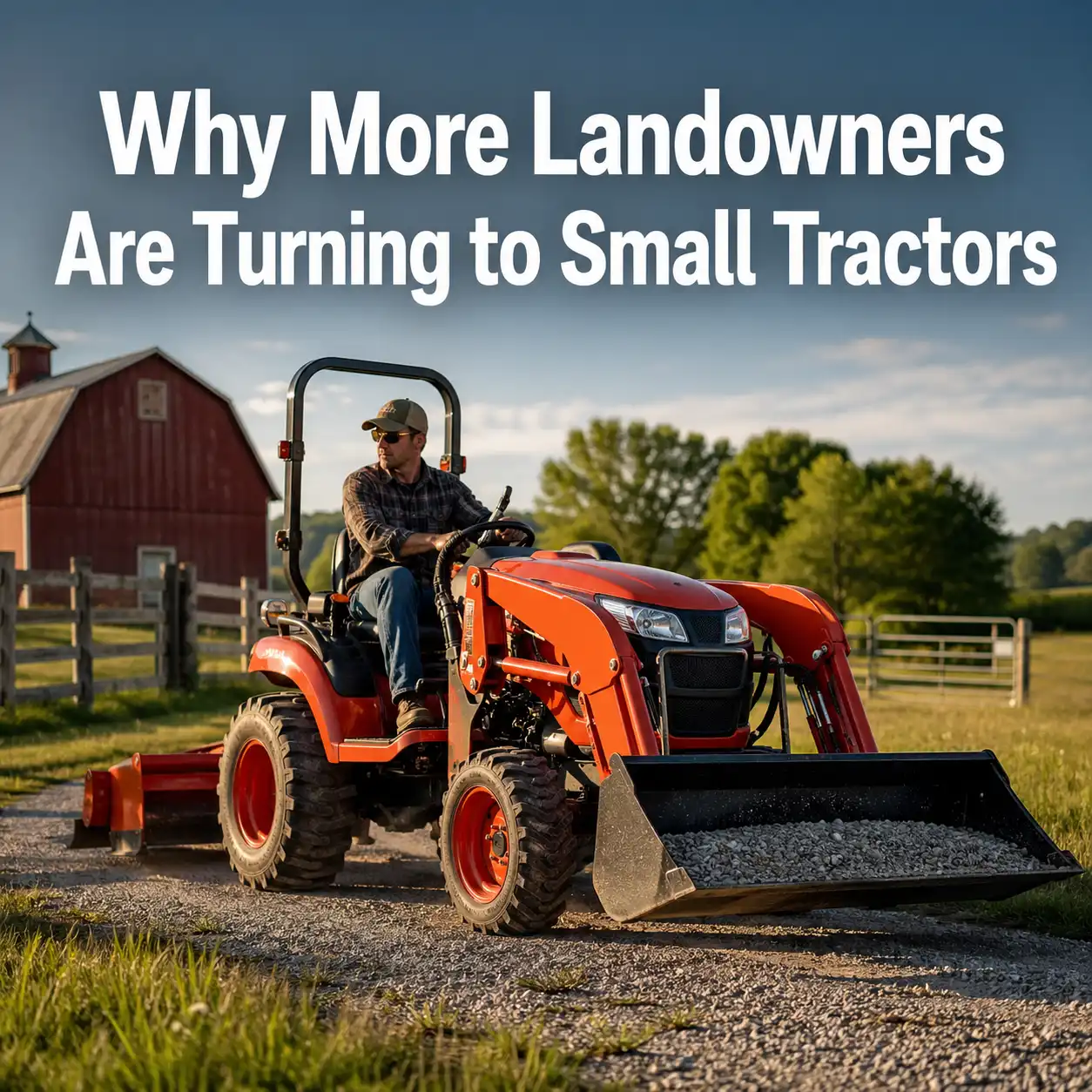
Managing a lifestyle block or a modest acreage rarely calls for oversized machinery, yet relying on hand tools alone quickly wears thin. Somewhere between those extremes sits a more practical approach. Many owners are rethinking how they handle routine jobs, and small tractors have found their way into that conversation without much fuss.
They offer enough capability to keep things moving without turning every task into a production. It is a shift driven as much by practicality as by preference, with people choosing equipment that fits their land rather than forcing the land to fit the machine.
The Versatility of Compact Performance
What draws people in is not a single standout feature, but the way these machines cover a wide range of jobs. Clearing scrub in the morning, levelling a rough track by afternoon, and maybe shifting a pile of soil before calling it a day. It all adds up. Swapping attachments is easy, and that flexibility changes how work gets planned.
Instead of juggling multiple tools or hiring help, one machine carries the load. It feels less like owning equipment and more like having a dependable extra pair of hands that never really clocks off.
Working Comfortably in Spaces that Feel Constrained
Properties are rarely laid out with machinery in mind. There are fences that sit just a little too close, sheds that leave little room to turn, and trees that seem to lean exactly where you need to pass. Larger equipment struggles here, often forcing awkward manoeuvres or leaving parts of the land untouched. Smaller units slip through with far less effort.
They handle uneven ground without chewing it up and can move across paddocks without leaving a mess behind. That matters, especially for those who care about how their property looks as much as how it functions.
Reduced Impact On Soil And Surrounding Landscape
There is also the question of wear and tear, not on the machine, but on the land itself. Heavier equipment compacts soil, damages grass cover, and leaves marks that take time to recover. Lighter machines keep that disruption to a minimum.
The difference is noticeable after a few passes, particularly in wetter conditions when the ground is more vulnerable. It allows work to continue without the lingering downside of repairs later. For many, that balance is reason enough to rethink what they use day to day.
Simpler Controls That Lower The Barrier To Entry
Operating machinery used to feel like a specialised skill, something learned through experience or passed down over time. That has changed. Modern designs are far more intuitive, with controls that respond predictably and layouts that make sense from the first use.
There is less guesswork involved. People who might have hesitated before now step in with confidence, and that opens things up within a household. Jobs do not sit waiting for one person to handle them. Anyone can take the lead when needed, which tends to keep things moving.
Finding The Right Power Range Without Excess
Choosing the right size often comes down to a bit of realism. Too much power sounds appealing at first, but it brings added cost, storage issues, and unnecessary fuel use. Machines in the mid-range tend to strike a better balance. They handle lifting, towing, and general maintenance without feeling oversized for the setting.
They fit comfortably into existing sheds and do not dominate the space. More importantly, they get used regularly, which is often the best measure of whether something was worth the investment in the first place.
Final Thoughts
There is a shift in how landowners approach their work. Efficiency matters, but so does ease and a sense that the equipment is working with you rather than against you. Smaller machines fit into that mindset without much persuasion.
They take on demanding tasks, adapt when plans change, and do it all without drawing attention to themselves. At the end of the day, that is what keeps them in use. Not because they are impressive on paper, but because they make everyday work feel manageable, and sometimes even a bit satisfying.