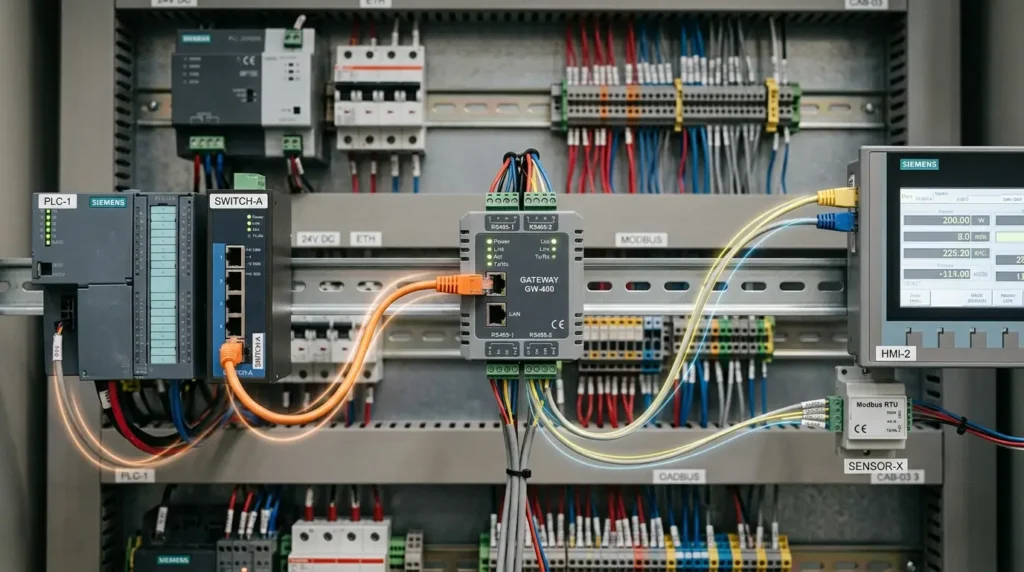
In modern industrial environments, seamless communication between devices is essential for efficient operation. However, many systems use different communication standards, which creates challenges when integrating equipment. This is where a communication protocol converter becomes a critical component. It enables devices using different protocols to exchange data reliably, ensuring interoperability across complex industrial networks.
As industrial infrastructure evolves, the need to connect legacy systems with modern digital platforms continues to grow. A communication protocol converter helps bridge this gap without requiring complete system replacement.
What Is a Communication Protocol Converter?
A communication protocol converter is a device or software solution that translates data between different communication protocols. In industrial networks, equipment such as controllers, sensors, meters, and automation systems often operate using incompatible protocols.
The role of the converter is to interpret incoming data from one protocol and translate it into another format that can be understood by the receiving device. This allows systems from different manufacturers or generations to function together within the same network.
Why Industrial Networks Need Protocol Conversion
Industrial environments typically include a mix of old and new technologies. Replacing all existing equipment is often not practical or cost-effective. A communication protocol converter allows organizations to modernize their infrastructure while maintaining existing assets.
Key reasons for using protocol converters include:
- Integration of legacy equipment into modern control systems
- Communication between devices using different industrial protocols
By enabling interoperability, these converters support more flexible and scalable system architectures.
Role in Automation and Control Systems
In automation systems, data must flow continuously between field devices and centralized platforms. A communication protocol converter ensures that this data exchange happens without interruption, even when devices use different standards.
For example, a converter can connect field devices using Modbus with systems based on IEC protocols. This allows operators to monitor and control equipment through a unified interface.
In practical applications, protocol converters are often used alongside remote terminal units (RTUs), programmable controllers, and SCADA systems to create fully integrated automation environments.
Benefits for Industrial Infrastructure
The use of a communication protocol converter provides several operational benefits:
- Reduced integration costs by avoiding full system replacement
- Increased flexibility when adding new equipment
It also simplifies system design by enabling communication between otherwise incompatible devices. This makes it easier to expand or upgrade infrastructure over time.
Support for Renewable Energy Systems
Renewable energy installations often involve equipment from multiple vendors, each using different communication protocols. A communication protocol converter allows these systems to be integrated into a single monitoring and control platform.
This is particularly important for solar and wind plants, where data from inverters, meters, and environmental sensors must be combined for effective management.
Solutions available at elseta.com support protocol conversion within energy systems, enabling efficient integration of distributed assets and centralized control.
Security and Data Integrity
As industrial networks become more connected, maintaining secure communication is essential. A communication protocol converter must ensure that data is transmitted accurately and without loss or corruption.
Modern solutions include features such as error checking, data validation, and secure communication channels. These capabilities help protect critical infrastructure from operational risks and cyber threats.
Scalability and Future Integration
Industrial systems are constantly evolving, and flexibility is a key requirement. A communication protocol converter allows organizations to adapt to new technologies without disrupting existing operations.
Its ability to support multiple protocols makes it a future-proof solution that can be integrated into expanding networks. This ensures long-term compatibility and reduces the need for costly upgrades.
Communication Protocol Converter as a Key Integration Tool
In conclusion, the communication protocol converter plays a vital role in industrial networks by enabling communication between diverse systems. It allows legacy and modern devices to work together, supports automation, and enhances operational efficiency.
As industries continue to digitalize and integrate new technologies, the communication protocol converter will remain an essential tool for ensuring interoperability, scalability, and reliable system performance.