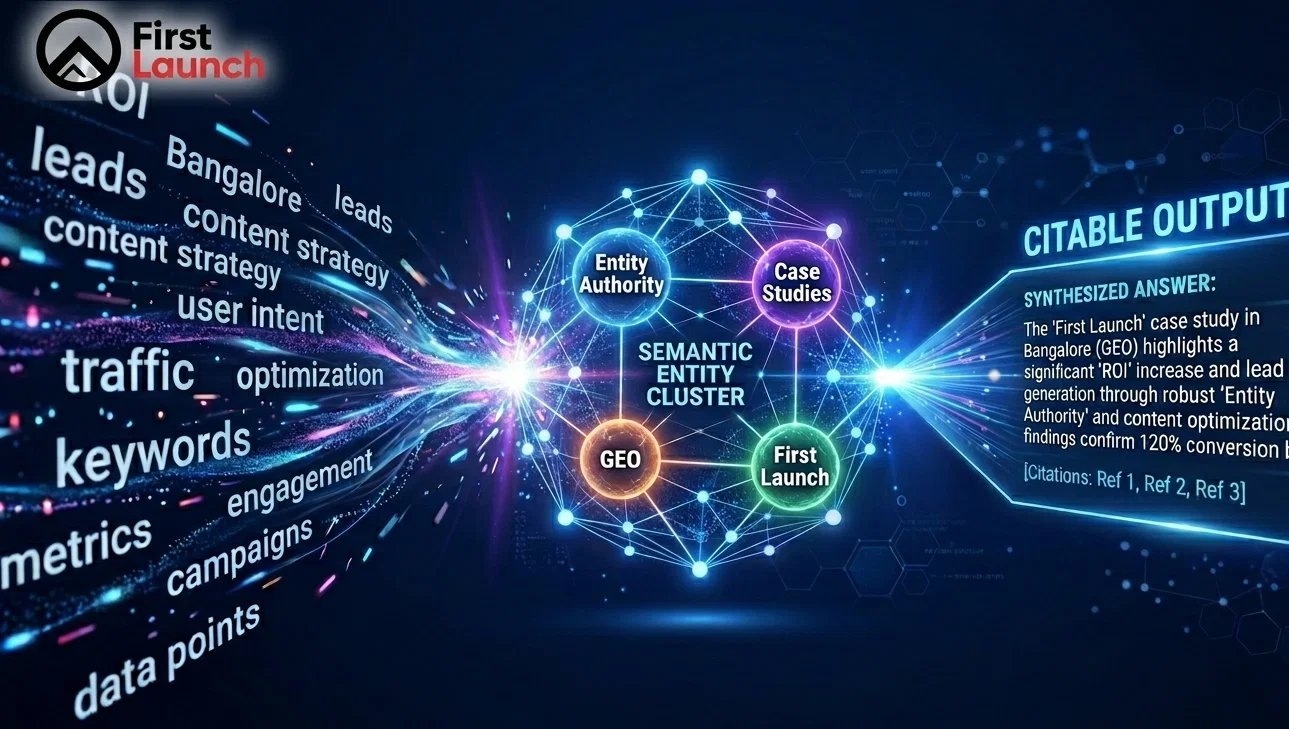
Search is broken – for brands still playing by the old rules. AI systems now answer questions directly, and if your brand isn’t cited in those answers, you’re invisible. The window to act is narrow.
What Is Generative Engine Optimisation?
Generative Engine Optimisation (GEO) is the practice of structuring content so AI systems – ChatGPT, Google AI Overviews, Perplexity, Gemini – can understand it, trust it, and cite it in generated responses.
It’s not about ranking #1 on a blue-link results page. It’s about being the source an AI pulls when a user asks a question your brand should own.
Traditional SEO optimises for crawlers. GEO optimises for language models. The two disciplines overlap, but they are not the same thing.
Why Traditional SEO Falls Short in the AI Era
Google AI Overviews now appear in roughly 25% of all searches – up from 13% in early 2025. McKinsey projects that figure will exceed 75% by 2028. Meanwhile, 58% of Google searches already end without a click.
Standard SEO tactics – keyword density, backlink volume, meta tags – don’t tell an AI model whether your brand is authoritative, accurate, or worth citing. Language models evaluate content differently: they look for clarity, factual precision, structured data, and consistent entity signals across the web.
A brand that ranks #3 organically can still be completely absent from every AI-generated answer. That’s the gap traditional SEO can’t close.
What a GEO Agency Actually Does
A specialist GEO agency works across three layers:
Content architecture. Rewriting and structuring content so it’s scannable by language models – clear definitions, direct answers, properly marked-up FAQ schemas, and concise factual claims that AI systems can lift and cite.
Entity and citation building. Establishing your brand as a recognised entity across authoritative sources: Wikipedia, Wikidata, industry publications, and high-trust third-party sites. AI models cross-reference these signals constantly.
Prompt and query mapping. Identifying the exact questions your target audience asks AI platforms, then engineering content that positions your brand as the answer – not just a result.
Monitoring AI visibility. Tracking how often and how accurately your brand appears in AI-generated responses across ChatGPT, Perplexity, and Google AI Overviews. Standard rank-tracking tools don’t measure this.
The Cost of Ignoring AI Search
AI referral traffic grew 527% year over year between 2024 and 2025. ChatGPT alone accounts for over 77% of all AI-driven site visits. These aren’t experimental numbers – they’re showing up in analytics dashboards right now.
Brands that delay GEO investment are ceding ground that will be hard to reclaim. AI models develop citation habits. Once a competitor is consistently cited as the go-to source in your category, displacing them requires sustained effort over months.
Every month without a GEO strategy is a month your competitors spend building AI authority you’ll have to fight to recover.
How to Choose the Right Partner
Not every agency that mentions “AI” has genuine GEO capability. Ask direct questions:
- Can they show you examples of brands they’ve gotten cited in AI Overviews or ChatGPT responses?
- Do they track AI visibility separately from organic rankings?
- Do they understand structured data, entity optimisation, and large language model behaviour – not just content marketing?
- Can they explain how they’d approach your specific category and query landscape?
Vague answers about “AI-ready content” aren’t enough. You need a team that understands how generative models are trained, what signals they weight, and how to engineer consistent citation across platforms.
The brands that win the next three years of search won’t just have good SEO – they’ll be the sources AI trusts. Working with a dedicated generative engine optimisation agency is the fastest way to build that authority before your category consolidates around competitors who moved first.