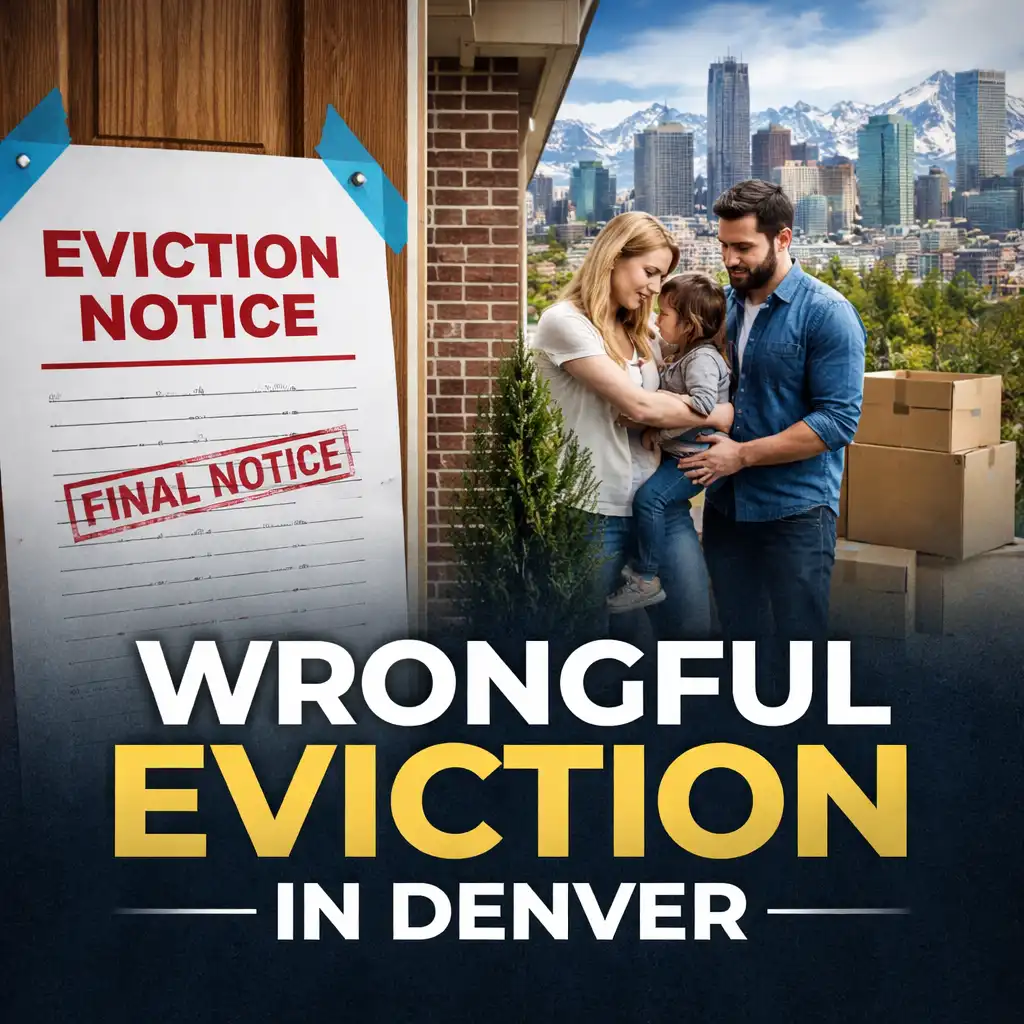
Denver’s housing market has produced one of the most active tenant protection policy environments in Colorado, with the city layering its own renter-specific protections on top of the state law framework that governs all Colorado landlord-tenant relationships. For Denver tenants who have been wrongfully evicted or who are facing an eviction that violates their legal rights, the combination of state law protections, Denver municipal ordinances, and the specific remedies available in Denver County Court creates a legal landscape with more tools available to tenants than most people realize when they first receive an eviction notice or find their belongings on the sidewalk.
What Makes an Eviction Wrongful in Colorado
An eviction in Colorado is wrongful when the landlord fails to follow the specific legal procedures Colorado law requires. Colorado’s forcible entry and detainer statutes, codified in Colorado Revised Statutes Title 13, Article 40, establish the mandatory process for lawful eviction: proper written notice with the legally required content and notice period, filing in the correct court if the tenant does not vacate, service of the summons and complaint on the tenant, a court hearing, and a court order of possession before any physical removal of the tenant. A landlord who short-circuits any step of this process has committed a wrongful eviction regardless of whether the underlying reason for the eviction was legitimate.
The most common forms of wrongful eviction in Denver include self-help evictions in which the landlord changes the locks, removes the tenant’s belongings, or shuts off utilities without a court order, retaliatory evictions brought in response to a tenant’s exercise of a legal right, discriminatory evictions based on a protected characteristic, and evictions based on improper or legally defective notices that do not comply with Colorado’s notice requirements.
Denver’s Specific Tenant Protections
Denver has enacted several tenant protection measures that go beyond Colorado state law baseline requirements. Denver’s Residential Tenant Protections ordinance addresses evictions in the context of the city’s affordability crisis and provides additional procedural protections for tenants in covered residential units. Denver also operates a dedicated eviction legal assistance program through Denver Human Services that provides free or reduced-cost legal representation to income-qualifying tenants facing eviction in Denver County Court.
For tenants in manufactured housing parks within Denver, Colorado’s Manufactured Housing Act provides specific additional protections including longer notice periods and additional grounds for challenging eviction. The intersection of Denver’s municipal protections with Colorado state law creates a layered framework that an attorney familiar with both must navigate to ensure every available protection is identified and asserted.
The Self-Help Eviction Prohibition and Its Remedies
Colorado law prohibits landlords from evicting tenants through self-help methods, meaning any action outside the court process designed to force the tenant to leave. Changing locks, removing doors, shutting off heat, electricity, or water, removing the tenant’s belongings, or physically removing the tenant without a court order are all unlawful self-help evictions under Colorado Revised Statute Section 38-12-510. A tenant subjected to a self-help eviction can obtain emergency relief from Denver County Court requiring the landlord to restore possession immediately, and can pursue damages including actual damages, statutory damages, and attorney fees.
Retaliatory Eviction and Its Damages
Colorado Revised Statute Section 38-12-509 prohibits landlords from retaliating against tenants who report housing code violations, organize with other tenants, contact a government agency about housing conditions, or exercise any other legally protected tenant right. When a landlord initiates an eviction within a specified period after a tenant exercises a protected right, Colorado law creates a rebuttable presumption of retaliation. A tenant who establishes retaliatory eviction can recover actual damages, an amount equal to three months’ rent, and attorney fees.The Denver County Court’s housing division resources describe the eviction hearing procedures and the emergency relief available to Denver tenants. Working with an experienced wrongful eviction attorney in Denver who knows the Denver housing court’s specific practices and the full range of city and state tenant protections gives wrongfully evicted Denver renters the legal tools to recover possession, damages, and the attorney fees that Colorado’s tenant protection statutes specifically provide.