

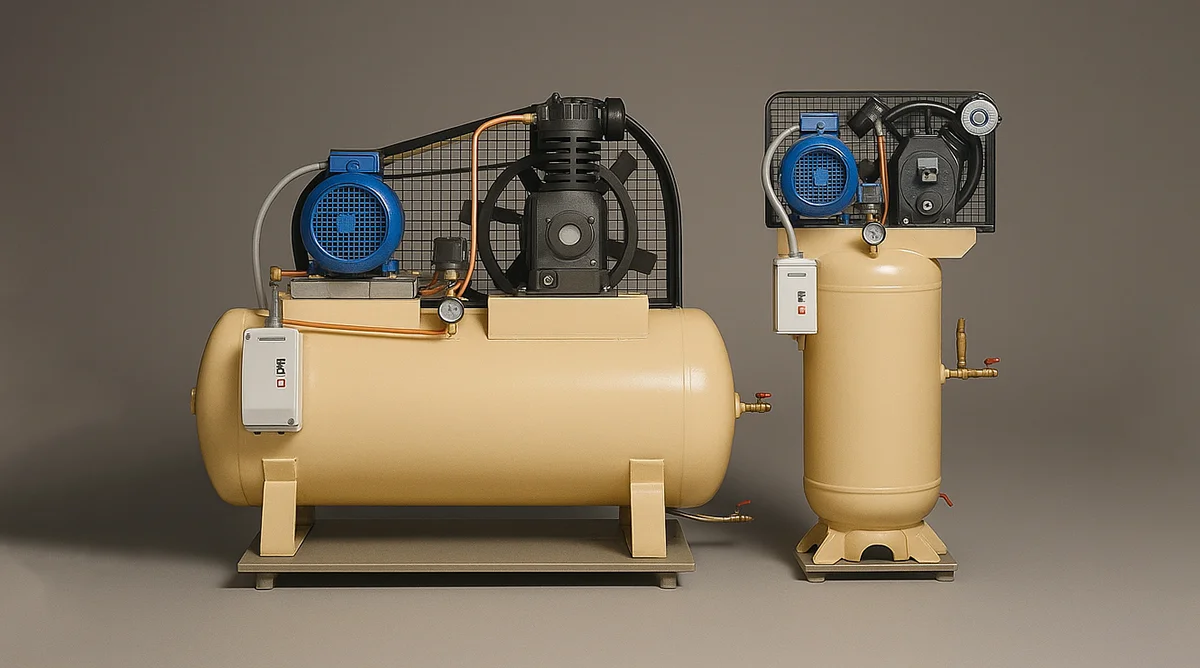
Behind a lot of the equipment we rely on every day—dental chairs, lab analyzers, vehicle brakes—sits a small but mighty workhorse: the single-piston compressor. It doesn’t get much attention, yet its simple design has powered industries for over a century.
What Is Single-Piston Technology?
A single-piston compressor uses one piston moving up and down inside a cylinder to compress air or create a vacuum. As the piston moves down, it draws air in. As it moves back up, it compresses that air and pushes it out. Switch the valve setup around, and the same basic motion can pull air out to create a vacuum instead.
It’s about as straightforward as machinery gets, and that simplicity is exactly the point.
The roots of piston compression go back to the Industrial Revolution, when reciprocating machines first powered factories and mines. Over the decades, the design has been refined with better materials, tighter tolerances, and quieter operation. The core principle, though, hasn’t changed much—which says a lot about how well it works.
Why Choose a Single-Piston Compressor?
There’s a reason this design has stuck around. Here are the main advantages that keep it relevant.
Efficiency and Energy Use
A single piston has fewer moving parts than multi-stage systems, so there’s less energy lost to friction and heat. For applications that don’t need huge volumes of compressed air, a single-piston unit delivers what you need without wasting power. That translates to lower running costs over the life of the equipment.
Durability and Low Maintenance
Fewer parts also means fewer things that can break. Many modern units are built as an oil-less air compressor, which removes the need for regular oil changes and cuts down on contamination risk. This is a big deal in settings like medical or food applications, where clean air isn’t optional.
Maintenance usually comes down to swapping filters and checking seals now and then. Compared to bulkier systems, the upkeep is refreshingly simple.
Versatility Across Applications
You’ll find single-piston compressors in dental offices, automotive shops, and laboratory benches alike. Their compact size and reliable output make them easy to fit into all sorts of equipment, whether you need steady pressure or a clean vacuum.
How Single-Piston Vacuum Technology Works
Flip the function of a piston compressor, and you’ve got a vacuum pump. Instead of pushing air out under pressure, the piston pulls air out of a sealed space to lower the pressure inside.
Single-piston vacuum pumps are prized in industrial and scientific settings for a few reasons. They produce a steady, controllable vacuum, they run quietly compared to many alternatives, and they’re easy to integrate into compact systems. For lab work like filtration, degassing, or sample handling, that consistency matters.
How do they stack up against other types? Diaphragm pumps are great for very clean, chemical-resistant work but often can’t reach the same vacuum depth. Rotary vane pumps pull deeper vacuums but tend to need more maintenance and oil management. Single-piston pumps sit in a sweet spot—reliable, reasonably powerful, and low-fuss. If you want a closer look at the trade-offs, this guide to vacuum pump types is worth a read.
Where Single-Piston Systems Get Used
The range of applications is honestly impressive. Here’s where you’re most likely to find this technology at work.
Medical and Laboratory
Hospitals and labs lean heavily on single-piston systems. Think suction units, dental equipment, ventilators, and analyzers. Clean, oil-free air is critical here, and the quiet operation is a welcome bonus in patient-facing environments.
Automotive and Manufacturing
In the automotive world, these compressors power brake systems, paint sprayers, and pneumatic tools. On the factory floor, they handle packaging, material handling, and assembly tasks that need dependable air on demand.
Environmental and Emerging Uses
Newer applications keep popping up. Air quality monitoring stations, water treatment systems, and various sensor technologies all use compact compression and vacuum units. As environmental monitoring grows, so does demand for small, efficient pumps.
How to Choose the Right Single-Piston System
Picking the right unit comes down to matching the machine to the job. A few factors deserve your attention.
- Pressure and flow rate: Figure out what your application actually requires. Oversizing wastes money and energy; undersizing leaves you short.
- Noise levels: If the unit runs near people—say, in a clinic or office—quiet operation matters more than you might think.
- Footprint and weight: Compact systems are easier to integrate, especially in portable or space-tight equipment.
- Duty cycle: Will it run constantly or in short bursts? Make sure the unit is rated for your usage pattern.
Don’t overlook installation and support, either. A supplier who offers solid technical guidance and accessible spare parts can save you a lot of headaches down the line. It’s worth checking the maintenance and support options before you commit.
What’s Next for Single-Piston Technology?
The basic design may be old, but innovation hasn’t stopped.
Materials are getting better—advanced polymers and coatings extend service life and reduce wear. Designers are also squeezing out more performance from smaller packages, which is great news for portable and embedded applications.
Smart technology is creeping in, too. Some newer systems include sensors that track performance, flag maintenance needs, and feed data into monitoring platforms. That kind of predictive insight helps prevent unexpected downtime.
Sustainability is another driver. Oil-free designs, lower energy draw, and recyclable materials are becoming selling points rather than afterthoughts. As efficiency standards tighten, expect single-piston systems to keep evolving in that direction.
Conclusion
Few technologies survive a hundred-plus years and stay genuinely useful. Single-piston compression and vacuum systems have managed it by being simple, efficient, and adaptable. They’re not always the flashiest option, but for a huge range of applications, they’re exactly the right tool.
Technology Perspective
Technology continues to transform industries through artificial intelligence, cloud computing, automation, cybersecurity, digital platforms, and data-driven decision making. As organizations increasingly adopt digital solutions, understanding emerging technologies becomes essential for businesses, professionals, and consumers. DGM News regularly covers these developments through expert analysis, technology news, and educational resources.
Innovation Outlook
Rapid advances in artificial intelligence, automation, machine learning, cloud infrastructure, and digital transformation continue reshaping global industries. Monitoring these developments helps organizations adapt to changing technologies, improve efficiency, and prepare for future innovation.
Did you know?
Artificial Intelligence is expected to influence nearly every major industry over the coming decade, from healthcare and finance to transportation, manufacturing, education, and entertainment.
AI, Machine Learning, Deep Learning and Generative AI Explained
Google AI Updates
About DGM News
DGM News is an independent digital publication delivering the latest Technology News, AI News, and FinTech News. We provide expert insights on startups, innovation, cybersecurity, software, business, gadgets, cloud computing, artificial intelligence, and emerging technologies. Our mission is to publish informative, accurate, and regularly updated content that helps readers stay informed in today's rapidly evolving digital landscape.
Since our editorial focus includes technology, artificial intelligence, and financial technology, we continuously expand our coverage as new innovations emerge.
Editorial Standards
Every article published on DGM News undergoes editorial review before publication. We prioritize factual accuracy, clarity, transparency, and reader value while following responsible digital publishing practices.
Research Methodology
Our editorial team researches publicly available information from official announcements, technical documentation, research publications, developer resources, reputable industry reports, and trusted public sources whenever applicable. Information is reviewed to improve clarity and accuracy before publication.
Fact-Checking Policy
We make reasonable efforts to verify factual information before publishing. Articles are reviewed for accuracy, consistency, and relevance. If significant developments occur after publication, content may be revised to reflect updated information.
Update Policy
Technology evolves rapidly. Articles may be reviewed and updated periodically to reflect software releases, AI developments, security advisories, regulatory updates, product launches, and other important industry changes.
Source Verification
Whenever possible, DGM News reviews information using official company announcements, technical documentation, research publications, government resources, publicly available reports, and reputable industry references before updating articles.
Editorial Independence
DGM News maintains editorial independence in all publishing decisions. Editorial content is produced independently and is intended to provide balanced, informative, and reader-focused coverage without influence from advertisers or commercial partnerships.
AI Usage Disclosure
Artificial intelligence tools may assist with research organization, grammar improvement, formatting, or editorial workflows. Every article is reviewed by human editors before publication to help maintain quality, clarity, and factual accuracy.
Corrections Policy
Accuracy is important to us. If readers identify outdated information or factual inaccuracies, they are encouraged to contact our editorial team. Verified corrections are reviewed and incorporated whenever appropriate.
Reader Feedback
Reader feedback helps improve our journalism. We welcome suggestions, corrections, and constructive feedback through our Contact page to continuously improve the quality of our reporting.
Last Editorial Review
This article follows the DGM News editorial review process and may be updated periodically as new information becomes available.
Why Trust DGM News?
DGM News is committed to publishing technology journalism that emphasizes accuracy, transparency, editorial independence, and regularly updated information. Our editorial process is designed to provide readers with reliable coverage of technology, AI, fintech, startups, and digital innovation.
DGM News Resources
Topics We Cover
Artificial Intelligence • AI Tools • Machine Learning • FinTech • Cybersecurity • Cloud Computing • Programming • Software Development • Gadgets • Mobile Technology • Business Technology • Startups • Digital Marketing • Blockchain • Cryptocurrency • Science • Innovation • Consumer Technology • Enterprise Technology • Automation
