

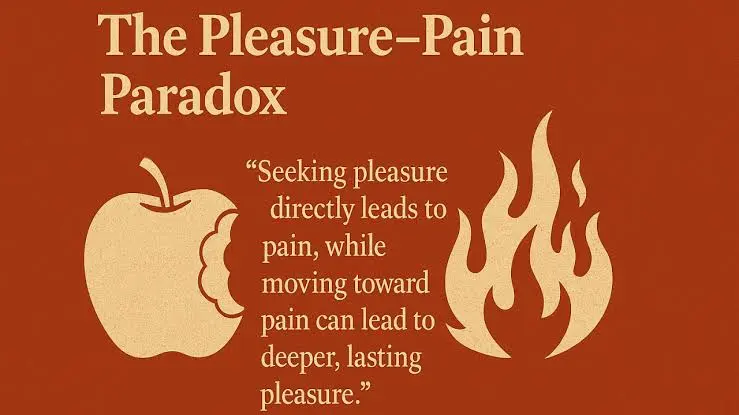
Human desire is rarely simple. Most people assume their inner lives are fairly standard, then stumble across a thought, a fantasy, or a reaction that makes them pause and wonder whether they are “normal.” That pause, it turns out, is one of the most common experiences in human psychology. Researchers and clinicians have spent decades trying to understand the full spectrum of human desire, and what they have found is both reassuring and genuinely fascinating.
This article walks through the psychological foundations of pain and pleasure, explains how these experiences overlap in the brain, reviews what the clinical literature says about atypical desires, and outlines the difference between a preference that is simply unusual and one that may warrant professional support. Whether you are curious for personal reasons or just interested in the science, there is a lot worth knowing here.
Why Pain and Pleasure Share Real Estate in the Brain
At the neurological level, pain and pleasure are far closer neighbors than most people realize. Both experiences activate the opioid system, the same network of receptors and neurotransmitters involved in reward, motivation, and physical sensation. When the body experiences mild physical stress, such as the burn of exercise or the heat of a spicy meal, the brain can respond by releasing endorphins that produce a mild euphoric effect. This is not metaphor; it is measurable neurochemistry.
A 2019 study published in the journal PLOS ONE found that the brain regions activated by social rejection and physical pain show significant overlap, particularly in the anterior cingulate cortex and the anterior insula. What that means practically is that emotional pain and physical pain are processed through similar circuits. The line between what hurts and what feels good is genuinely blurry at the level of brain tissue, not just in poetry.
This overlap partly explains why certain people find controlled experiences of pain or vulnerability unexpectedly pleasurable. The brain is not malfunctioning in those cases. It is doing something it was essentially built to do, which is to integrate and interpret sensory information through a lens shaped by context, expectation, and personal history.
The Spectrum of Atypical Desire: What Research Actually Says
Academic psychology distinguishes between a paraphilia, which is simply an atypical pattern of sexual arousal, and a paraphilic disorder, which involves distress to the individual or harm to others. This is a critical distinction that gets lost in popular conversation. Having an unusual desire is not, by itself, a diagnosis or a problem.
The fifth edition of the Diagnostic and Statistical Manual of Mental Disorders (DSM-5), published by the American Psychiatric Association, lists several paraphilias as categories of human experience without labeling them as disorders unless they cause significant distress or involve non-consenting parties. The manual is explicit: a paraphilia does not automatically equal a paraphilic disorder.
Research on prevalence is limited by obvious methodological challenges, since people are understandably reluctant to disclose atypical desires to researchers. A 2016 study in the Journal of Sex Research surveyed 1,040 adults in Quebec and found that nearly 47 percent reported an interest in at least one sexual behavior considered atypical, and roughly 33 percent had acted on such an interest at least once. In other words, atypical desire appears to be genuinely common, even if rarely discussed openly.
Consent, Context, and the Line Between Kink and Harm
Among the most discussed topics in the psychology of desire is the role of consent and mutual agreement in determining whether a behavior is harmful. Clinicians and researchers broadly agree that consensual activity between adults that causes no lasting physical damage and involves no coercion occupies a fundamentally different moral and psychological category than non-consensual behavior.
The concepts of sadism and masochism illustrate this distinction well. When researchers and therapists examine these tendencies, they consistently find that the presence or absence of free, informed, and enthusiastic consent is the defining variable. The same physical act that is mutually desired and openly negotiated by two adults is categorically different from one that is imposed without agreement.
Context matters enormously too. A person who experiences arousal from controlled pain within a negotiated encounter is having a fundamentally different psychological experience than someone acting on compulsive urges that feel intrusive or out of control. One involves agency and self-knowledge; the other may involve anxiety, shame, or compulsion. Those are not the same thing, and treating them as identical does a disservice to both.
Common Misconceptions About Atypical Desire
Several myths persist about people who experience atypical desires, most of which the clinical literature does not support. Addressing them directly is useful because misinformation can increase shame, reduce help-seeking, and distort self-perception.
- Myth: Atypical desires are always caused by trauma. Reality: While trauma can influence sexual development, research does not support the idea that all atypical desires originate from negative experiences. Many people with no trauma history report these preferences.
- Myth: People with atypical desires are more likely to commit crimes. Reality: The vast majority of people with paraphilias do not act outside of consensual contexts. Research does not support a reliable link between atypical desire and criminal behavior in the general population.
- Myth: Therapy can or should eliminate atypical desires. Reality: Most ethical clinicians do not aim to change sexual orientation or desire patterns. The clinical goal, when someone seeks help, is typically to reduce distress or problematic compulsive behavior, not to alter the underlying preference.
- Myth: Atypical desires always become more extreme over time. Reality: This is not supported by the available evidence. Many people maintain consistent, stable preferences throughout their adult lives without escalation.
When Does Desire Become a Clinical Concern?
The clearest markers that a desire or behavior pattern may warrant professional attention are distress, impairment, and harm to others. These are not arbitrary criteria; they reflect a broader principle in mental health that the problem is not the feeling itself but what it does to a person’s life and relationships.
Distress means the person themselves feels significant suffering related to the desire, not merely discomfort from social stigma. Impairment refers to the desire interfering with daily functioning, work, relationships, or self-care. Harm to others is self-explanatory: any behavior that involves non-consenting individuals, or that causes lasting physical injury, is outside the boundary of what ethical frameworks protect.
| Factor | Non-Clinical Context | Potentially Clinical Context |
| Consent | Fully mutual and negotiated | Absent, coerced, or ambiguous |
| Emotional experience | Comfortable, integrated, self-aware | Intrusive, ego-dystonic, shame-driven |
| Functional impact | No interference with daily life | Affects work, relationships, or self-care |
| Compulsivity | Desire feels chosen and manageable | Urges feel uncontrollable or distressing |
| Harm potential | No lasting physical or psychological harm | Involves risk of injury or harm to others |
It is also worth noting that shame itself can create clinical symptoms where none would otherwise exist. A person who feels intense guilt about consensual, harmless preferences may develop anxiety, depression, or avoidance behaviors as a result of that shame rather than because of the desire itself. In those cases, the target of therapeutic work is often the shame response, not the desire.
Talking to a Mental Health Professional About Desire
Many people avoid seeking mental health support specifically because they fear being judged or pathologized for their desires. That fear is understandable, but it is worth knowing that training standards for licensed mental health professionals increasingly include education on sexual diversity. Organizations like the American Association of Sexuality Educators, Counselors and Therapists (AASECT) certify practitioners specifically in the area of sex therapy and sexual health.
When looking for a therapist to discuss questions of desire, it is reasonable to ask directly about their approach to sexual diversity before committing to sessions. A competent, ethical clinician will not attempt to change a consensual preference and will not express moral judgment about atypical desires. Their job is to support your wellbeing, not to enforce a narrow definition of acceptable sexuality.
What a good therapist can help with is separating the parts of your inner life that are simply uncommon from the parts that may be causing real distress or difficulty. Those two things can coexist, but they are not the same problem, and they often need different kinds of attention. Self-understanding, in most cases, turns out to be a more useful goal than self-correction.
Final Thoughts on Desire, Difference, and Wellbeing
The psychology of desire is genuinely complex, shaped by neurobiology, personal history, culture, and individual variation in ways that science is still working to fully understand. What is clear is that atypical desires are common, that the presence of an unusual preference does not by itself indicate pathology, and that the most meaningful questions to ask are about consent, distress, and impact rather than about how closely someone’s inner life matches a statistical average. Curiosity about your own psychology is healthy. Acting on that curiosity, by reading, reflecting, or talking with a qualified professional, tends to lead to greater clarity and, more often than not, greater peace of mind.
Technology Perspective
Technology continues to transform industries through artificial intelligence, cloud computing, automation, cybersecurity, digital platforms, and data-driven decision making. As organizations increasingly adopt digital solutions, understanding emerging technologies becomes essential for businesses, professionals, and consumers. DGM News regularly covers these developments through expert analysis, technology news, and educational resources.
Innovation Outlook
Rapid advances in artificial intelligence, automation, machine learning, cloud infrastructure, and digital transformation continue reshaping global industries. Monitoring these developments helps organizations adapt to changing technologies, improve efficiency, and prepare for future innovation.
Did you know?
Artificial Intelligence is expected to influence nearly every major industry over the coming decade, from healthcare and finance to transportation, manufacturing, education, and entertainment.
AI, Machine Learning, Deep Learning and Generative AI Explained
Google AI Updates
About DGM News
DGM News is an independent digital publication delivering the latest Technology News, AI News, and FinTech News. We provide expert insights on startups, innovation, cybersecurity, software, business, gadgets, cloud computing, artificial intelligence, and emerging technologies. Our mission is to publish informative, accurate, and regularly updated content that helps readers stay informed in today's rapidly evolving digital landscape.
Since our editorial focus includes technology, artificial intelligence, and financial technology, we continuously expand our coverage as new innovations emerge.
Editorial Standards
Every article published on DGM News undergoes editorial review before publication. We prioritize factual accuracy, clarity, transparency, and reader value while following responsible digital publishing practices.
Research Methodology
Our editorial team researches publicly available information from official announcements, technical documentation, research publications, developer resources, reputable industry reports, and trusted public sources whenever applicable. Information is reviewed to improve clarity and accuracy before publication.
Fact-Checking Policy
We make reasonable efforts to verify factual information before publishing. Articles are reviewed for accuracy, consistency, and relevance. If significant developments occur after publication, content may be revised to reflect updated information.
Update Policy
Technology evolves rapidly. Articles may be reviewed and updated periodically to reflect software releases, AI developments, security advisories, regulatory updates, product launches, and other important industry changes.
Source Verification
Whenever possible, DGM News reviews information using official company announcements, technical documentation, research publications, government resources, publicly available reports, and reputable industry references before updating articles.
Editorial Independence
DGM News maintains editorial independence in all publishing decisions. Editorial content is produced independently and is intended to provide balanced, informative, and reader-focused coverage without influence from advertisers or commercial partnerships.
AI Usage Disclosure
Artificial intelligence tools may assist with research organization, grammar improvement, formatting, or editorial workflows. Every article is reviewed by human editors before publication to help maintain quality, clarity, and factual accuracy.
Corrections Policy
Accuracy is important to us. If readers identify outdated information or factual inaccuracies, they are encouraged to contact our editorial team. Verified corrections are reviewed and incorporated whenever appropriate.
Reader Feedback
Reader feedback helps improve our journalism. We welcome suggestions, corrections, and constructive feedback through our Contact page to continuously improve the quality of our reporting.
Last Editorial Review
This article follows the DGM News editorial review process and may be updated periodically as new information becomes available.
Why Trust DGM News?
DGM News is committed to publishing technology journalism that emphasizes accuracy, transparency, editorial independence, and regularly updated information. Our editorial process is designed to provide readers with reliable coverage of technology, AI, fintech, startups, and digital innovation.
DGM News Resources
Topics We Cover
Artificial Intelligence • AI Tools • Machine Learning • FinTech • Cybersecurity • Cloud Computing • Programming • Software Development • Gadgets • Mobile Technology • Business Technology • Startups • Digital Marketing • Blockchain • Cryptocurrency • Science • Innovation • Consumer Technology • Enterprise Technology • Automation
