

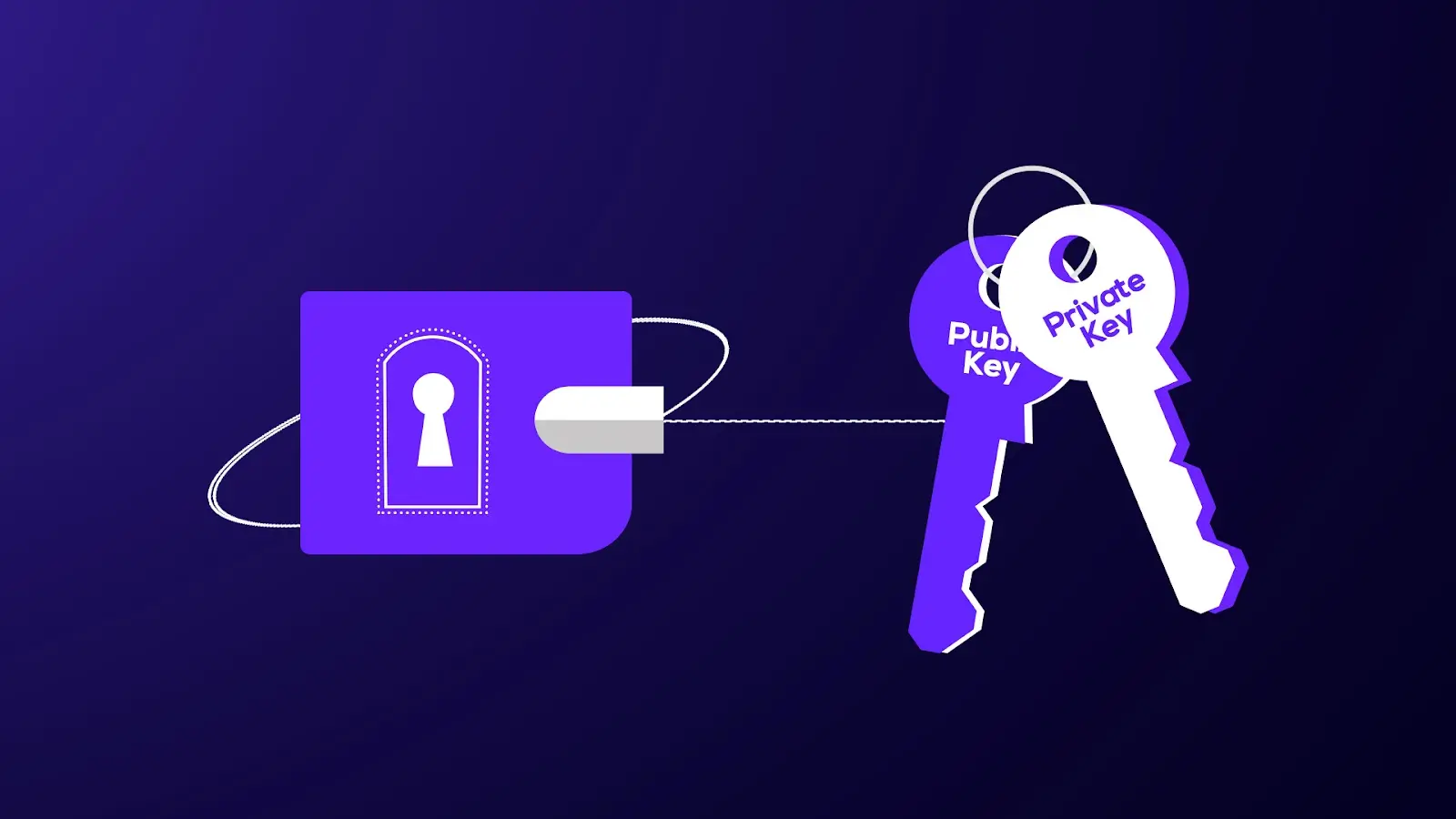
If you are learning about cryptocurrency, one of the first security concepts to understand is this: what is a private key crypto users rely on to control their digital assets? A private key is a unique cryptographic code that gives access to funds stored in a connected crypto wallet. It is not a password in the usual sense. Instead, it is a mathematically generated secret that proves ownership and allows the wallet holder to authorize blockchain transactions.
In simple terms, whoever holds the private key controls the crypto connected to that wallet. If you have the key, you can send, move, or manage the funds. If someone else gets it, they can do the same. This is why private keys are often described as the most important piece of information in crypto self-custody.
A private key usually appears as a long string of letters and numbers, though most wallet apps hide it behind a recovery phrase, also called a seed phrase. This phrase is easier for humans to store and restore, but it represents the same access power. Losing it can mean losing access to your assets permanently.
Unlike a bank account, where a provider can often reset your password, blockchain wallets are usually decentralized. There is no central support team that can recover a lost key. This gives users more control, but it also creates more responsibility. Crypto ownership depends on protecting the private key from theft, loss, screenshots, phishing websites, fake support agents, and unsafe storage methods.
For anyone managing crypto, following trusted security updates and educational resources such as news.whitewallet.app can help build safer habits and avoid common wallet mistakes.
How private keys work
A private key works through cryptography. When a wallet is created, the system generates a private key and uses it to create a related public key and wallet address. The private key remains secret, while the public information can be shared with others to receive funds.
When you send cryptocurrency, your wallet does not publish your private key to the blockchain. Instead, it uses the key to create a digital signature. This signature proves that the transaction was approved by the real wallet owner. Blockchain validators or nodes can check that the signature is valid without ever seeing the private key itself.
This process is one of the main reasons crypto can work without a central authority. The blockchain does not need to know your identity. It only needs cryptographic proof that the transaction was signed by the correct private key. If the proof is valid, the network can process the transaction according to its rules.
For example, imagine you want to send crypto from your wallet to another address. Your wallet prepares the transaction details: the amount, the receiving address, and any required network fee. Then it uses your private key internally to sign the transaction. After that, the signed transaction is broadcast to the blockchain. The network verifies the signature and records the transfer if everything is correct.
The key point is that approval happens without exposing the secret key. This is similar to using a stamp that proves authenticity, but without giving away the stamp-making tool. However, if the private key is stolen, a malicious person can create valid signatures and move the funds. Blockchain transactions are generally irreversible, so stolen crypto is often very difficult to recover.
That is why users should never type private keys or seed phrases into unknown websites, send them through messages, store them in cloud notes, or share them with anyone claiming to be “support.” A real wallet provider, exchange, or blockchain service should not need your private key to help you.
Private Key vs Public Key
Understanding private key vs public key is essential for using crypto safely. These two elements are connected, but they have very different roles.
A private key is secret. It controls access to the wallet and is used to approve transactions. A public key is derived from the private key and can be used to verify signatures. A wallet address is usually created from the public key and is the information you share when you want to receive crypto.
You can think of the wallet address like an email address. People can know it and send assets to it. The public key is also shareable in many blockchain systems because it helps verify activity. But the private key is more like the master password, signature authority, and ownership proof combined. It should never be shared.
The relationship works in one direction. A wallet can generate a public key from a private key, and an address from the public key. But it should be practically impossible to reverse the process and calculate the private key from the public key or wallet address. This one-way design is what protects blockchain wallets.
Here is the practical difference: if someone knows your wallet address, they may be able to see public transaction history on a blockchain explorer, depending on the network. They can send funds to you, but they cannot spend your funds. If someone knows your private key, they can access and transfer your crypto.
This distinction is especially important for beginners. Sharing your wallet address is normal when receiving payments, NFTs, or tokens. Sharing your private key is dangerous and can result in immediate loss of funds.
In crypto, ownership is based on control. The private key is the core proof of that control. Learning how it works, how it differs from public information, and how to store it safely is one of the most important steps toward responsible crypto use.
Technology Perspective
Technology continues to transform industries through artificial intelligence, cloud computing, automation, cybersecurity, digital platforms, and data-driven decision making. As organizations increasingly adopt digital solutions, understanding emerging technologies becomes essential for businesses, professionals, and consumers. DGM News regularly covers these developments through expert analysis, technology news, and educational resources.
Innovation Outlook
Rapid advances in artificial intelligence, automation, machine learning, cloud infrastructure, and digital transformation continue reshaping global industries. Monitoring these developments helps organizations adapt to changing technologies, improve efficiency, and prepare for future innovation.
Did you know?
Artificial Intelligence is expected to influence nearly every major industry over the coming decade, from healthcare and finance to transportation, manufacturing, education, and entertainment.
AI, Machine Learning, Deep Learning and Generative AI Explained
Google AI Updates
About DGM News
DGM News is an independent digital publication delivering the latest Technology News, AI News, and FinTech News. We provide expert insights on startups, innovation, cybersecurity, software, business, gadgets, cloud computing, artificial intelligence, and emerging technologies. Our mission is to publish informative, accurate, and regularly updated content that helps readers stay informed in today's rapidly evolving digital landscape.
Since our editorial focus includes technology, artificial intelligence, and financial technology, we continuously expand our coverage as new innovations emerge.
Editorial Standards
Every article published on DGM News undergoes editorial review before publication. We prioritize factual accuracy, clarity, transparency, and reader value while following responsible digital publishing practices.
Research Methodology
Our editorial team researches publicly available information from official announcements, technical documentation, research publications, developer resources, reputable industry reports, and trusted public sources whenever applicable. Information is reviewed to improve clarity and accuracy before publication.
Fact-Checking Policy
We make reasonable efforts to verify factual information before publishing. Articles are reviewed for accuracy, consistency, and relevance. If significant developments occur after publication, content may be revised to reflect updated information.
Update Policy
Technology evolves rapidly. Articles may be reviewed and updated periodically to reflect software releases, AI developments, security advisories, regulatory updates, product launches, and other important industry changes.
Source Verification
Whenever possible, DGM News reviews information using official company announcements, technical documentation, research publications, government resources, publicly available reports, and reputable industry references before updating articles.
Editorial Independence
DGM News maintains editorial independence in all publishing decisions. Editorial content is produced independently and is intended to provide balanced, informative, and reader-focused coverage without influence from advertisers or commercial partnerships.
AI Usage Disclosure
Artificial intelligence tools may assist with research organization, grammar improvement, formatting, or editorial workflows. Every article is reviewed by human editors before publication to help maintain quality, clarity, and factual accuracy.
Corrections Policy
Accuracy is important to us. If readers identify outdated information or factual inaccuracies, they are encouraged to contact our editorial team. Verified corrections are reviewed and incorporated whenever appropriate.
Reader Feedback
Reader feedback helps improve our journalism. We welcome suggestions, corrections, and constructive feedback through our Contact page to continuously improve the quality of our reporting.
Last Editorial Review
This article follows the DGM News editorial review process and may be updated periodically as new information becomes available.
Why Trust DGM News?
DGM News is committed to publishing technology journalism that emphasizes accuracy, transparency, editorial independence, and regularly updated information. Our editorial process is designed to provide readers with reliable coverage of technology, AI, fintech, startups, and digital innovation.
DGM News Resources
Topics We Cover
Artificial Intelligence • AI Tools • Machine Learning • FinTech • Cybersecurity • Cloud Computing • Programming • Software Development • Gadgets • Mobile Technology • Business Technology • Startups • Digital Marketing • Blockchain • Cryptocurrency • Science • Innovation • Consumer Technology • Enterprise Technology • Automation
