

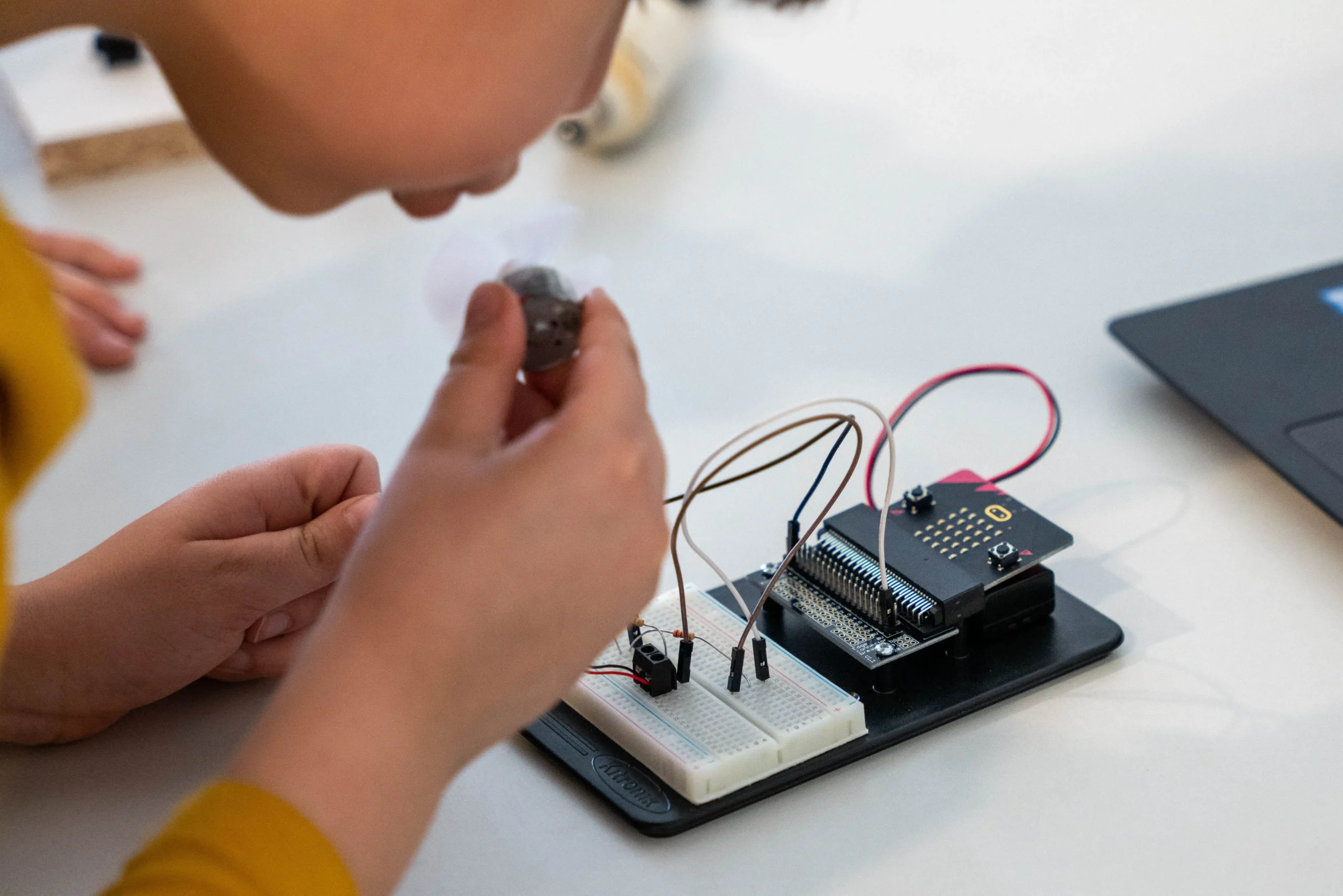
Technology is changing the way students learn, and schools are adapting by introducing hands-on learning experiences that prepare children for the future. Instead of relying only on textbooks and lectures, modern classrooms are increasingly using practical activities that encourage students to explore, experiment, and solve real-world problems. This is why STEM kits for classrooms have become an important part of education.
STEM stands for Science, Technology, Engineering, and Mathematics. Rather than teaching these subjects separately, STEM education combines them through engaging projects that help students understand how concepts work together. One of the most effective tools supporting this approach is the micro:bit, a compact programmable device that allows students to learn coding, electronics, and engineering through interactive activities.
Why Hands-On Learning Matters
Research consistently shows that students remember more when they actively participate in lessons. Reading about programming or engineering provides theoretical knowledge, but building a working project helps students truly understand how those concepts apply in practice.
Modern STEM education kits encourage learners to ask questions, test ideas, make mistakes, and improve their solutions. This process develops critical thinking, creativity, and confidence—skills that are valuable far beyond the classroom.
For teachers, these kits also make lessons more engaging. Instead of explaining abstract concepts for an entire class period, educators can guide students through projects that naturally spark curiosity and discussion.
The Growing Role of micro:bit in Education
Among today’s educational technologies, the micro:bit has earned a strong reputation because it combines simplicity with impressive capabilities. Originally developed for education, it allows students with little or no programming experience to create interactive projects within a short time.
The device includes built-in features such as:
- LED display
- Buttons for user interaction
- Motion and temperature sensors
- Compass
- Bluetooth communication
- Expandable connections for external sensors and devices
These built-in components allow students to create meaningful projects without requiring expensive laboratory equipment.
From Coding to Real-World Problem Solving
Many coding lessons stop after students write simple programs on a computer screen. The micro:bit goes further by allowing students to see their code interact with physical hardware.
For example, students can:
- Build digital thermometers
- Design step counters
- Create reaction-time games
- Program traffic light simulations
- Develop smart plant monitoring systems
- Build classroom weather stations
These projects demonstrate how software controls hardware, making coding more meaningful and enjoyable.
This practical experience is one reason why coding kits for schools are becoming increasingly popular worldwide.
Supporting Different Learning Levels
A major advantage of micro:bit classroom kits is their flexibility. Younger students can begin with simple block-based programming, while older learners gradually transition to text-based languages such as Python.
This progression allows schools to use the same platform across multiple grade levels without constantly purchasing new hardware.
Teachers also appreciate that students learn at different speeds. Advanced learners can build more complex systems, while beginners can complete simpler activities using the same device.
Encouraging Teamwork and Creativity
Modern careers require collaboration, communication, and creative thinking. STEM projects naturally encourage these skills because students often work together to solve challenges.
A classroom project might involve:
- Designing a smart home alarm
- Creating an automatic watering system
- Programming wearable fitness trackers
- Building classroom voting devices
Each student can contribute different ideas while learning how to communicate, divide responsibilities, and improve designs together.
Easy Integration Across Multiple Subjects
Many people assume STEM devices are useful only during technology classes. In reality, the micro:bit fits naturally into many different subjects.
- Science teachers can collect environmental data using sensors.
- Mathematics teachers can demonstrate data collection, graphing, and probability.
- Geography lessons can include compass-based navigation projects.
- Art teachers can combine programming with interactive displays and creative installations.
- Even language teachers can encourage storytelling through interactive games built with simple code.
This cross-curricular flexibility helps schools maximize the value of their investment.
Preparing Students for Future Careers
Industries around the world increasingly depend on automation, robotics, artificial intelligence, and data analysis. Students entering tomorrow’s workforce will benefit from understanding not only how technology works but also how to create it.
Using robotics kits for classrooms alongside the micro:bit introduces learners to concepts such as sensors, motors, automation, and logical decision-making. These experiences build confidence and inspire interest in careers related to engineering, software development, robotics, and electronics.
More importantly, students develop transferable skills like analytical thinking, resilience, and problem-solving that remain valuable regardless of their future profession.
Why Schools Continue Choosing micro:bit
Schools often have limited budgets, making affordability an important consideration. The micro:bit offers an excellent balance of functionality, ease of use, and scalability. Teachers can introduce programming quickly without requiring advanced technical expertise, while students remain engaged through practical projects that produce visible results.
When combined with high-quality micro:bit classroom kits, educators gain access to sensors, expansion boards, lesson resources, and project ideas that support structured learning throughout the academic year.
Conclusion
As education continues to evolve, practical learning is becoming just as important as theoretical knowledge. STEM kits for classrooms give students opportunities to explore, experiment, and build confidence through hands-on activities rather than passive instruction.
Among the many educational platforms available today, the micro:bit stands out because it makes coding, electronics, and engineering accessible to learners of all ages. Whether schools are introducing basic programming or developing advanced STEM programs, micro:bit classroom kits provide an engaging and future-focused solution that prepares students with the technical and problem-solving skills they will need in an increasingly digital world.
Technology Perspective
Technology continues to transform industries through artificial intelligence, cloud computing, automation, cybersecurity, digital platforms, and data-driven decision making. As organizations increasingly adopt digital solutions, understanding emerging technologies becomes essential for businesses, professionals, and consumers. DGM News regularly covers these developments through expert analysis, technology news, and educational resources.
Innovation Outlook
Rapid advances in artificial intelligence, automation, machine learning, cloud infrastructure, and digital transformation continue reshaping global industries. Monitoring these developments helps organizations adapt to changing technologies, improve efficiency, and prepare for future innovation.
Did you know?
Artificial Intelligence is expected to influence nearly every major industry over the coming decade, from healthcare and finance to transportation, manufacturing, education, and entertainment.
AI, Machine Learning, Deep Learning and Generative AI Explained
Google AI Updates
About DGM News
DGM News is an independent digital publication delivering the latest Technology News, AI News, and FinTech News. We provide expert insights on startups, innovation, cybersecurity, software, business, gadgets, cloud computing, artificial intelligence, and emerging technologies. Our mission is to publish informative, accurate, and regularly updated content that helps readers stay informed in today's rapidly evolving digital landscape.
Since our editorial focus includes technology, artificial intelligence, and financial technology, we continuously expand our coverage as new innovations emerge.
Editorial Standards
Every article published on DGM News undergoes editorial review before publication. We prioritize factual accuracy, clarity, transparency, and reader value while following responsible digital publishing practices.
Research Methodology
Our editorial team researches publicly available information from official announcements, technical documentation, research publications, developer resources, reputable industry reports, and trusted public sources whenever applicable. Information is reviewed to improve clarity and accuracy before publication.
Fact-Checking Policy
We make reasonable efforts to verify factual information before publishing. Articles are reviewed for accuracy, consistency, and relevance. If significant developments occur after publication, content may be revised to reflect updated information.
Update Policy
Technology evolves rapidly. Articles may be reviewed and updated periodically to reflect software releases, AI developments, security advisories, regulatory updates, product launches, and other important industry changes.
Source Verification
Whenever possible, DGM News reviews information using official company announcements, technical documentation, research publications, government resources, publicly available reports, and reputable industry references before updating articles.
Editorial Independence
DGM News maintains editorial independence in all publishing decisions. Editorial content is produced independently and is intended to provide balanced, informative, and reader-focused coverage without influence from advertisers or commercial partnerships.
AI Usage Disclosure
Artificial intelligence tools may assist with research organization, grammar improvement, formatting, or editorial workflows. Every article is reviewed by human editors before publication to help maintain quality, clarity, and factual accuracy.
Corrections Policy
Accuracy is important to us. If readers identify outdated information or factual inaccuracies, they are encouraged to contact our editorial team. Verified corrections are reviewed and incorporated whenever appropriate.
Reader Feedback
Reader feedback helps improve our journalism. We welcome suggestions, corrections, and constructive feedback through our Contact page to continuously improve the quality of our reporting.
Last Editorial Review
This article follows the DGM News editorial review process and may be updated periodically as new information becomes available.
Why Trust DGM News?
DGM News is committed to publishing technology journalism that emphasizes accuracy, transparency, editorial independence, and regularly updated information. Our editorial process is designed to provide readers with reliable coverage of technology, AI, fintech, startups, and digital innovation.
DGM News Resources
Topics We Cover
Artificial Intelligence • AI Tools • Machine Learning • FinTech • Cybersecurity • Cloud Computing • Programming • Software Development • Gadgets • Mobile Technology • Business Technology • Startups • Digital Marketing • Blockchain • Cryptocurrency • Science • Innovation • Consumer Technology • Enterprise Technology • Automation
