The moment a vanity goes in, the whole bathroom clicks into place — or doesn’t. Get it right, and the rest of the room follows; get it wrong, and you’ll notice every morning for years.
It’s not just about storage. The vanity sets the visual tone of the entire space. As the largest freestanding element, it communicates — more than tiles or fixtures — whether the room feels considered or simply assembled.
So how do you choose well, especially when the space is smaller than ideal, awkwardly proportioned, or the budget is tight?
Start with how the room actually lives
Before browsing finishes and handles, spend a week observing how your bathroom actually gets used. How many people share it? Is it quick and functional, or somewhere people linger? How’s the light?
These practical questions matter more than any trend. A family bathroom used by three kids each morning has very different needs than a quiet ensuite for two adults — one demands serious drawer depth and durable surfaces; the other might justify spending more on something genuinely beautiful.
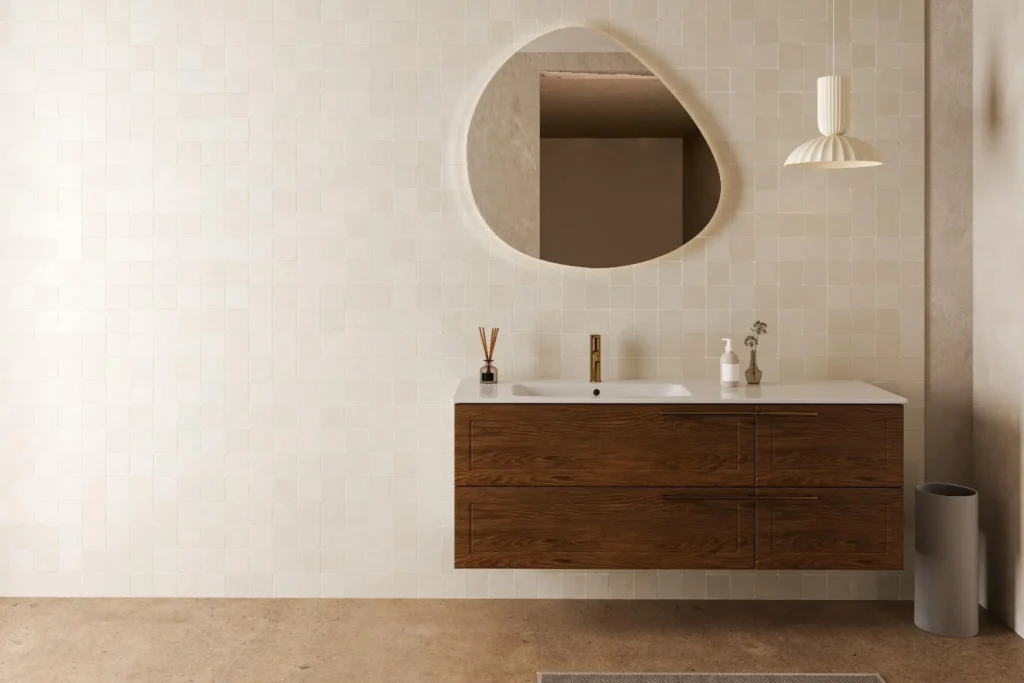
Be honest about storage before committing to a profile. Wall-hung vanities look sleek, but if you’re concealing two people’s worth of skincare, hairdryers, and toiletries, you may be adding extra storage within six months. Sometimes the more substantial unit is simply the smarter choice.
The thing people underestimate: proportion
Australians tend to renovate in smaller bathrooms than people might expect — particularly in older inner-city homes and apartments where the original footprint wasn’t generous to begin with. In these spaces, proportion becomes everything.
A vanity that’s too wide in a narrow room creates a pinch point that feels uncomfortable every single day. One that’s too narrow in a spacious room looks lost and almost accidental. The standard advice is to measure your available wall run and allow at least 60cm of clear floor space opposite — but if you’re tight on both counts, also look at what’s happening vertically. A taller unit with a narrower footprint can give you the storage you need without overwhelming a compact floor plan.
Colour plays into proportion, too. Lighter finishes — whites, soft stone tones, pale timbers — make a room read as larger. Darker finishes can be stunning, but they do need enough natural light or a genuinely spacious room to land properly.
Where the real design decisions happen
Once the practical groundwork is done, design decisions narrow to three: silhouette, finish, and hardware.
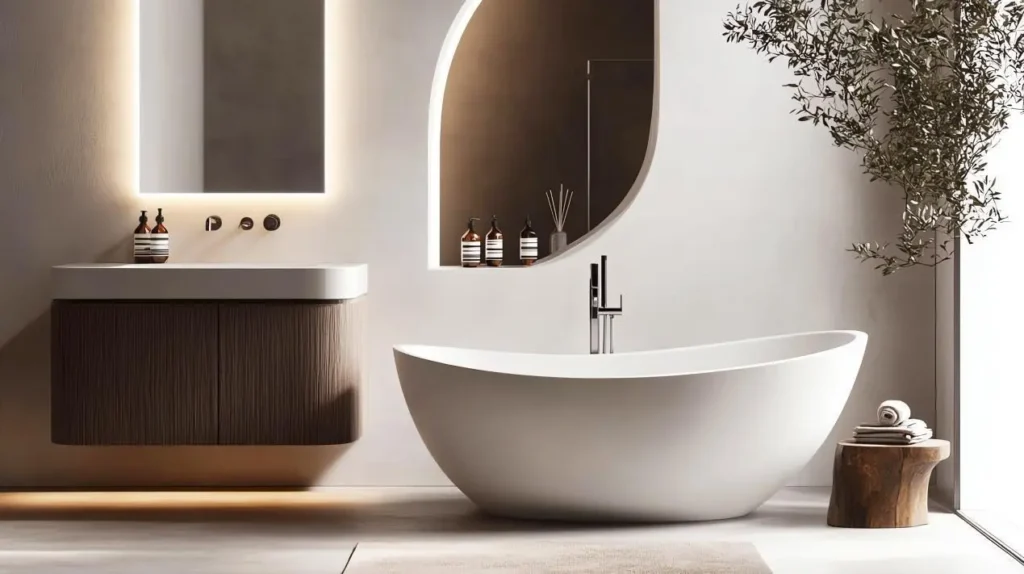
Silhouette matters more than most expect. Some profiles read as formal, precise corners, strong horizontal lines, and a considered cabinetmaking quality. Others carry a softness that makes a bathroom feel warmer and more inviting.
This is where a curved bath vanity earns its place. The gentle arc of a rounded drawer front takes the edge off a space that might otherwise feel clinical — a detail that reads as thoughtfully chosen rather than trend-driven.
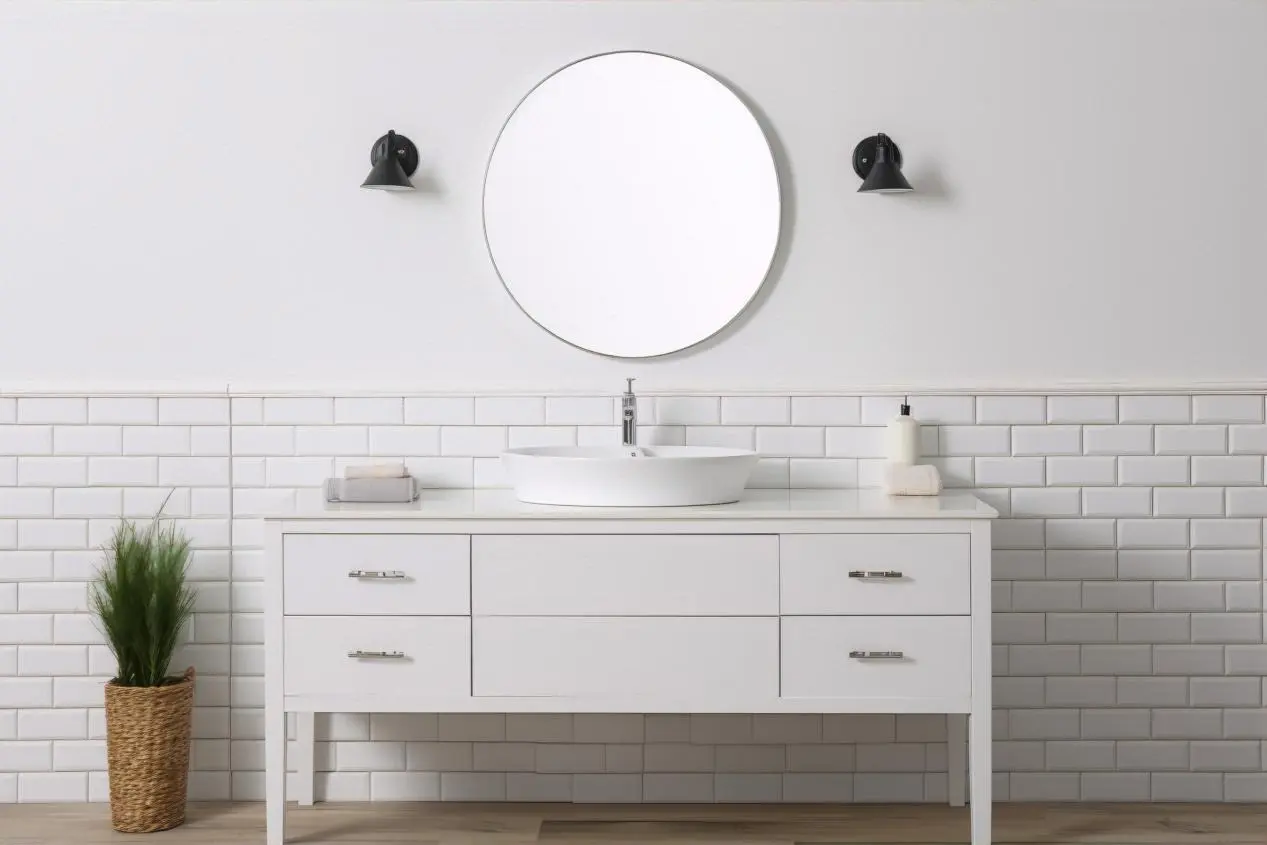
A freestanding bathroom vanity takes that reasoning further. There’s something sculptural about a piece that stands on its own, and it’s also practical in older homes where walls aren’t plumb, and floors aren’t level — sidestepping complications while often delivering more storage than a wall-hung equivalent.
For heritage homes or character apartments, a freestanding piece also tends to sit more comfortably alongside original architraves and ornate ceilings.
The long view
The bathrooms that still look good fifteen years after they were renovated aren’t usually the ones that chased a moment. They’re the ones where someone made a considered decision about quality, proportion, and materials — and then let those choices do the work.