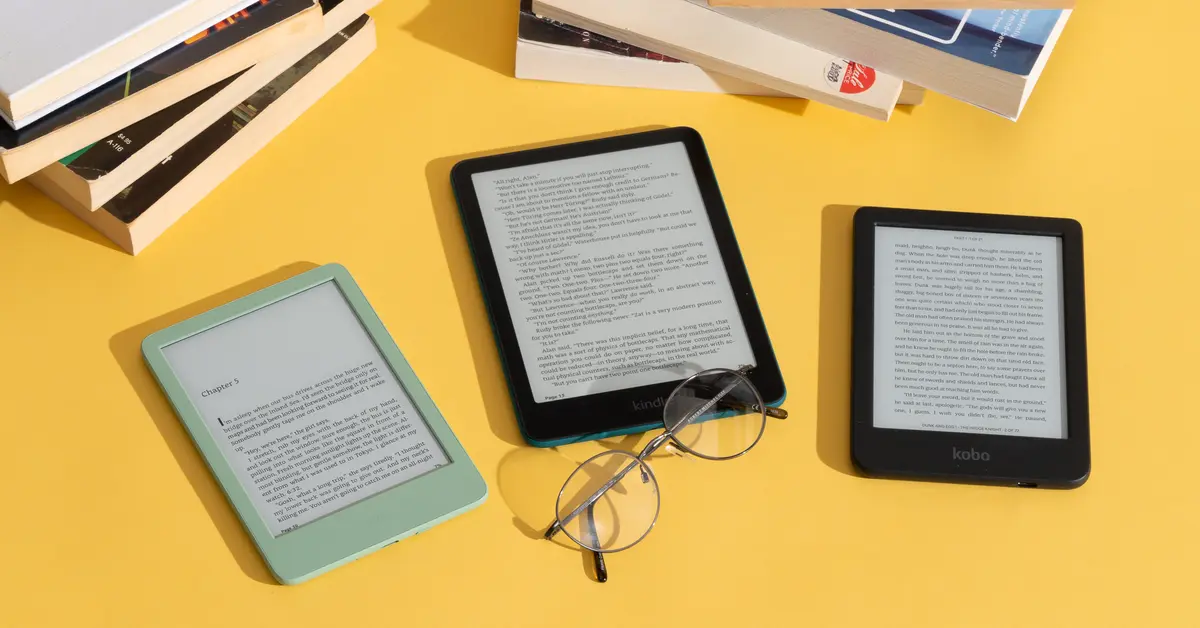
For a long time, eReaders were gray boxes. Functional, yes. Beautiful, no. Color E Ink was a laboratory dream for most of the last decade. That changed. Kaleido technology arrived, then improved. Now we have third-generation color E Ink that genuinely changes what digital reading can be. The Kobo Clara colour represents what this technology looks like when it matures into a consumer product. This article breaks down the real-world impact of color E Ink for everyday readers.
What Took Color E Ink So Long to Get Good?
Color E Ink is genuinely hard to make. Traditional E Ink uses black and white microcapsules that flip when charged. Adding color means layering color filters on top. Early attempts, Kaleido 1 and 2, produced washed-out pastels at low saturation. The colors looked like someone photocopied a watercolor painting. Kaleido 3 changed that. It improves color saturation by 30 percent over its predecessor and bumps color resolution to 150 PPI. That is still lower than the 300 PPI black and white resolution, but it is good enough that illustrated content reads cleanly.
Who Actually Benefits from a Color eReader?
Not everyone needs color. Novel readers are fine with black and white. But color matters for specific categories: graphic novels, manga, children’s picture books, travel guides, cookbooks, textbooks with diagrams, and scientific publications with charts. These formats have always been awkward on grayscale eReaders. Color solves that. Teachers, students, and researchers who annotate visual content benefit the most. If 90 percent of what you read is plain text, color is a nice bonus. If 30 percent or more is illustrated, color becomes a necessity.
Does Color E Ink Drain the Battery Faster?
The short answer is yes, slightly. Color pages use marginally more power than pure grayscale because of how the color filter layer works. In practice, the difference is minor. The Kobo Clara Colour still delivers weeks of reading on a single charge. That advantage over LCD tablets holds. The battery gap between color and grayscale E Ink is small enough that most users never notice it. What they do notice is not having to charge the device every two days like they would with a tablet.
How Does Color Change the Reading Experience for Kids?
Children’s books live and die by their illustrations. A grayscale version of a picture book strips out half the experience. Color E Ink brings those books back to life without introducing a glowing tablet screen that competes with the child’s attention. The eye-safe nature of E Ink matters here. Blue light suppresses melatonin. Kids need sleep. A color eReader lets children read illustrated stories before bed without wrecking their sleep cycle. That is a genuine parenting win backed by sleep science.
Can Color eReaders Replace Tablets for Studying?
For pure reading and annotation tasks, yes. Kobo’s built-in highlighting, note-taking, and dictionary tools work well on the Clara Colour. Color makes chart and graph annotations more useful. However, eReaders are not built for multitasking. They cannot run apps, stream video, or browse with ease. If a student needs to switch between reading, writing essays, and video lectures, a tablet or laptop is still the better tool. For focused study reading only, the eReader wins because it removes distractions by design.
What Does the Research Say About Reading on Screens vs Paper?
A 2023 meta-analysis published in Educational Psychology Review found that reading comprehension on E Ink devices is comparable to paper reading. LCD tablets show a measurable drop in comprehension, especially for longer texts. The theory is that E Ink removes visual fatigue and reduces distractions, allowing deeper focus. Color adds context to illustrated material, improving comprehension for visual content specifically. For scientific journals and textbooks with figures, readers on color E Ink retained information better than those on grayscale devices.
Is the Price Premium for Color Worth It?
Color eReaders cost more than their grayscale counterparts. That gap has narrowed as the technology matured. The question is not whether color costs more. It clearly does. The question is whether the use case justifies the gap. If you primarily read illustrated content, the answer is yes. If you read only novels and nonfiction prose, the answer is probably no. Most buyers end up somewhere in the middle. Color adds versatility. Versatility has value. For a device you will use daily for three to five years, the per-day cost of the premium is small.